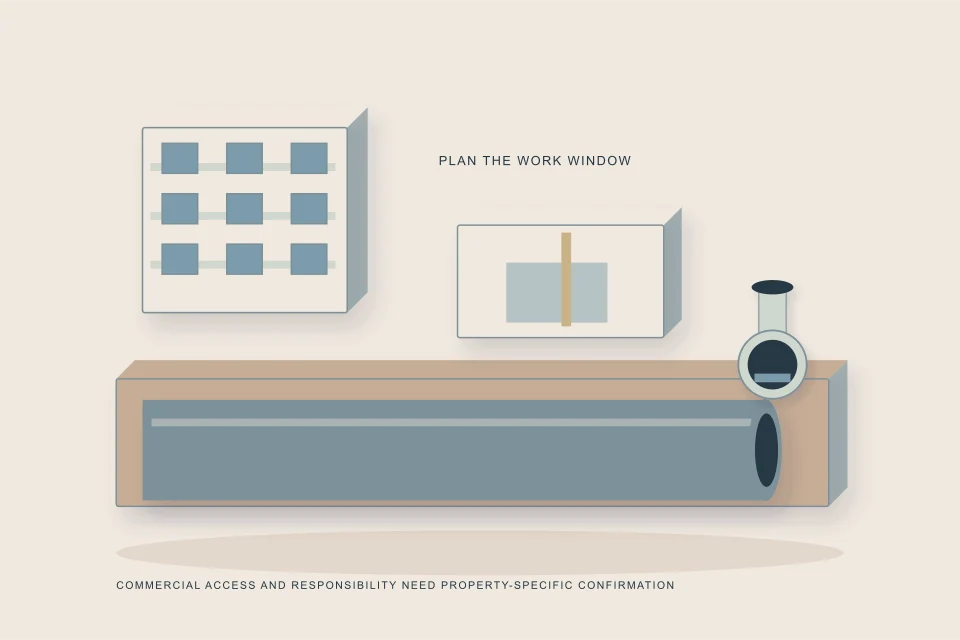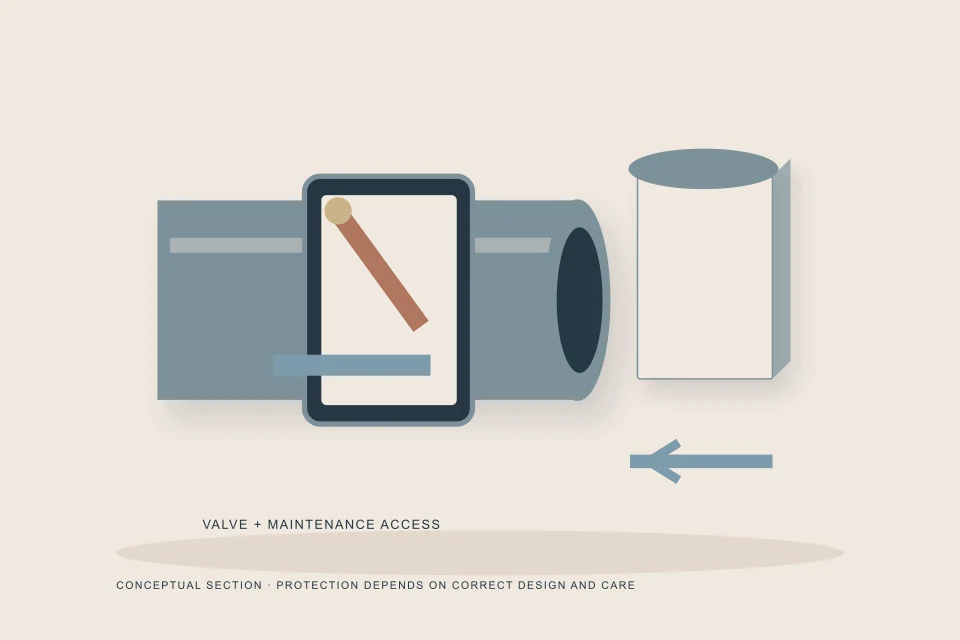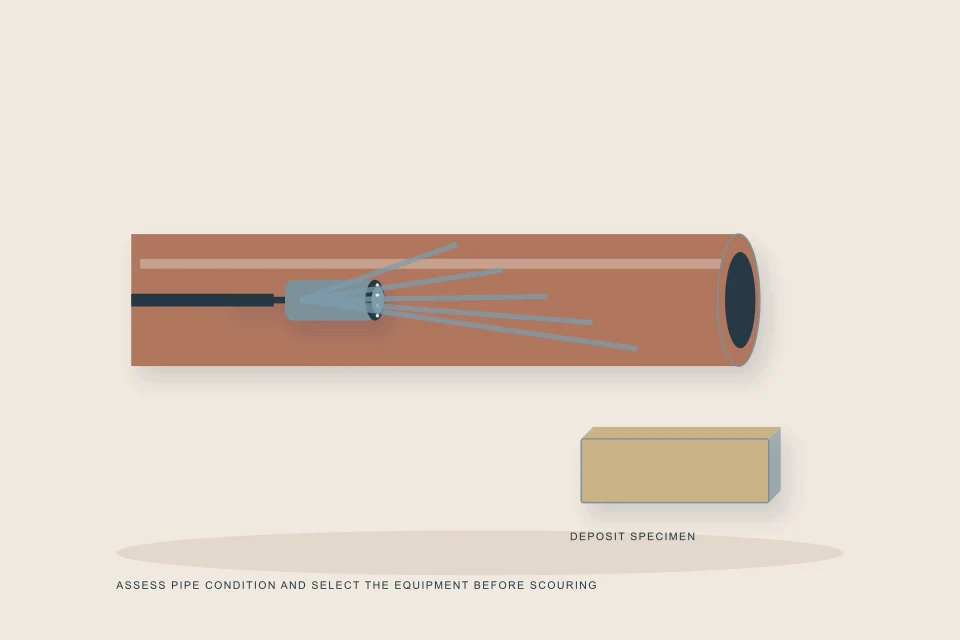
Hydro jetting cleans a sewer line with high-pressure water fired through a nozzle whose rear-facing jets drag the hose forward and scour the full pipe wall. It is the right lane when a camera shows grease, scale, sludge or fine roots coating the pipe, and when clogs keep returning after cable cleaning. It is the wrong lane for broken, collapsed or badly deteriorated pipe.
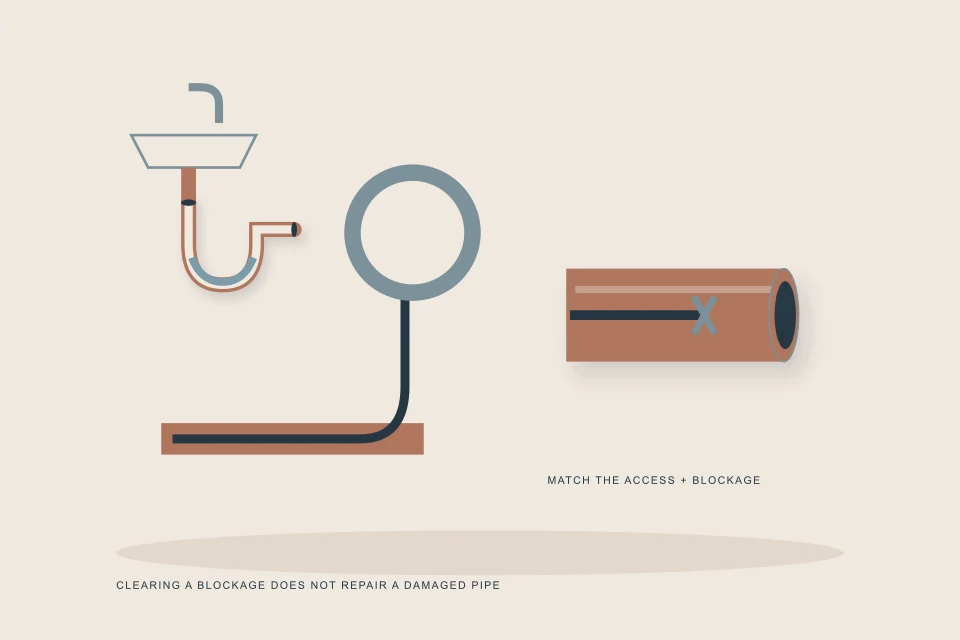
- Jetting removes what is stuck to the pipe wall; a cable only opens a channel through what is in the middle.
- On Sewers.ca, jetting is the second step for recurring clogs, after a camera has shown what is coating the line.
- Fragile pipe, including fibre pipe, broken clay and heavily corroded cast iron, needs a condition check before any jetter goes in.
- The nozzle choice matters as much as the machine; ask what the contractor plans to run and why.
- High-pressure water can inject through skin; this is not a rental-and-try job.
01 /When is hydro jetting the right sewer service?
Choose jetting when the problem is buildup along the pipe rather than a single plug in it. A camera shows the difference instantly: a clean pipe with a wad of wipes at one spot is a cable job, while a pipe whose walls are furred with grease, scale or a fine root curtain for metres at a time is a jetting job.
| Camera or cleaning finding | Better first tool | Reason |
|---|---|---|
| Single soft blockage, sound pipe | Cable | Fast, cheap, no water volume needed |
| Grease coating a kitchen branch or main | Jetter | Water scours and carries grease out; a cable smears it |
| Mineral scale in older cast iron | Jetter or descaling head | Restores diameter where the wall is still sound |
| Sand, silt or gravel settled in the bottom | Jetter | Flushes solids downstream |
| Fine hair roots throughout | Jetter with root-cutting nozzle | Cleans the whole circumference |
| Dense root ball at a joint | Cable root saw, then jetter | Cut the mass, then flush fragments |
| Broken or collapsed section | Neither, until assessed | Water can wash soil in and worsen the break |
That is why the service selector routes "clogs keep coming back" to a camera inspection first and jetting second. The camera decides whether jetting will help or harm.
02 /How does a sewer jetter work?
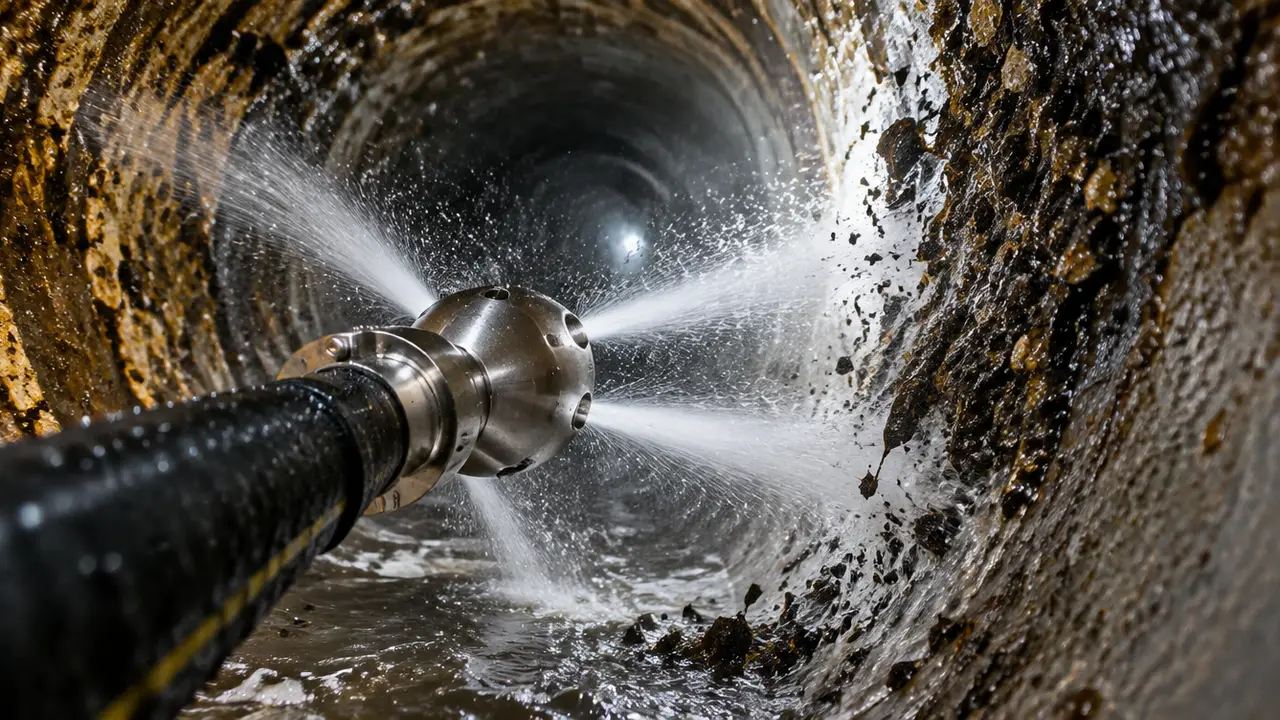
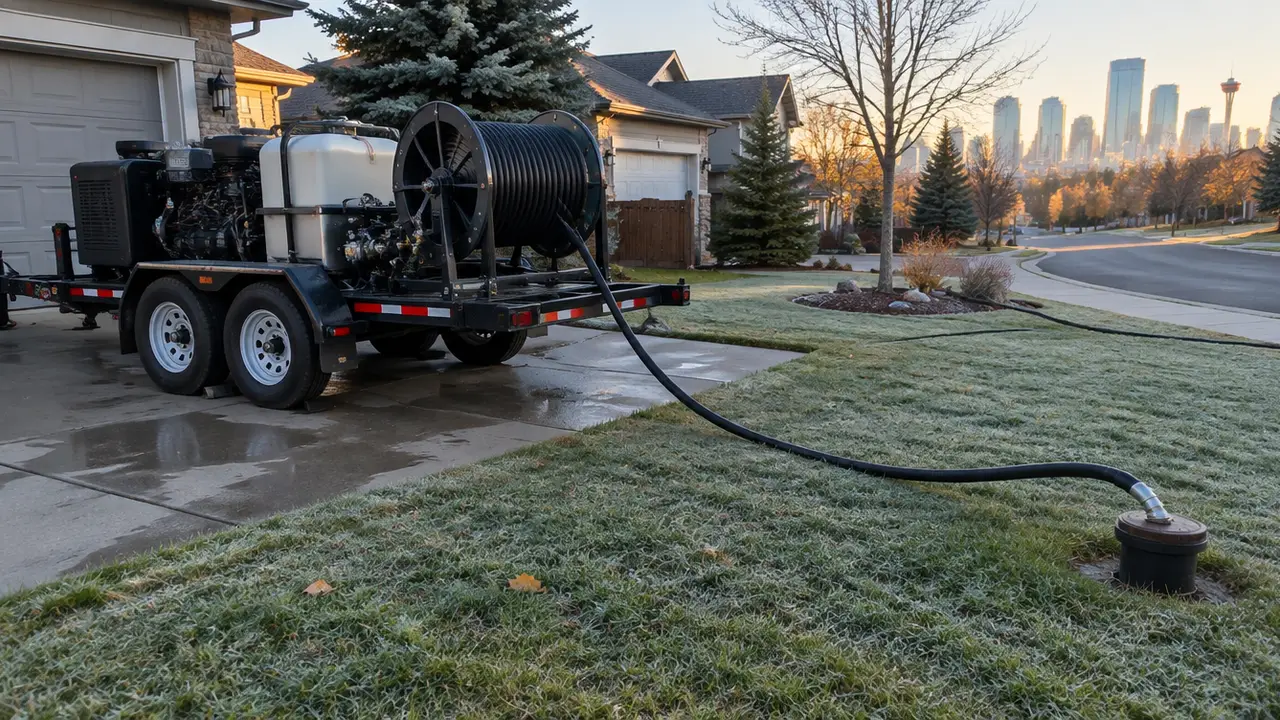
A jetter is a pump, a water tank or supply, a hose reel and a nozzle. Most of the nozzle's jets point backwards, so the reaction force pulls the hose up the pipe while the spray scrubs the wall behind it. A forward jet, where fitted, cuts into soft blockages ahead. Some nozzles spin to spread the jet evenly; others are built to cut roots or to chew through hardened grease.
Residential and light commercial machines vary widely in pressure and flow, and operators select both for the pipe material and diameter in front of them. Flow moves debris; pressure cuts. A large-flow machine on a small, fragile pipe is as poor a match as a small electric unit on a long, greasy commercial line.
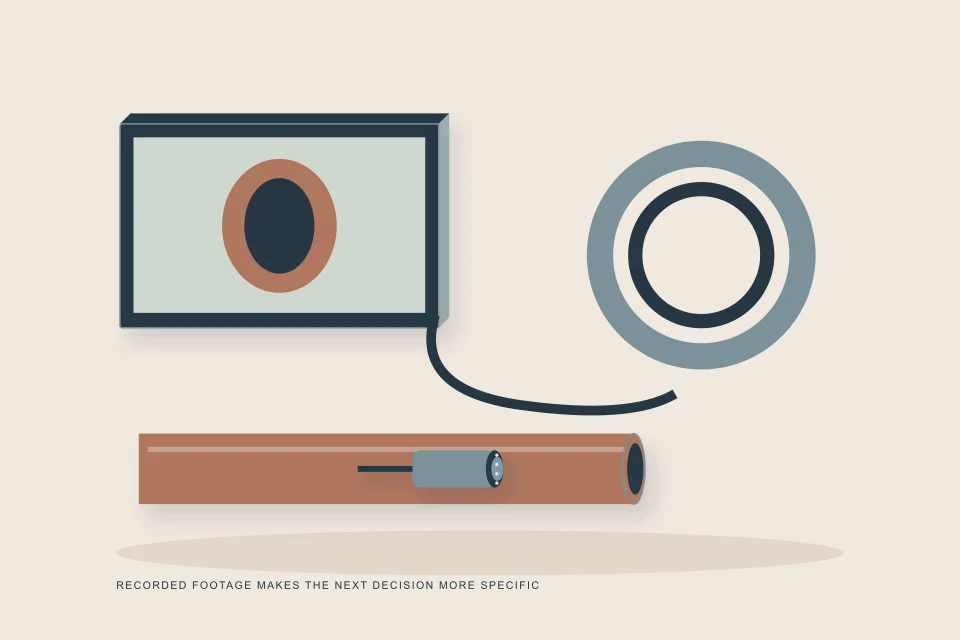
- Camera or history first
Confirm the pipe can take it. Old fibre pipe, open breaks and heavily corroded cast iron are the classic exclusions.
- Choose the nozzle
A penetrating nozzle for blockages, a rotating or scouring nozzle for walls, a root cutter where roots were filmed.
- Work upstream to downstream
Debris is flushed toward the main in passes, pulling the hose back slowly so the rear jets clean on the way out.
- Film the result
A post-jetting camera run shows whether the wall is clean and exposes defects that the coating hid.
03 /Can hydro jetting damage an old sewer pipe?
Yes, if the pipe is already failing. Jetting is gentle on sound pipe of every common material, but water under pressure will find any opening. At a break or an open joint it can wash bedding soil away, enlarge a void or drive pieces of a crumbling wall further out of place.
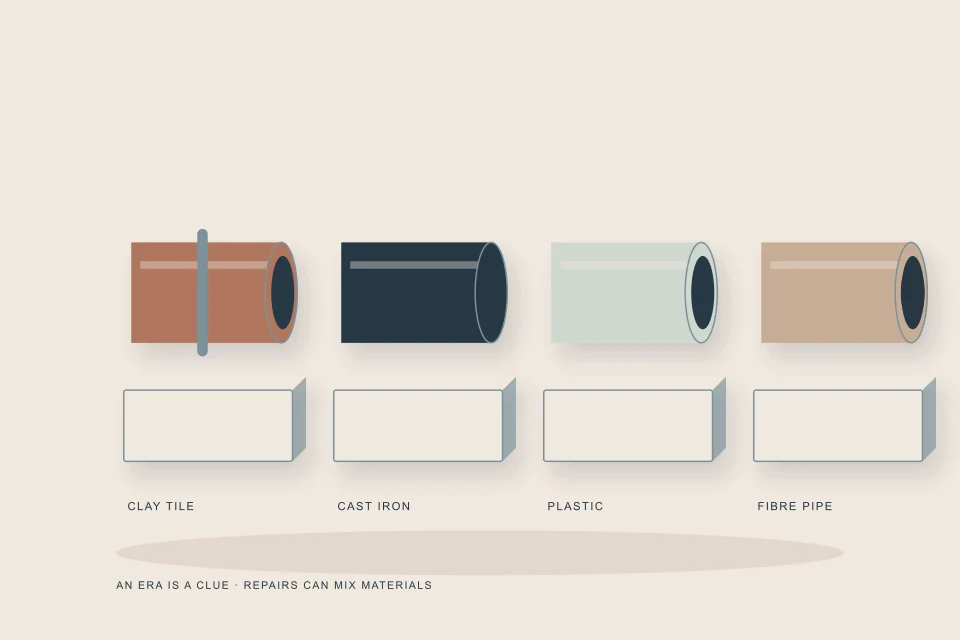
- Bituminous fibre pipe (often called Orangeburg) deforms with age and is usually excluded from aggressive cleaning of any kind.
- Vitrified clay is hard but brittle; cracked and broken sections need assessment first.
- Cast iron can be scaled so heavily that the scale is holding a thin wall together.
- Plastic pipe (ABS, PVC) tolerates jetting well when set up correctly.
A contractor who recommends jetting on an older line without filming it first should be able to explain why. The sewer pipe materials by era guide shows which materials are likely in a house of a given age.
04 /What does jetting leave unsolved?
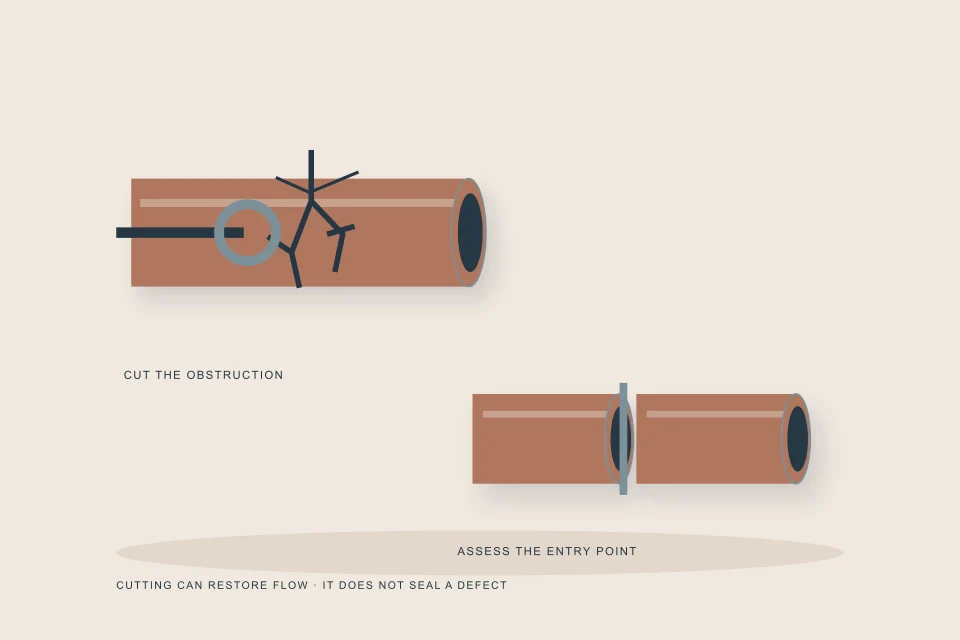
Jetting restores the inside of the pipe; it does not change the pipe's shape, slope or joints. Grease will return if the kitchen habits that caused it continue. Roots will regrow through joints that were open before. A sag will fill with water and solids again. The lasting fix belongs to another lane.
For methods, nozzle types and detailed operating guidance, SewerJetting.ca is the network's jetting specialist. This page's job is to tell you when jetting is the right lane.
05 /How do you stop the buildup from coming back after jetting?
Most buildup that jetting removes was put there, so habits decide how long a clean line stays clean. The City of Calgary explains that fats, oils and grease poured down drains cool, harden and stick to the inner walls of sewer pipes, and that products labelled flushable may still clog pipes. Its rule for toilets is short: only pee, poo and toilet paper.
- Wipe greasy pans with paper towel before washing, and put cooled fat in the green bin or garbage.
- Use sink strainers in the kitchen and on floor drains near laundry.
- Keep wipes, floss, hair and hygiene products out of toilets, whatever the packaging says.
- For scale, film the line every few years and jet only when the camera shows the bore narrowing.
The scale of the problem is visible at city level. Calgary reports responding to more than 8,000 sewer backups a year and spending about $3 million repairing damage from blockages. Commercial kitchens are regulated more tightly, with grease interceptors and servicing schedules; the commercial and multi-unit page covers those rules.
06 /What does hydro jetting cost, and how do you compare quotes?
A scheduled residential jetting visit typically plans at about $400 to $900 in 2026 dollars, more for long runs, heavy grease, no cleanout or after-hours work. Commercial kitchens and multi-unit lines usually price by time and equipment, and often on a maintenance schedule.
- Is a camera run included before, after, or both?
- Which nozzles will be used, and why for this pipe?
- Where does the water and debris go, and how is overflow at the cleanout prevented?
- What happens if the camera shows a defect partway through the job?
Once you know what is coating the line, request a quote with the footage attached.
FAQQuestions people ask
Is hydro jetting better than snaking a sewer line?
It depends on the problem. Jetting is better for grease, scale, sludge and fine roots along the wall. A cable is faster and cheaper for a single soft blockage in sound pipe, and it is the safer first tool when the pipe condition is unknown.
Will hydro jetting remove tree roots permanently?
No method that cleans the inside of a pipe removes roots permanently. Jetting with a root nozzle clears fine roots well, but roots return through the same open joints. Lasting control means sealing or replacing those joints.
Do I need a camera inspection before hydro jetting?
For an older line or one with repeated problems, yes. Jetting a broken, collapsed or fibre pipe can wash soil into the line and make the damage worse. On newer plastic pipe with a known grease problem, some contractors jet first and film afterward.
How long do the results of hydro jetting last?
As long as the cause stays away. A grease line kept free of cooking fat can stay clean for years, while a line with open joints and trees nearby may need attention again within a year or two.
Can I rent a jetter to clean my own sewer line?
Small electric jetters are sold and rented, but main line jetting carries injection-injury risk, contamination risk and the chance of damaging fragile pipe. Most homeowners are better served by hiring an operator and asking for a camera run with the job.
NETWORKGo deeper across the HAUSE Sewer network
Sewer cleaning equipment explained: machines, jetters, cameras and trucks
Sewer cleaning equipment explained: drum and sectional machines, cable heads, jetters and hose, cameras, combination trucks, and what you can rent.
PipeCleaning.caPipe cleaning methods compared, method by method
Pipe cleaning methods compared: snaking, hydro jetting, descaling, chain knockers, enzymes and chemicals — what each removes, and which pipes each can harm.
SewerJetting.caWhat is hydro jetting, and how does it clean a sewer line?
What hydro jetting is: how a sewer jetter uses rear-facing jets to pull a hose up the line, scour the pipe wall and flush debris out. Plain physics.