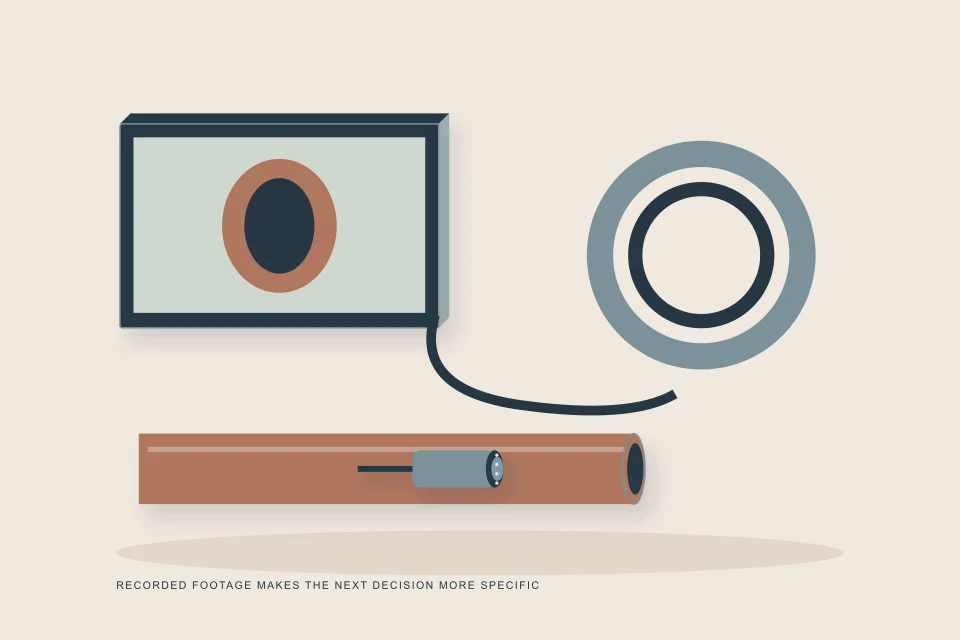
A sewer camera inspection pushes a waterproof camera on a flexible rod through the drain and lateral, recording the pipe wall with a distance counter, and usually locating defects from the surface with a transmitter. Book it first when drains are slow all over the house, clogs keep returning, you smell sewage without a dry trap to blame, or you are buying a home.
- The camera is the diagnostic lane: it tells every other service where to work and whether cleaning, repair or replacement fits.
- A useful inspection delivers a recording, a distance for each defect, and a surface mark or depth where a locator was used.
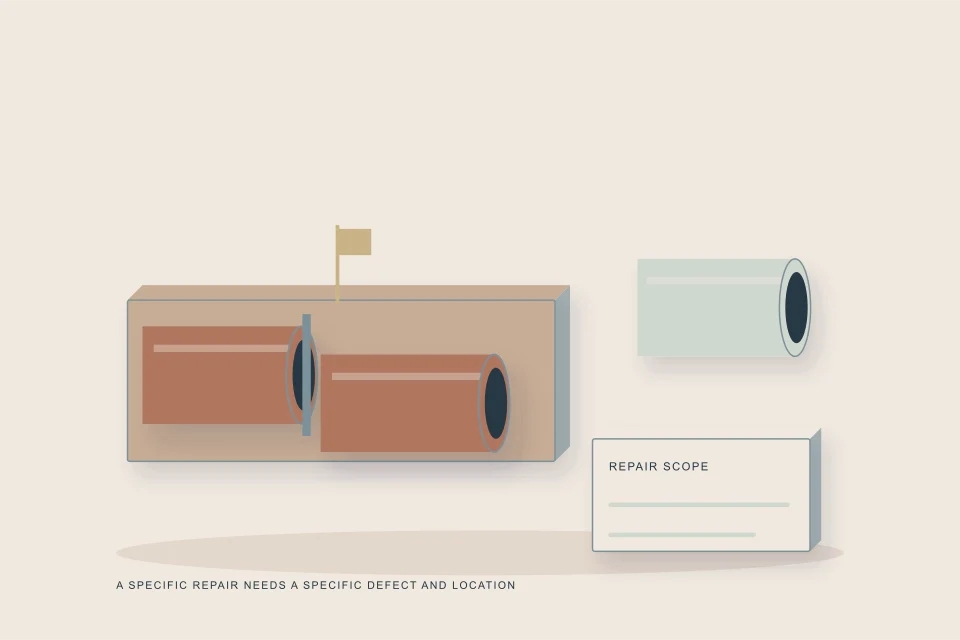
- The camera cannot judge what it cannot reach, so the report should state where the run stopped and why.
- Cleaning first and filming second is normal when the line is blocked; filming first is better when the line still flows.
- Footage belongs to you as evidence: ask for the file before you book, and share the same video with every contractor who quotes.
01 /When should a camera inspection be the first sewer service you book?
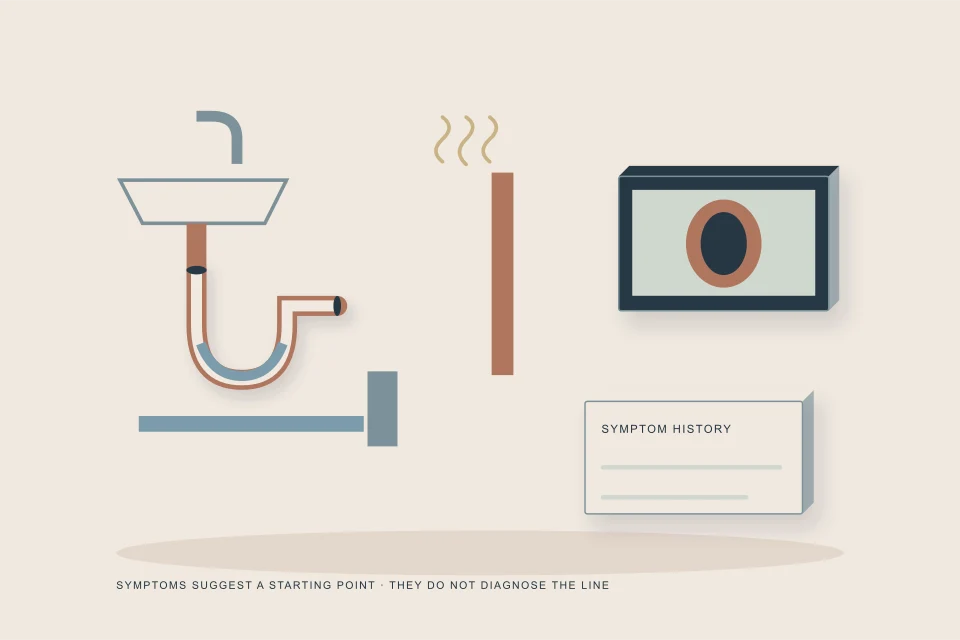
Book the camera first whenever the question is "why" rather than "how do I get water moving right now". A single blocked sink does not need one. A house where the basement floor drain gurgles, several fixtures slow together, or the same clog returns every few months does, because the cause sits somewhere in a pipe nobody can see, and every later decision depends on knowing what that cause is.
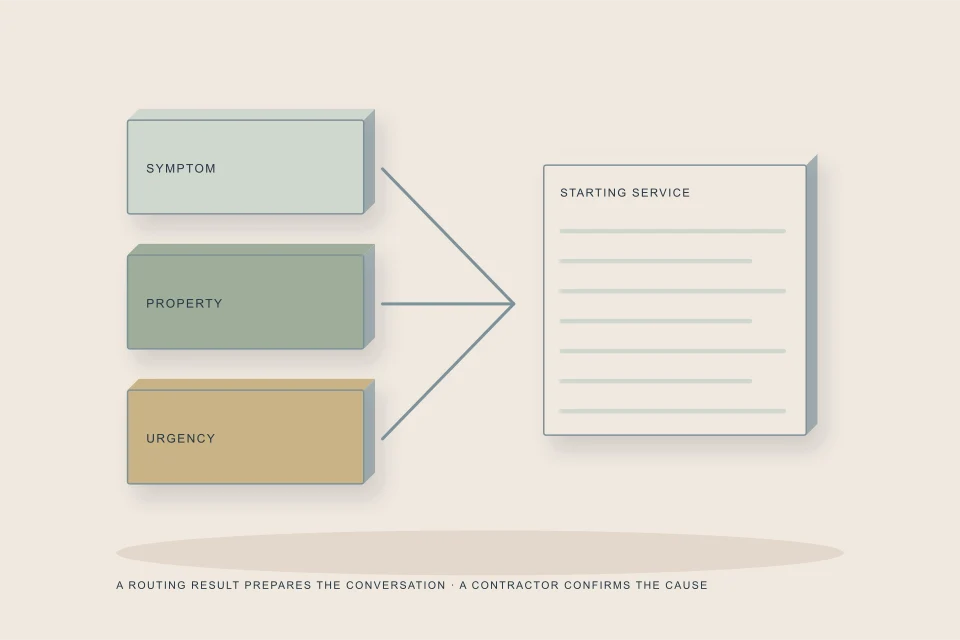
On the Sewers.ca service selector, four of the ten symptoms route through the camera: several slow drains (after the line is cleared), a sewer smell indoors, recurring clogs, and buying a house. Two more, roots and camera-found damage, assume a camera has already been down the line.
| What you notice | Camera first or second? | What the footage answers |
|---|---|---|
| Several slow drains, line still flowing | First, or right after clearing | Is it a one-off blockage or a structural defect? |
| The same clog keeps returning | First | Roots, a sag, grease, an offset joint or a break |
| Sewer smell with traps full of water | First | Open joints, a broken pipe or a venting fault near the drain |
| Buying a house built before about 1990 | First, before your condition deadline | Material, condition and where the private line runs |
| Roots came out on the cable | Second, after cutting | Which joints let them in and whether a liner can seal them |
| Planning an addition, driveway or tree planting | First | Route and depth, so new work avoids the line |
If water is already rising out of a floor drain, the camera is not the first call. Get the line open, then film it. The drain cleaning lane covers that step.
02 /How does a sewer camera inspection actually work?
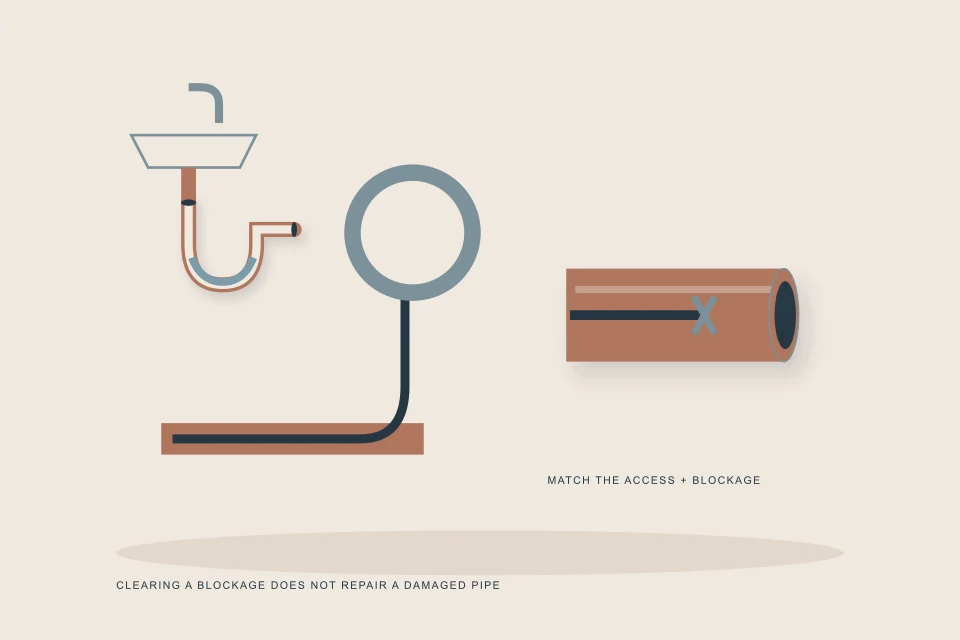
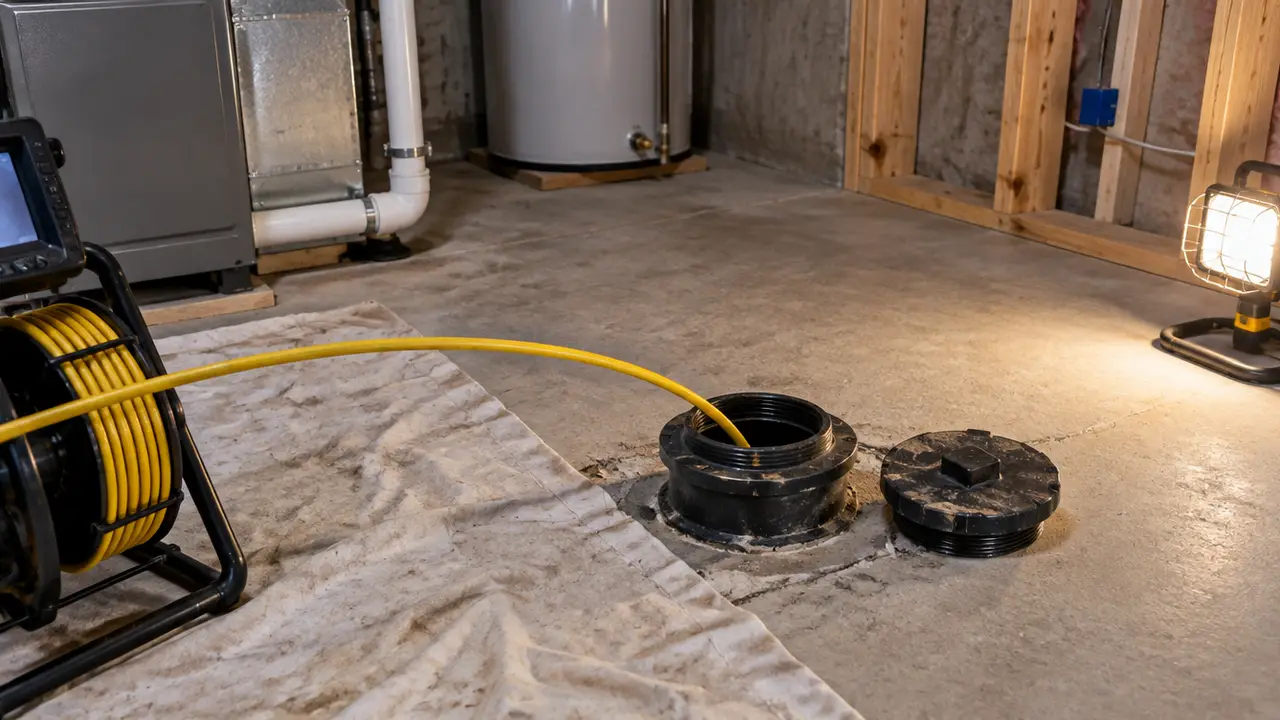
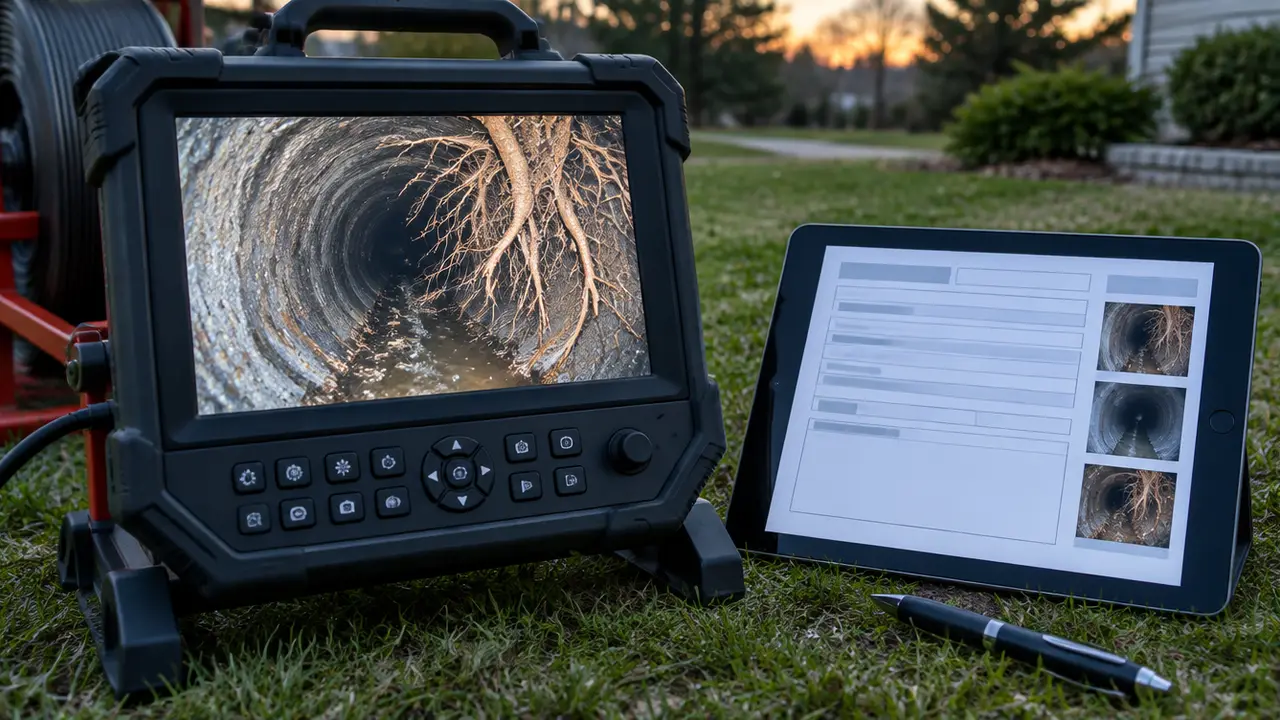
The operator feeds a self-levelling camera head on a semi-rigid push rod into the line, usually through a cleanout near the foundation. A counter on the reel logs distance. When the image shows a defect, the operator switches on a small radio transmitter, called a sonde, in the camera head and walks the yard with a receiver to mark the spot and estimate depth.
- Access
An existing cleanout is ideal. Without one, the operator may pull a toilet or work from the roof vent, which adds time and limits how far the camera travels.
- Run to the main
The camera travels the building drain and the lateral toward the municipal main, recording continuously.
- Mark and measure
Each defect gets a distance from the access point; where a locator is used, the position and approximate depth are painted or flagged.
- Report
A recording, a list of observations with distances, and a note of where the camera stopped and why.
Larger commercial and municipal pipes are usually filmed with a wheeled crawler instead of a push rod, and those crews often code defects using NASSCO's pipeline and lateral assessment programs (PACP and LACP). A home report may be written in plain language instead. Either is useful if the observations are specific and tied to distances.
03 /What should a camera inspection report include?
A report is only as good as the evidence you can hand to the next contractor. Before booking, ask for these items in writing:
- The video file itself, not just screenshots, with the distance counter visible on screen.
- The access point used and the direction of travel, so a second operator can repeat the run.
- Pipe material and diameter at the start, and any change in material along the run.
- Each defect with a distance: roots, cracks, offset or separated joints, sags holding water, deformation, breaks.
- Surface locate and depth for defects that may need digging.
- Where the run ended and whether that is the municipal main, a blockage, a sag full of water or a bend the camera could not pass.
For decoding coded reports, the sister site SewerInspector.ca explains defect codes and severity in depth. If you are buying in Calgary and working against a condition deadline, SewerScope.ca is the network's buyer-focused site.
04 /What can a sewer camera not tell you?
A camera shows the inside surface of the pipe it reaches. It does not show the bedding under the pipe, voids in the soil beside it, or the condition beyond a blockage, a deep sag full of water or a tight bend. It also cannot predict how many more years a pipe will last. A clean, round, well-jointed pipe on video is good news; it is not a warranty.
- Standing water hides the bottom of the pipe. A sag reads as water on the lens, so the extent of a belly is often estimated.
- Grease and scale hide cracks. Heavily coated pipe may need cleaning before an honest assessment is possible.
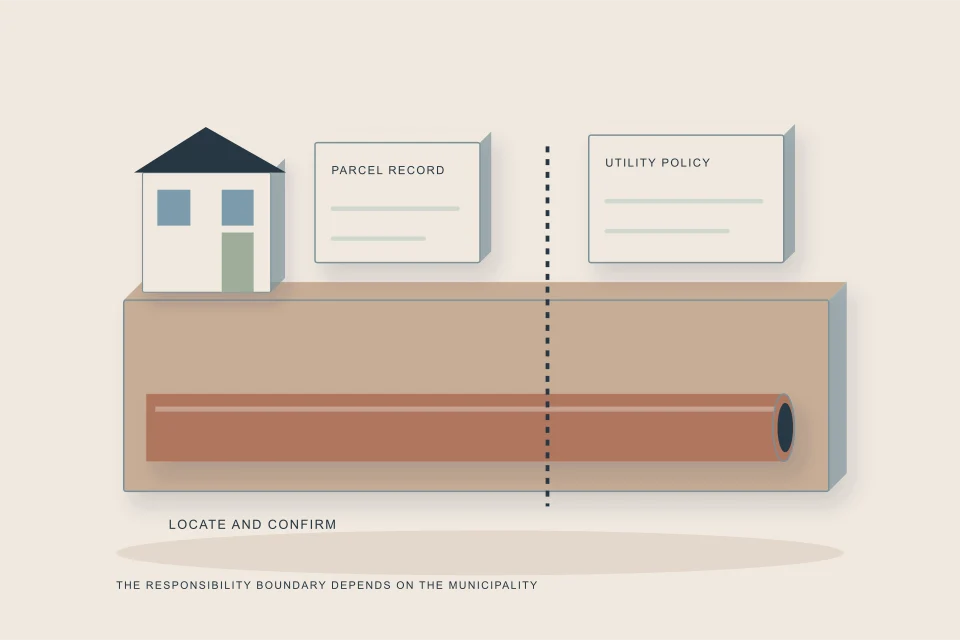
- Municipal ownership is not on the video. Where your responsibility ends is a question for your city; see who owns the sewer line.
- Private lines are not on public locate maps. Utility Safety Partners in Alberta notes that customer-owned sewer service lines are not registered with it, so the camera's sonde is often the only way to trace your own line before digging.
05 /Where does a camera finding send you next?
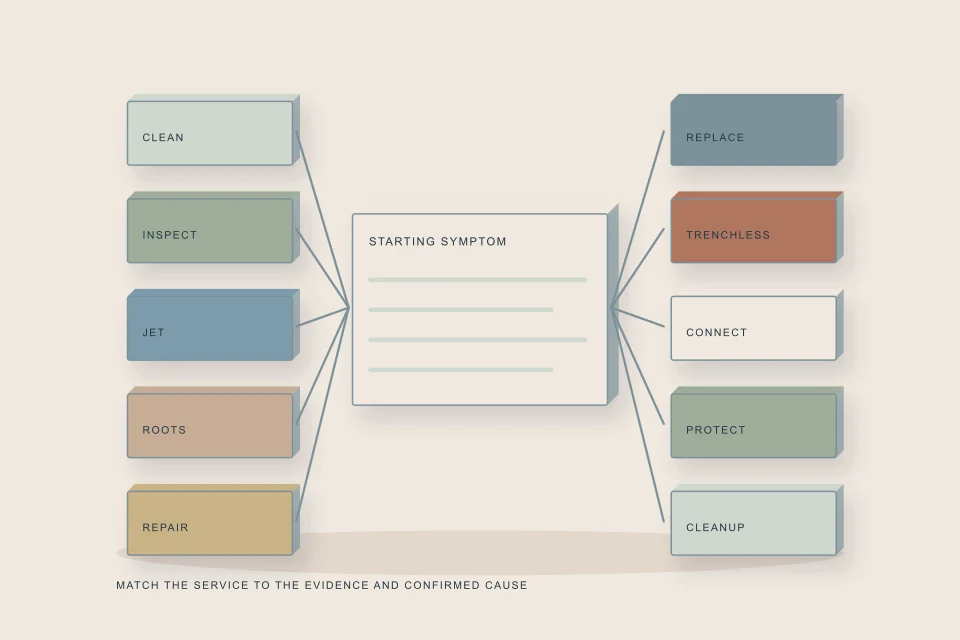
The camera is a routing service. Its findings decide which lane you move into, and a finding in one lane often opens a second.
| Camera finding | Usual next lane | Why |
|---|---|---|
| Grease coating, scale, sludge | Hydro jetting | Water scours deposits a cable only punches through |
| Fine roots at one or two joints | Root removal | Cut now, then plan to seal the joints |
| One cracked or offset section in sound pipe | Sewer repair | A spot repair or sectional liner fixes one location |
| Cracks and open joints along a round pipe on grade | Trenchless repair | A full-length liner seals the whole run |
| Collapse, deformed fibre pipe, deep sag | Sewer replacement | The pipe's shape or slope can no longer be saved |
| Clean, sound pipe | Nothing, or a re-check later | Record the video with your house papers |
If you are unsure which of those lanes fits your footage, the which sewer service do I need guide compares all ten side by side.
06 /How much does a sewer camera inspection cost in Canada?
As a 2026 planning estimate, a standalone residential camera inspection with a locate typically quotes in the $250 to $600 range. Adding a camera to a cleaning visit that is already on site is often cheaper than a separate trip. No cleanout, a long run, or an after-hours visit pushes the number up.
When you have symptoms and a rough idea of the house's age, you can send a request to the HAUSE Sewer desk and ask for an inspection with a recording and locate included.
FAQQuestions people ask
Do I need to be home during a sewer camera inspection?
Usually yes, or someone needs to be. The operator needs access to the cleanout or a toilet, and you will want to watch the screen and ask questions while the camera is in the pipe, which is when defects are easiest to understand.
Should the line be cleaned before the camera goes in?
If the line is blocked or heavily coated, yes, because the camera cannot pass a blockage or see through grease. If the line still drains, filming first shows the problem as it is, which is useful evidence before anything is cut or flushed away.
Can a camera inspection find where my sewer line is buried?
Yes, if the operator uses a sonde in the camera head and a surface receiver. That gives an approximate position and depth along the route, which matters because private service lines are not marked by public utility locate services.
How long does a residential sewer camera inspection take?
Often under an hour on site for a typical house with a usable cleanout. Pulling a toilet, working from the roof, or locating several defects adds time.
Does a home inspection include a sewer camera?
Usually not. Many general home inspections stop at the fixtures and visible piping. Ask the inspector what is included, and book a separate sewer camera inspection if the house is older or has had backups.
Who owns the video from a sewer inspection?
Agree on it before booking. Ask for the full file with the distance counter on screen, delivered to you, so you can share it with other contractors, your insurer or a future buyer.
NETWORKGo deeper across the HAUSE Sewer network
Sewer camera inspection cost, and what the fee should include
Sewer camera inspection cost in Canada for 2026: standalone, pre-purchase and add-on scope prices in CAD, what a proper report includes and when the fee is wasted.
SewerInspector.caShould you scope the sewer before buying a house?
When a sewer scope before buying a house is worth it, which homes need one most, how to fit it inside a condition period, and what to do with the result.
SewerRoots.caWhose tree, whose pipe: who pays when roots block a sewer line
Who is responsible when a city or neighbour's tree sends roots into your sewer line: the general Canadian pattern, the evidence, and how to raise it.