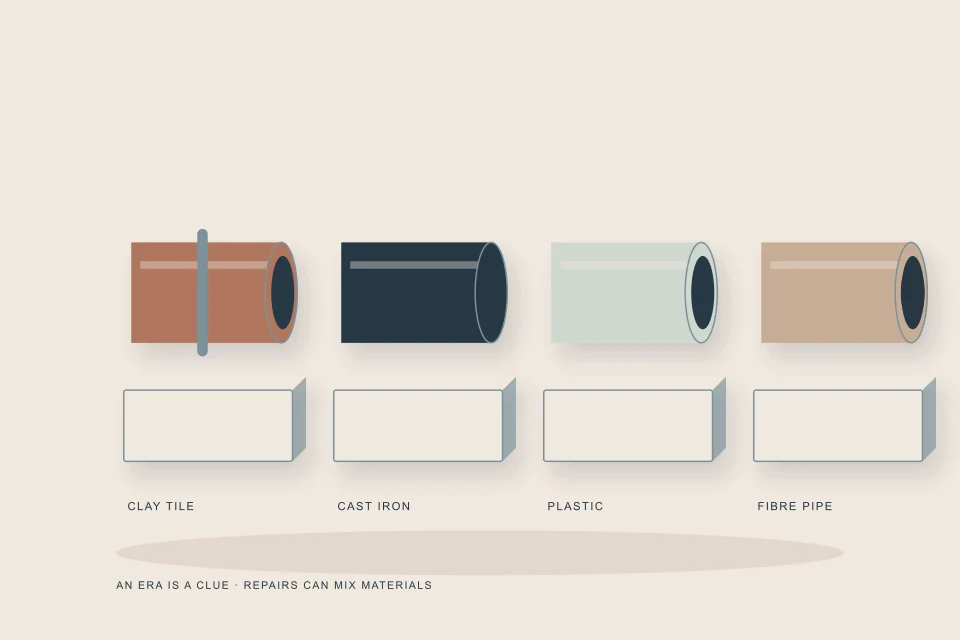
The age of a house is the best first clue to its sewer pipe. Older Canadian homes commonly have vitrified clay or cast-iron laterals, some mid-century homes have bituminous fibre (Orangeburg) pipe, and plastic PVC and ABS became standard from roughly the 1970s onward. Each fails differently, so the material points to the likely problem and the right service, but only a camera confirms it.
- Clay fails at the joints (roots, offsets); cast iron fails from the inside (scale, corrosion); fibre pipe deforms; plastic mostly fails from poor installation.
- Calgary's open data shows the public portion of services installed from 1990 on is overwhelmingly PVC, while 1950s and 1960s services are recorded mainly in older-material codes.
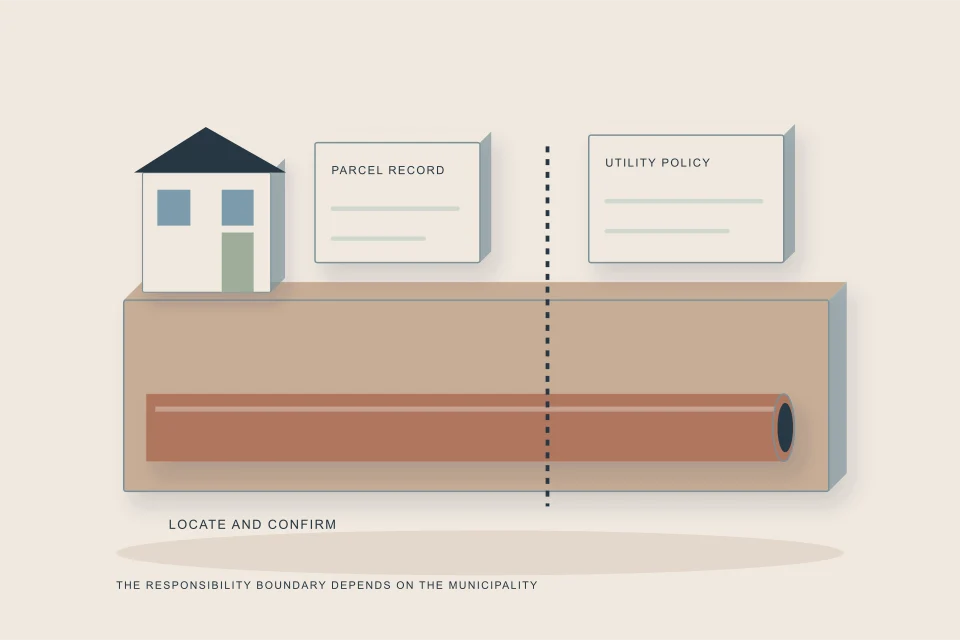
- The private portion can differ from the public portion, so a street's records are a clue, not an answer.
- Repairs and additions mean one line can contain several materials, with transitions that are themselves weak points.
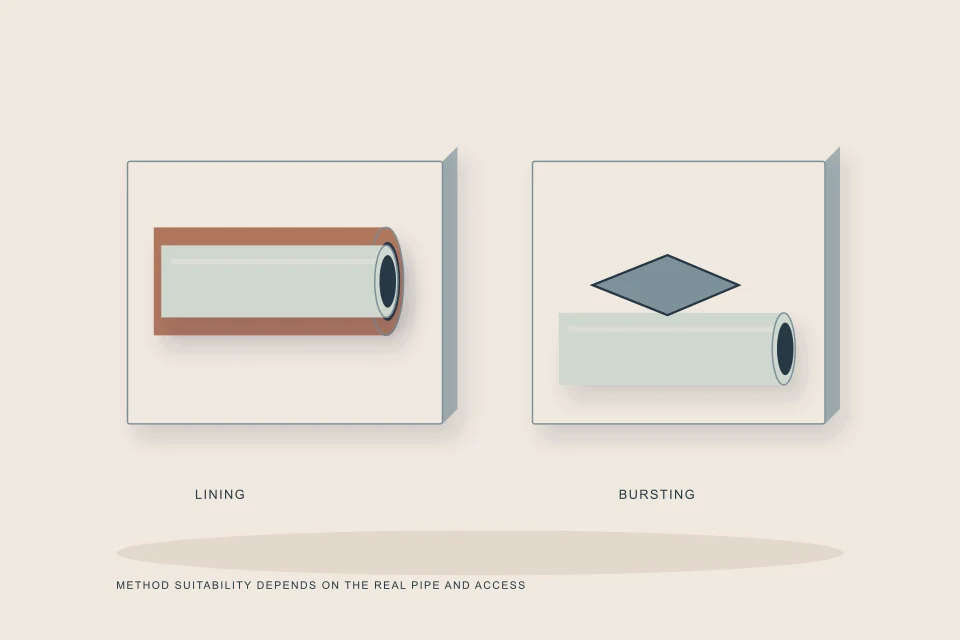
- Material affects the method: fibre pipe usually rules out aggressive cleaning and lining, and brittle pipe changes how it can be burst or cut.
01 /Which sewer pipe materials are found in Canadian homes?
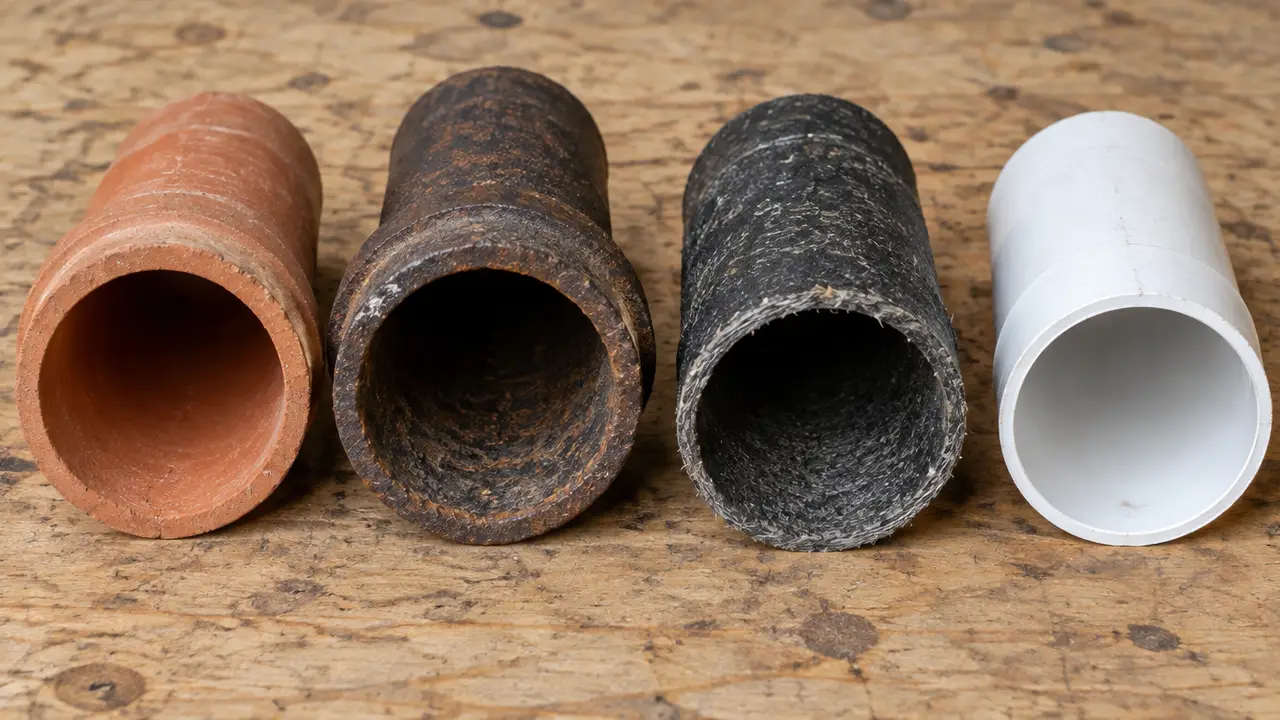
Six materials account for nearly all residential sewer laterals and building drains in Canada. Their dates overlap widely because practice varied by city, builder and supply, so treat the eras below as tendencies to be confirmed on camera.
| Material | Tends to appear in | Typical failure | Service lane it points to |
|---|---|---|---|
| Vitrified clay | Older homes, often pre-1970s | Root intrusion and offsets at frequent joints; cracks | Root removal, lining |
| Cast iron | Older homes, building drains and stacks | Internal scale, corrosion, thin walls, cracks | Jetting or descaling, lining, replacement |
| Bituminous fibre (Orangeburg) | Some mid-century homes | Deforms into an oval, blisters, collapses | Replacement |
| Asbestos-cement or concrete | Some mid-century services and mains | Joint problems, surface deterioration | Assessment before any cutting |
| ABS plastic | Building drains from roughly the 1970s | Joint and fitting failures, rarely the pipe | Repair of the failed section |
| PVC plastic | Laterals from roughly the 1970s; standard today | Sags and offsets from poor bedding | Camera, then repair |
02 /What does Calgary's open data show about pipe materials by age?
Calgary publishes the public portion of each sanitary service line, with a material code and install date. As queried in September 2026, the pattern by era is striking. The dataset does not define its material codes; CI is conventionally cast iron, and TIL and TP are commonly read as clay tile and tar-paper (bituminous fibre) pipe, but treat those readings as unconfirmed.
| Installed | Leading codes recorded | Approximate counts |
|---|---|---|
| Before 1950 | Mostly "OTHER" | About 7,500 of about 7,600 |
| 1950–1969 | TIL, OTHER, CI, TP | About 29,200 TIL; 9,400 OTHER; 7,900 CI; 7,600 TP |
| 1970–1989 | TIL and PVC in similar numbers, then CI | About 44,900 TIL; 41,100 PVC; 4,300 CI |
| 1990 onward | PVC, with some CIPP-lined services | About 202,800 PVC; 4,000 CIPP |
Across all eras, about two-thirds of Calgary's roughly 367,000 active public-side services are recorded as PVC. The City adds an important caution: the private portion may be a different material installed at a different time. A 1960s house could have a City-side service that has since been lined and a private lateral that is still original, or the reverse.
03 /How does each material fail, and what should you watch for?
Knowing the failure mode tells you what to look for in footage and which symptoms to take seriously.
- Vitrified clay is hard and chemically resistant but brittle, and its short lengths mean many joints. Roots find those joints, and ground movement pushes them out of line. Watch for recurring root clogs and offsets that catch paper.
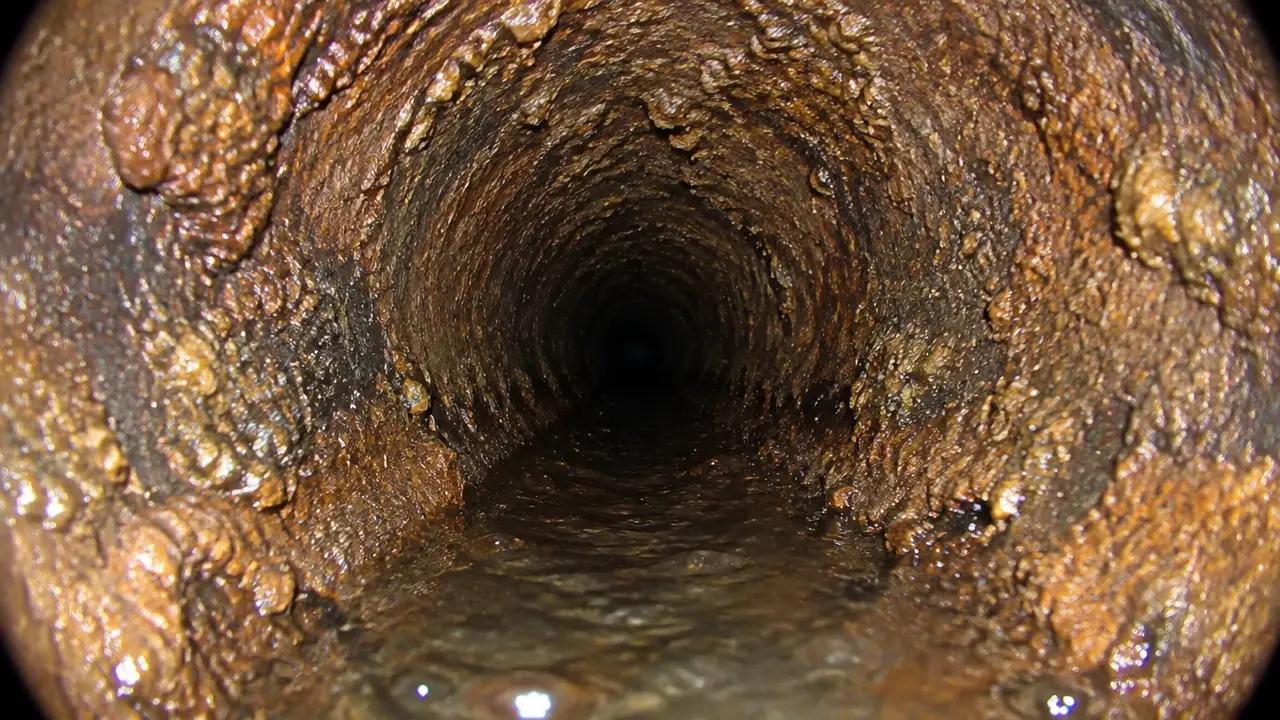
- Cast iron corrodes from the inside, building a rough scale that narrows the bore and snags debris. The wall thins over decades until cracks or holes appear, often along the bottom. Watch for slow drainage that returns after cleaning.
- Bituminous fibre pipe was made from wood fibre and pitch. It softens and deforms under soil load, and it is generally unsuited to aggressive cleaning or lining. A camera showing an oval or blistered pipe usually means replacement.
- Asbestos-cement pipe is usually stable when left undisturbed. Health Canada notes that asbestos materials in good condition and left undisturbed pose no significant risk; the concern is cutting, breaking or bursting it, which is work for trained contractors.
- ABS and PVC resist roots and corrosion well. Their weak point is installation: poor bedding lets sections sag or joints separate.
04 /Why does one sewer line often contain several materials?
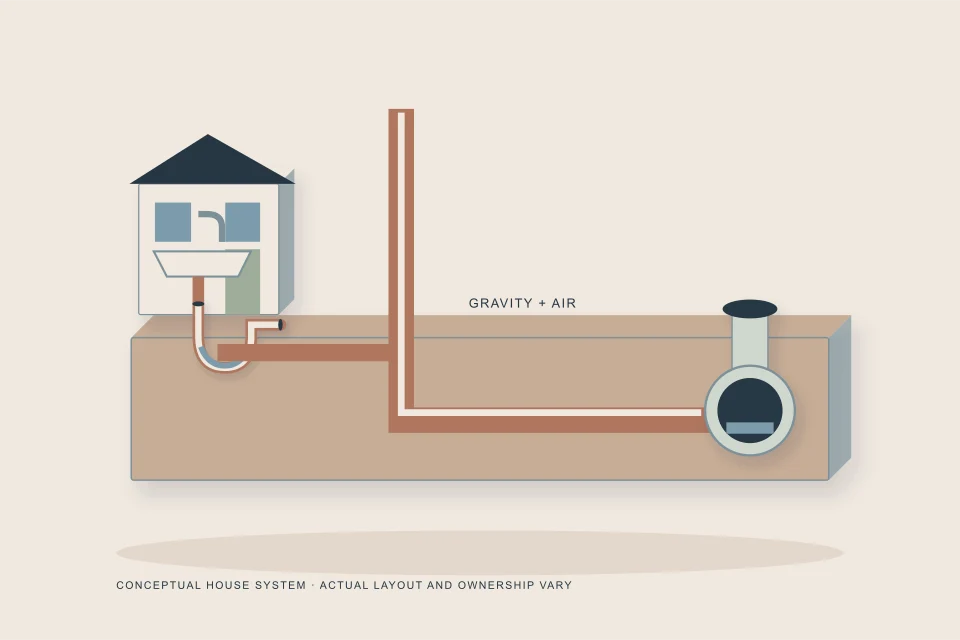
Because lines are rarely replaced all at once. A cast-iron building drain under the basement floor may connect to a clay lateral outside, which was spot-repaired in PVC at some point, and the city may have lined its own portion. Each change of material is a joint that needs the right coupling, and badly made transitions are a common camera finding.
This is one reason a camera inspection report should record where the material changes along the run, not just the material at the start.
05 /How does pipe material change the repair method?
| Material | Lining | Bursting | Aggressive cleaning |
|---|---|---|---|
| Clay, round and on grade | Often good | Often good | Usually fine if not broken |
| Cast iron, still round | Often good after descaling | Possible | With care on thin walls |
| Bituminous fibre, deformed | Poor | Often a fit | Avoid |
| Asbestos-cement | Possible | Specialist handling | With care |
| PVC with a sag | Poor for the sag | Limited | Fine |
For method detail, see trenchless repair and hydro jetting. The network's PipeCleaning.ca covers cleaning methods material by material, and SewerReplacement.ca covers replacing each old material.
06 /Does the sewer pipe material matter when buying or selling a house?
It often does, because the material shapes a buyer's view of the risk. A PVC lateral from a recent replacement, with a permit and a finished-line video, answers the question before it is asked. An original clay or cast-iron line in an older house invites a condition on the offer and a camera inspection.
For sellers, a recent camera video and any repair records reduce uncertainty. For buyers, the material is a starting point; the footage decides. Insurers and lenders may also ask about the age and material of plumbing, so keep the records together. The camera inspection lane covers what a pre-purchase inspection should deliver.
07 /How can you find out what your sewer pipe is made of?
- Look at the stack
Visible pipe in the basement shows the building drain's material, often cast iron or ABS.
- Check city records
Some cities publish public-side service data; Calgary's open data includes material and install date by address.
- Ask for permit history
A past sewer permit may name the material used in a repair or replacement.
- Camera the lateral
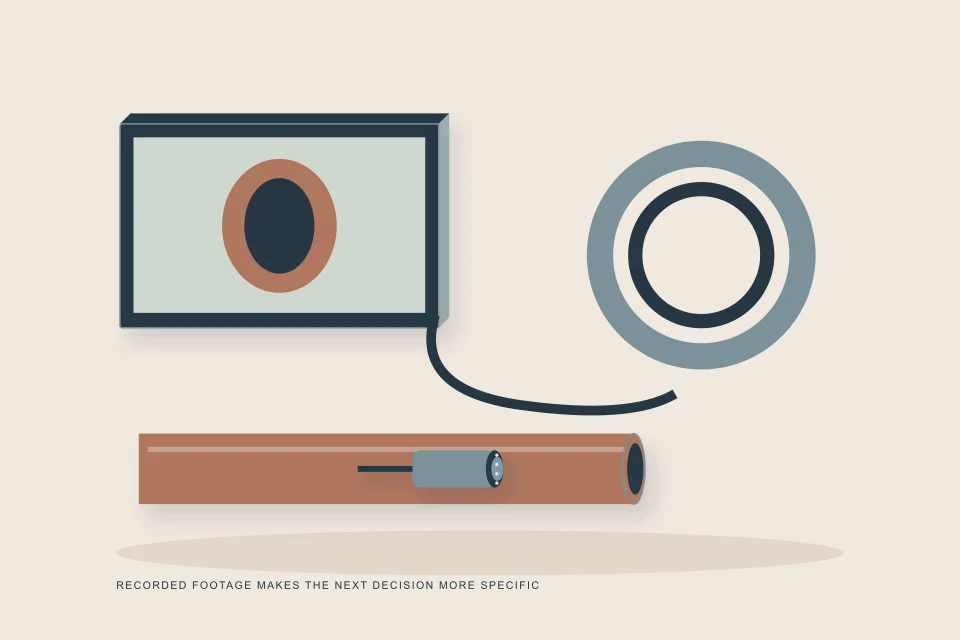
The only reliable answer for the private portion, including any transitions along the run.
If you are buying, a pre-purchase camera run answers this before your condition deadline; the service selector routes "buying a house" straight to it. Once you know the material, the sewer line warning signs guide helps you read symptoms in that light.
FAQQuestions people ask
What sewer pipe material did homes built in the 1950s and 1960s use?
Commonly vitrified clay or cast iron for laterals, with bituminous fibre (Orangeburg) and asbestos-cement in some places. Calgary's public-side records for services installed in those decades are dominated by older-material codes rather than PVC. A camera confirms what your own line is.
When did PVC become standard for sewer lines in Canada?
Plastic pipe spread through the 1970s and 1980s and is standard for new laterals today. Calgary's open data shows PVC and older-material codes in similar numbers for public-side services installed from 1970 to 1989, and PVC overwhelmingly after 1990.
Is Orangeburg pipe common in Canada?
It was used in some mid-century homes, and some Canadian city records include codes that may correspond to it. It is far less durable than clay or plastic and tends to deform, so a camera finding of fibre pipe usually leads to replacement.
Is asbestos-cement sewer pipe dangerous?
Health Canada says asbestos materials in good condition and left undisturbed pose no significant health risk. The risk comes from cutting, breaking or grinding the pipe, which should be left to trained contractors.
Does cast iron sewer pipe need to be replaced?
Not automatically. Cast iron that is still round with moderate scale can often be descaled and lined. Thin walls, holes along the bottom or cracks along the length push the decision toward replacement.
NETWORKGo deeper across the HAUSE Sewer network
Sewer pipe materials by construction era, and what each looks like on camera
Sewer pipe materials by era in Canadian homes: clay, cast iron, Orangeburg, concrete, ABS and PVC, how each one fails and what it looks like on camera.
PipeCleaning.caWhat pipe do I have? Identify your drain pipe material
What pipe do I have? Identify a drain pipe from its look, joints, markings and house age, with a confidence rating, safe cleaning methods and camera advice.
SewerJetting.caJet or auger? A decision tool for your blocked line
Jet or auger decision tool: enter blockage type, pipe material, camera findings, pipe size and access to see whether to jet, auger or camera first.