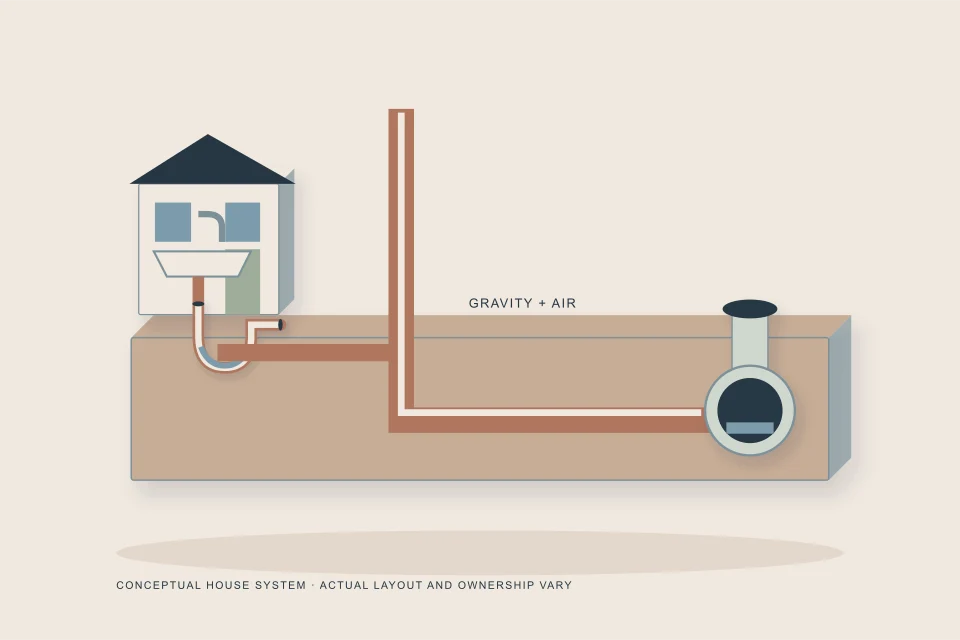
A home sewer system is a gravity network. Each fixture drains through a water-filled trap that blocks sewer gas, into branch drains that slope toward a vertical stack, down to the building drain under the basement floor, out through the foundation as the lateral, and into the municipal sanitary main. Vent pipes to the roof let air in so water flows freely and traps are not siphoned dry.
- Water comes in under pressure; wastewater leaves by gravity, which is why slope and venting matter so much.
- Every trap holds a water seal against sewer gas, and an unused floor drain can dry out and let gas in.
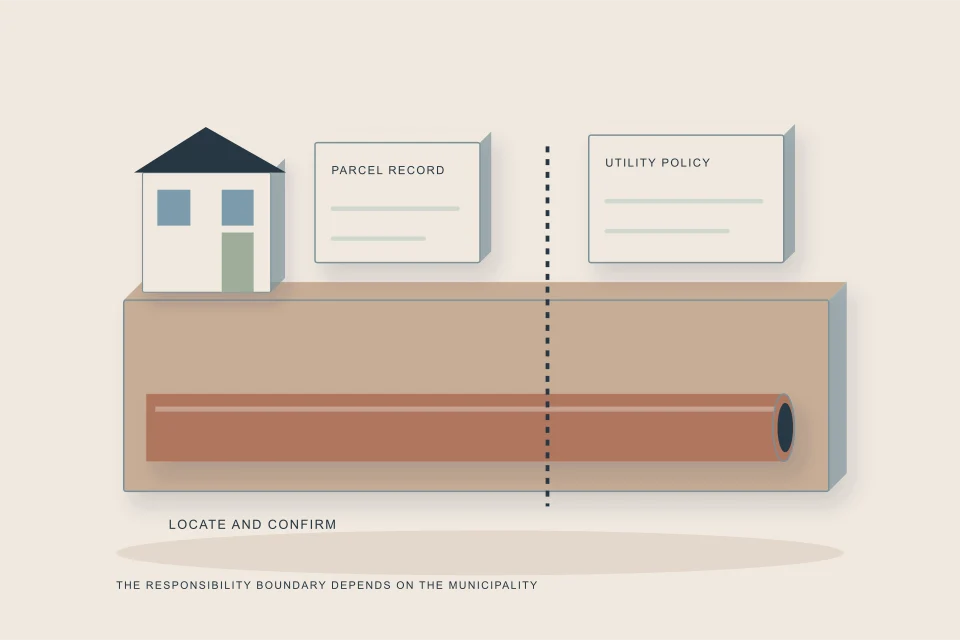
- The lateral is usually the owner's pipe to the property line; in Calgary most public-side services are 100 mm pipe.
- Sanitary sewers carry household wastewater; storm systems carry rain; older areas may have combined sewers.
- Knowing which part is which tells you which service lane you need when something goes wrong.
01 /What are the parts of a home sewer system?
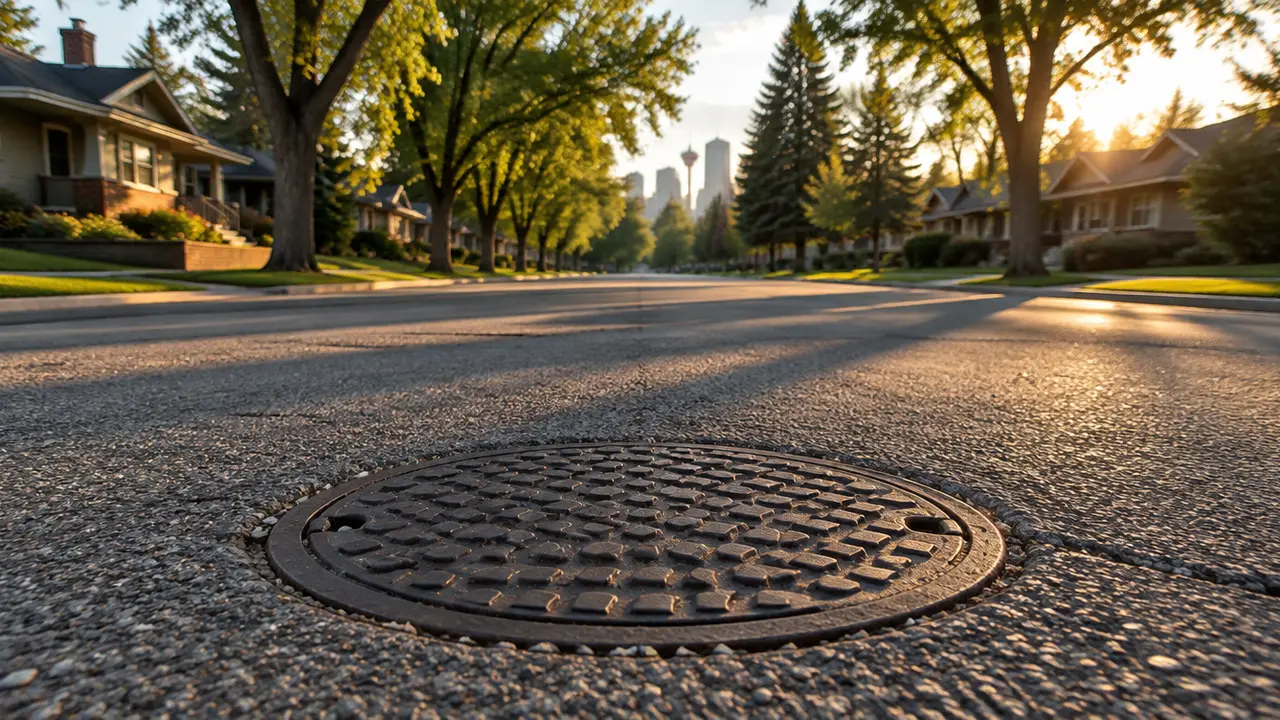
A house has two separate plumbing systems. Supply pipes bring water in under pressure from the municipal main or a well. The drain-waste-vent system, usually shortened to DWV, takes used water out by gravity. Everything on this site concerns the second one, from the drain under your sink to the municipal sanitary main under the street or lane.
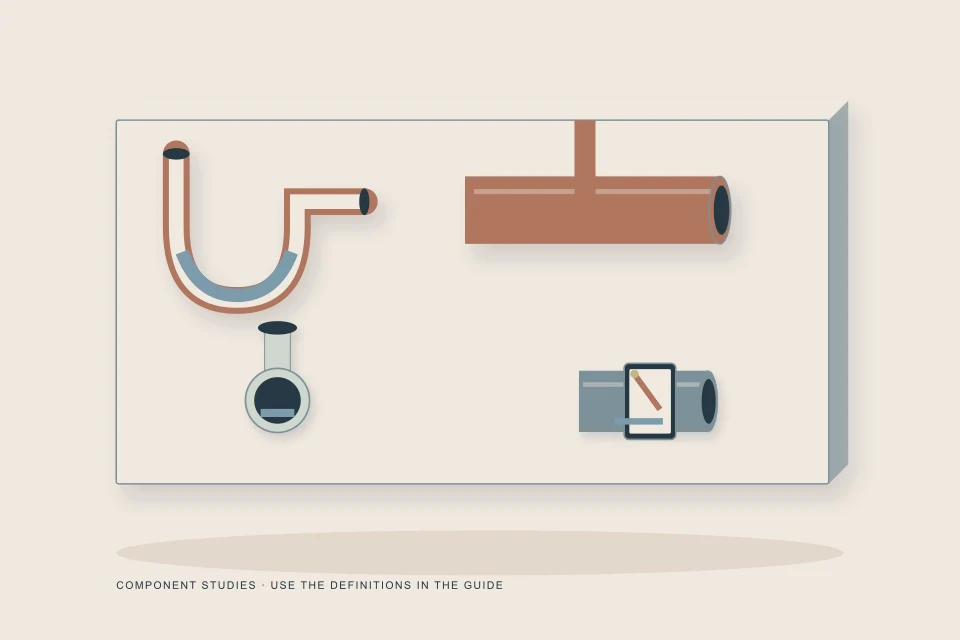
| Part | What it does | Typical problem |
|---|---|---|
| Fixture and trap | U-shaped bend holds water to block sewer gas | Hair, grease, dried-out seal |
| Branch drain | Carries one fixture group to the stack | Local clogs |
| Stack | Vertical pipe collecting branches; extends up as the vent | Debris, vent blockages |
| Building drain | Horizontal pipe under the basement floor | Main-line clogs, belly under slab |
| Cleanout | Capped access fitting for cleaning and cameras | Missing, buried or seized |
| Backwater valve (if fitted) | One-way flap against backflow from the main | Debris holding it open |
| Lateral (building sewer) | Pipe from the foundation to the main | Roots, offsets, sags, collapse |
| Municipal main | Public pipe collecting many laterals | Surcharge during storms |
02 /Why do drains need traps and vents?
Traps keep sewer gas out; vents keep traps working. Each trap holds a small plug of water that gas cannot pass. When a large volume of water rushes down a drain, it can pull air behind it and siphon a trap empty. Vent pipes, which rise through the roof, supply air to the system so the water can move without sucking traps dry.
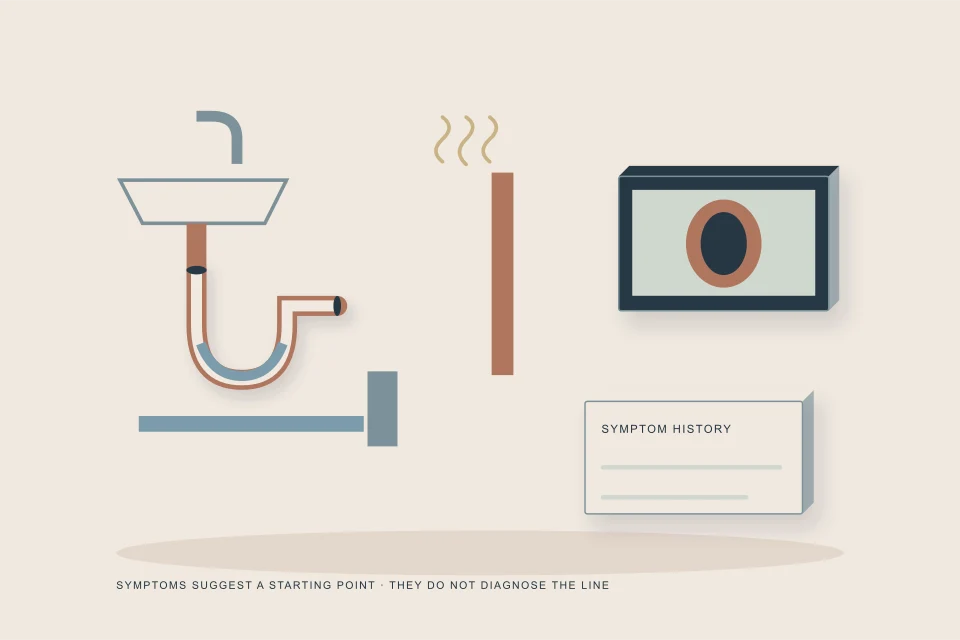
Sewer gas matters because it contains hydrogen sulphide. CCOHS describes its rotten-egg odour and notes it can dull the sense of smell, and it is flammable. Most indoor sewer smells, though, have simple causes:
- A dry floor drain or unused shower. Pour water into it every few weeks; the seal evaporates otherwise.
- A failed toilet wax ring. Look for rocking or staining at the base.
- A blocked or disconnected vent. Gurgling fixtures and slow drainage often accompany it.
- A cracked drain or open joint. This is where a camera inspection comes in.
03 /How does wastewater get from the house to the city sewer?
By gravity, down a continuous slope. The plumbing code sets minimum slopes for drainage pipe; for pipe of three inches or less, the National Plumbing Code of Canada calls for at least 1 in 50. A lateral that sags, settles or was laid flat lets solids settle and eventually block.
Where the building drain leaves the foundation, it becomes the building sewer or lateral. In Calgary, the City's open data shows almost every single-family public-side service is 100 mm pipe, and the public portion averages about 8 m long. The private portion from the property line to the house varies with lot depth and setback.
Where the main is too shallow for a basement to drain by gravity, a sewage ejector pump lifts wastewater from the lowest fixtures up to the building drain. Pumps need power, alarms and maintenance, and they are a different failure point from the gravity line.
04 /What is the difference between sanitary, storm and combined sewers?
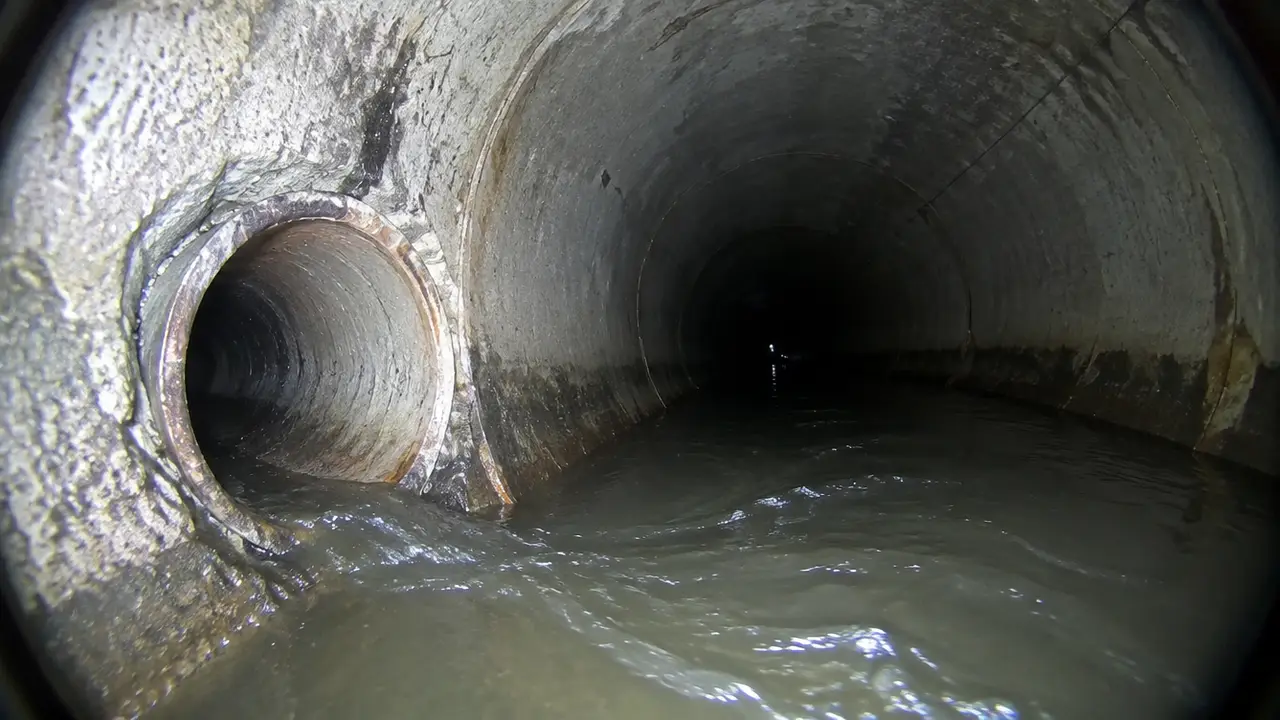
Sanitary sewers carry wastewater from toilets, sinks, showers and appliances to treatment. Storm sewers carry rain and snowmelt from streets and roofs, usually to a river or pond without treatment. Combined sewers, found in older parts of some cities, carry both in one pipe, which is why heavy rain can overload them and push water back up laterals.
Foundation drainage (weeping tile) is its own subsystem. In many newer homes it drains to a sump pit and pump that discharges outside. Calgary notes that maintaining a sump pump is the homeowner's responsibility, and the Insurance Bureau of Canada recommends disconnecting downspouts that feed sanitary or combined sewers.
05 /Which parts of the system cause the most trouble?
Problems cluster at transitions and at the ends of the system: the trap, where debris first collects; the building drain, where every fixture's waste meets; and the lateral, where roots, ground movement and age act on the pipe. Each maps to a service lane.
| Location | Common cause | Service lane |
|---|---|---|
| One fixture's trap or branch | Hair, soap, grease, objects | Drain cleaning |
| Building drain or lateral | Wipes, grease, roots, offsets | Cleaning, then camera |
| Lateral joints | Roots | Root removal, then sealing |
| Lateral grade | Sag from settled bedding | Sewer replacement of that section |
| Connection to a surcharging main | Storm overload | Backwater valve |
What goes into the system matters as much as the pipe. Calgary's rule for toilets is only pee, poo and toilet paper, and it notes that fats, oils and grease harden on sewer walls and that products labelled flushable can still clog pipes.
06 /How do you find the parts of your own system?
- Find the stack
The largest vertical pipe in the basement, usually cast iron in older homes and ABS or PVC in newer ones.
- Find the cleanout
A capped fitting near the base of the stack, beside the floor drain, or outside near the foundation.
- Look for a backwater valve
An access cover in the basement floor near where the main drain leaves the house.
- Trace the lateral's direction
Note which wall the building drain exits; the lateral usually heads toward the street or lane from there.
- Record it
Photos with notes save time for every future contractor.
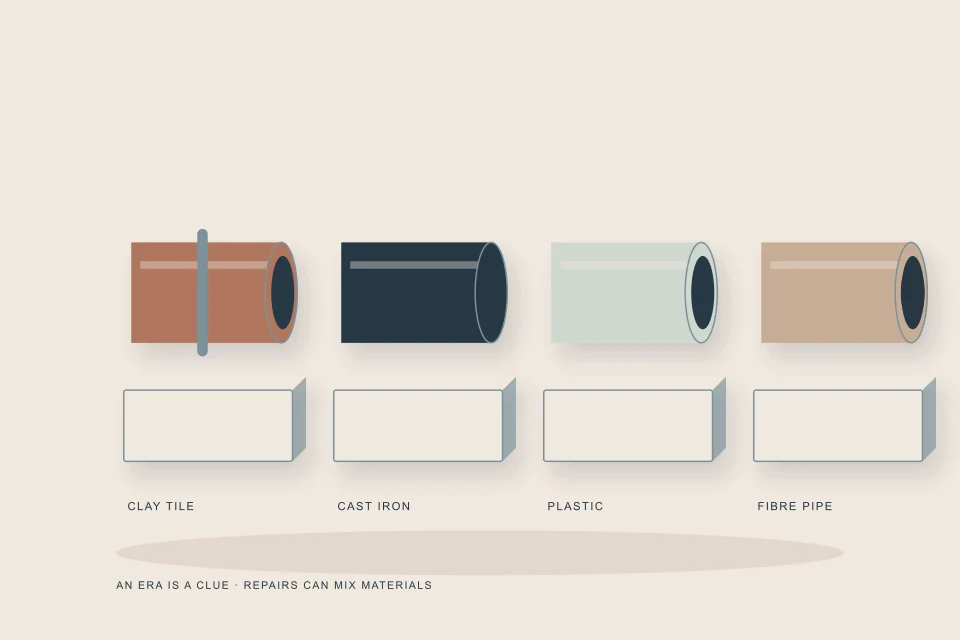
Knowing the materials helps too. The sewer pipe materials by era guide shows what a house of a given age likely has, and who owns the sewer line explains where your part ends. If something is already wrong, the service selector routes the symptom to a service.
FAQQuestions people ask
What is the difference between a drain and a sewer?
In a house, drains carry wastewater from fixtures to the building drain. The sewer, or lateral, is the pipe that carries everything from the building to the municipal main. The municipal main is the public sewer.
Why does my floor drain smell like sewage?
Most often because its trap has dried out and no longer blocks sewer gas. Pour a few litres of water into it. If the smell continues with the trap full, check for a failed toilet seal or vent problem, then consider a camera inspection.
Where is the main sewer cleanout in a house?
Usually near the base of the main stack in the basement, near the floor drain, or outside close to the foundation. Some older homes have no usable cleanout, which makes cleaning and inspection harder and is worth fixing.
How big is the sewer pipe from a house to the street?
For most single-family homes it is 100 mm, or four inches. Calgary's open data shows almost all single-family public-side services at 100 mm. Larger and multi-unit buildings use larger pipe.
What does a plumbing vent do?
It lets air into the drainage system so water flows smoothly and traps are not siphoned dry, and it carries sewer gas up and out through the roof. Blocked vents can cause gurgling, slow drains and smells.
Does a house need a cleanout on the sewer line?
Plumbing codes require cleanouts in drainage systems, and a usable one near the foundation makes every future cleaning and camera run faster and cheaper. Many older homes have one that is buried, seized or missing, which is worth fixing during any sewer work.
What is a house trap on a sewer line?
Some older homes have a trap on the building drain itself, near where it leaves the house, intended to block gas from the municipal sewer. These fittings can collect debris and cause blockages, so contractors often point them out during a camera inspection.
NETWORKGo deeper across the HAUSE Sewer network
What causes sewer backup, and how to tell which cause is yours
What causes sewer backup: roots, grease, wipes, sags, broken pipe, frozen lines and rain-overloaded city sewers, plus how to tell which one caused yours.
SewerInspector.caSewer scope inspections in Edmonton: what to expect and who to call
Sewer scope and sewer line inspection in Edmonton: what mature and newer neighbourhoods show on camera, cold and clay soils, elms, EPCOR and 311 checks.
PipeCleaning.caHow to clean the pipes under a kitchen or bathroom sink
How to clean the pipes under a sink: remove and scrub the P-trap, clear the trap arm, fix a slow bathroom stopper, and reassemble without leaks, step by step.