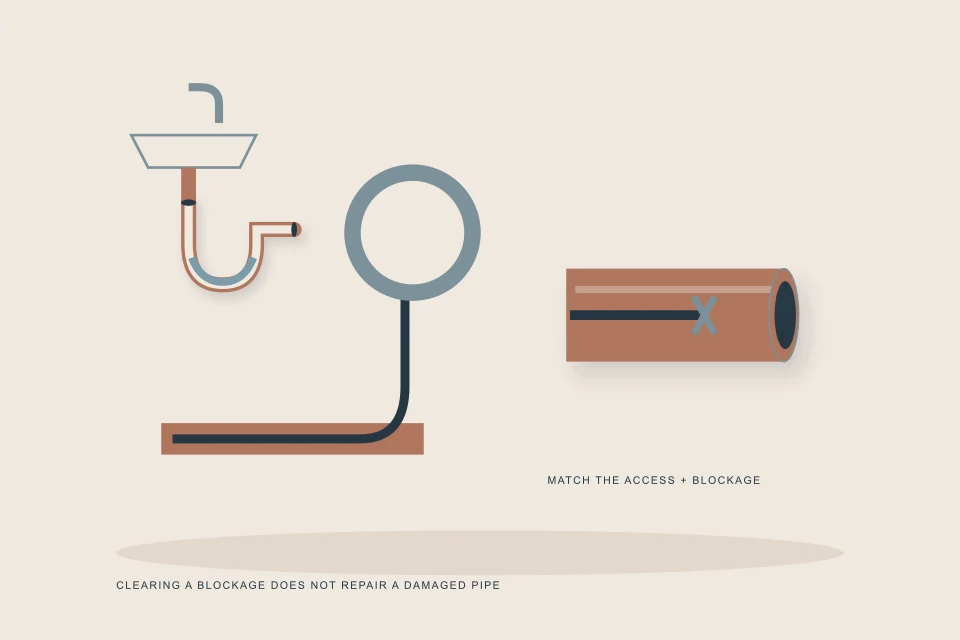
Drain cleaning opens a blocked pipe, usually by feeding a motor-driven steel cable with a cutting head through a cleanout until it breaks up or retrieves the obstruction. It is the right first call when one fixture or the whole house has stopped draining. It restores flow; it does not repair cracked, sagging or root-damaged pipe, which is why a clog that returns needs a camera next.
- One slow fixture is a branch problem; several fixtures slow together, or a floor drain rising, points to the main line.
- Main line cleaning is the emergency lane of the sewer network, and the only one that should come before a camera when water is backing up.
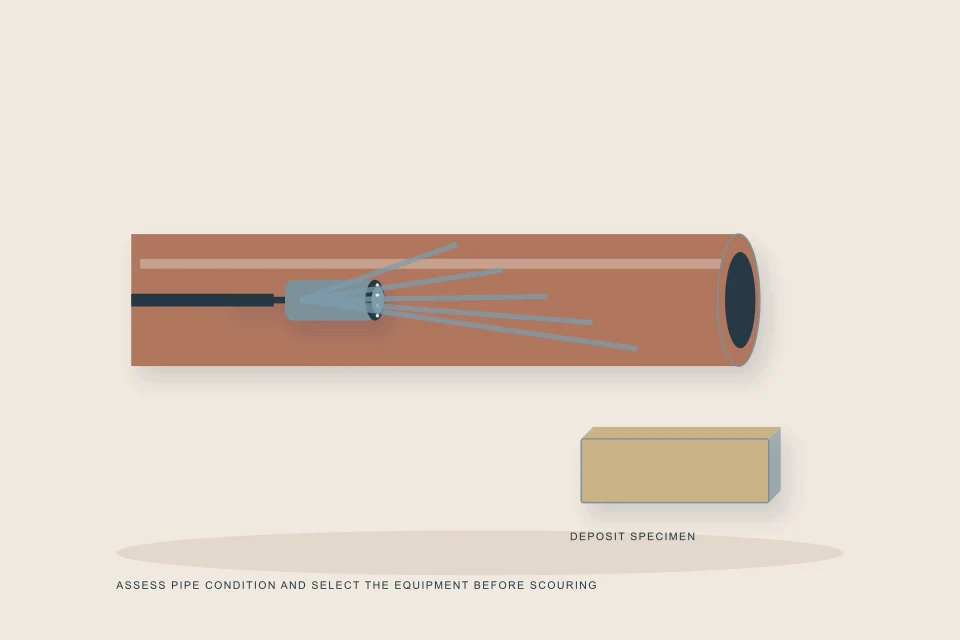
- A cable punches a hole through a blockage; it does not scour grease or scale off the pipe wall.
- If the same clog returns within months, the cleaning worked and the pipe did not; book a camera to find out why.
- Chemical drain openers do not belong in a main line and put the person who opens it next at risk.
01 /Is it a fixture clog or a main line clog?
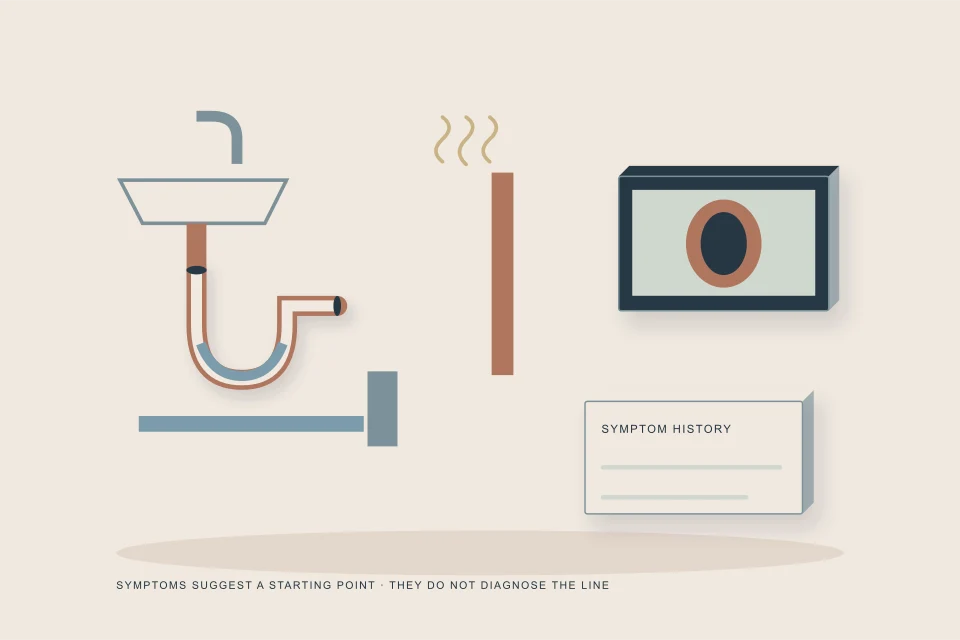
Which fixtures are affected tells you which pipe is blocked, and that decides whether this is a small job or an urgent one. A kitchen sink that drains slowly while every bathroom works is a clog in that sink's trap or branch. A basement floor drain that gurgles when an upstairs toilet flushes means the shared main below everything is restricted, and continued water use will push sewage out of the lowest opening in the house.
| Pattern | Likely location | Urgency |
|---|---|---|
| One sink, tub or toilet slow | That fixture's trap or branch | Inconvenient; often a small job |
| One bathroom slow, rest of house fine | That bathroom's branch | Soon |
| Fixtures on several floors slow together | Main line (building drain or lateral) | Same week; limit water use |
| Floor drain gurgles or rises when upstairs fixtures run | Main line | Stop using water now |
| Sewage at the floor drain or cleanout cap | Main line, or a surcharged municipal sewer | Stop using water; call now |
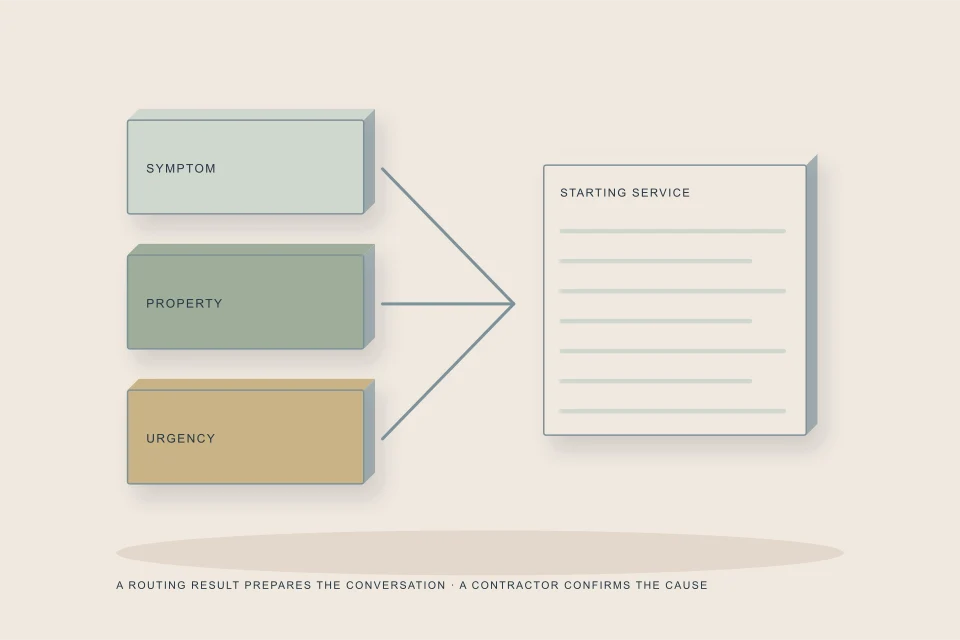
The service selector sends "one fixture drains slowly" straight to cleaning alone, and sends "several drains are slow at once" to cleaning followed by a camera inspection. The difference is deliberate: one slow sink rarely tells you anything about the sewer, while a whole-house slowdown usually does.
02 /How does a contractor clean a main sewer line?
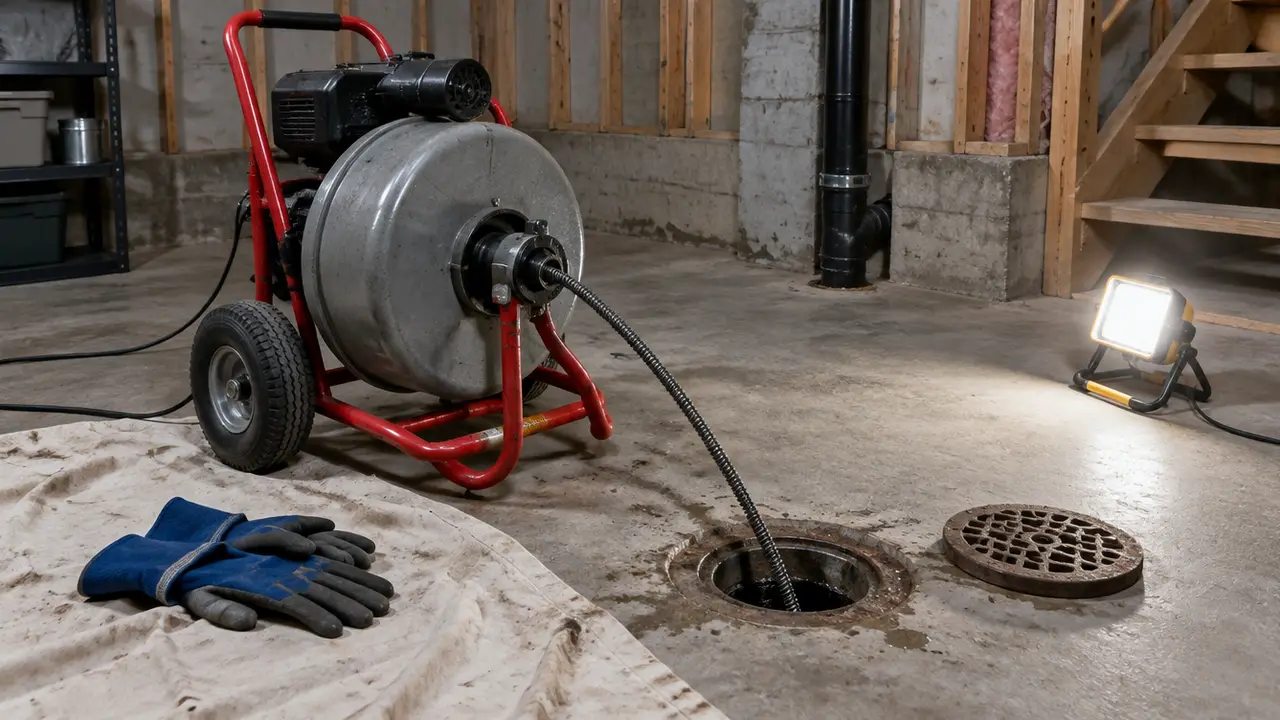
Most residential main line calls start with a drum or sectional cable machine. The operator opens a cleanout, feeds the rotating cable toward the blockage, and chooses a head for the job: a spear or bulb head to open a hole, a spade or cutter to widen it, a root saw where roots are suspected. When the water drops, the line is flushed and the operator runs fixtures to confirm flow.
- Find the access
An exterior or basement cleanout is best. City crews in Calgary ask owners to locate the cleanout or stack before they arrive, and a private contractor will ask the same.
- Open carefully
On a backed-up line, the cap holds back sewage. An experienced operator relieves it slowly or opens a lower access point.
- Cable to the blockage
The counter on the cable shows roughly how far out the obstruction sits, which is useful information for later.
- Retrieve and flush
What comes back on the head is evidence: roots, wipes, grease, sand or pipe fragments each point to a different cause.
- Confirm and record
Running several fixtures at once tests the result. A camera run now shows why the line blocked.
Where the blockage is soft grease or sludge along a long run, a contractor may switch to hydro jetting, which scours the whole wall instead of opening one channel.
03 /What does drain cleaning not fix?
Cleaning treats the contents of the pipe, not the pipe. If the blockage formed because of a defect, the defect is still there when the truck leaves. The debris on the cable head is often the first clue.
A line that drains again after cleaning can still hide a partial restriction or a structural defect. The fix for a recurring clog is a camera and then the right repair lane, whether that is root removal, a spot repair or replacement.
04 /Should you try to clear a main line yourself?
Clearing a single fixture with a plunger or a hand auger is reasonable for most homeowners. Opening a backed-up main is different: the cleanout may release a column of sewage, rental machines carry real injury risk, and the person using them usually cannot tell a soft clog from a broken pipe.
Chemical drain openers are a poor choice at any scale on a main line. Health Canada lists drain cleaners among household products that can cause burns and poisonings, and warns never to mix household chemicals. A line full of caustic water is also a hazard to whoever opens it next, so always tell the contractor what has already been poured in.
For hands-on detail on cable machines, heads and technique, the sister sites DrainAugering.ca and SewerCleaners.ca go deeper than this hub. PipeCleaning.ca covers how cleaning methods change with pipe material.
05 /What should you have ready before the contractor arrives?
A few minutes of preparation shortens the visit and improves the diagnosis. The operator's first questions are always the same: where is the access, what has happened, and what has already been tried.
- Find the cleanout. Look near where the main drain leaves the basement wall, beside the floor drain, or outside near the foundation. Clear boxes and furniture from around it.
- Note the pattern. Which fixtures are slow or backing up, since when, and whether it follows heavy rain, laundry or a holiday gathering.
- List what went down the drain. Chemical openers, wipes, grease or a dropped object all change how the line is opened.
- Know the house's age and history. Past root cuttings, a previous camera video or a known repair location saves time.
- Keep water use off. Stop running fixtures until the line is open, and tell everyone in the house.
Ask the operator to tell you how far out the blockage was and to show you what came back on the head. Those two details turn a cleaning invoice into useful evidence, and they are exactly what the camera inspection lane will want to know next.
06 /How much does drain or main line cleaning cost?
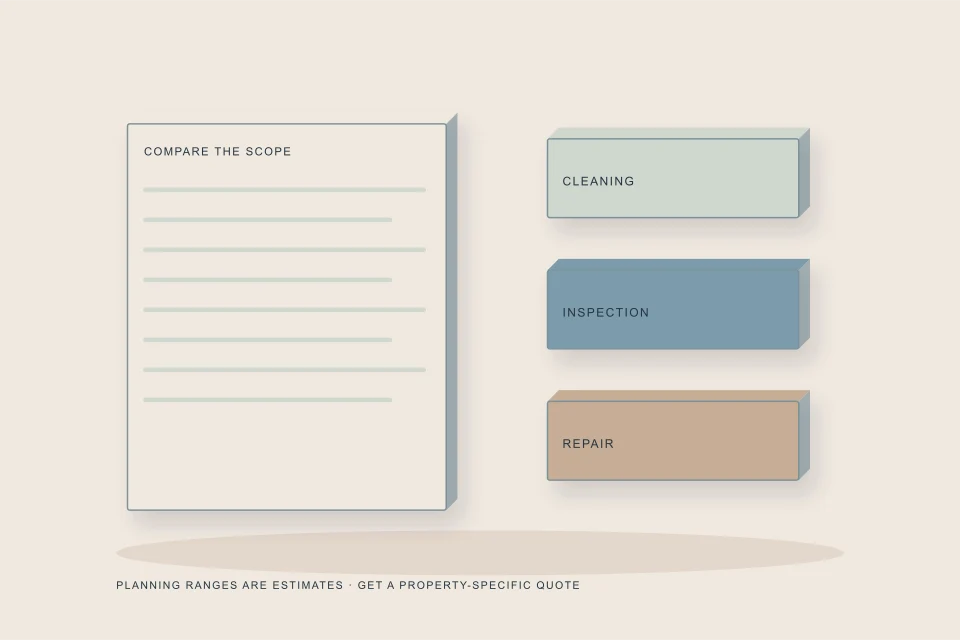
A scheduled, business-hours main line cleaning with cable from a usable cleanout typically quotes around $200 to $450 as a 2026 planning figure. No cleanout, which means pulling a toilet or working from the roof vent, adds roughly $150 to $450. After-hours calls commonly carry a premium, which the sewer cost estimator models as about 1.4 to 1.6 times the daytime range.
Ask whether a camera run is included or can be added while the truck is there. A cleaning invoice that records how far out the blockage was, and what came back on the head, is worth keeping. When you are ready, send the symptoms to the HAUSE Sewer desk.
FAQQuestions people ask
How do I know if my main sewer line is clogged rather than one drain?
Watch the lowest opening in the house. If the basement floor drain, basement toilet or shower gurgles, bubbles or rises when fixtures upstairs run, the shared main is restricted. A clog confined to one fixture leaves every other drain working normally.
Can a cleanout cap be opened when the line is backed up?
It can, but it is risky. The cap may be holding back sewage under pressure, and opening it can flood the area around it. Leave it for the person clearing the line, who can relieve it in a controlled way.
Does a main sewer line need cleaning on a schedule?
There is no universal schedule. A line with no symptoms may never need it. A line with known roots or a sag may need scheduled cleaning, and the interval should come from camera findings and your own history of backups rather than a calendar.
Why did my drain clog again a few weeks after it was cleaned?
Usually because the cable opened a channel through a blockage caused by a defect that is still there, such as roots entering an open joint, an offset lip or a sag. A camera inspection after cleaning identifies which, and points to a lasting repair.
Is it safe to use a store-bought drain cleaner on the main line?
It is not recommended. Chemical openers rarely reach a main line blockage in useful strength, can damage some older pipe, and leave caustic water for the next person who opens the line. Mechanical cleaning is the standard approach.
Does the city clear blocked sewer lines for free?
Some cities investigate backups to see whether the public side is the cause, and clear their own pipes at no charge. The private portion is normally the owner's to clear. Rules differ, so call your municipality or 311 first when a backup starts.
NETWORKGo deeper across the HAUSE Sewer network
Main sewer line cleaning: what is actually involved
Main sewer line cleaning explained: how pros access the line, cable vs jetting, camera proof, how long it lasts, and what a complete job should include.
DrainAugering.caClog Locator: find the blockage before you pick up a cable
Use the Clog Locator to find where a drain clog sits (trap, branch, stack, main or lateral) and which auger class and cable size fits the pipe.
SewerRoots.caSigns of roots in your sewer line
Signs of roots in your sewer line: gurgling, slow floor drains, seasonal backups and what a camera shows. Ten symptoms ranked, plus how to confirm roots fast.