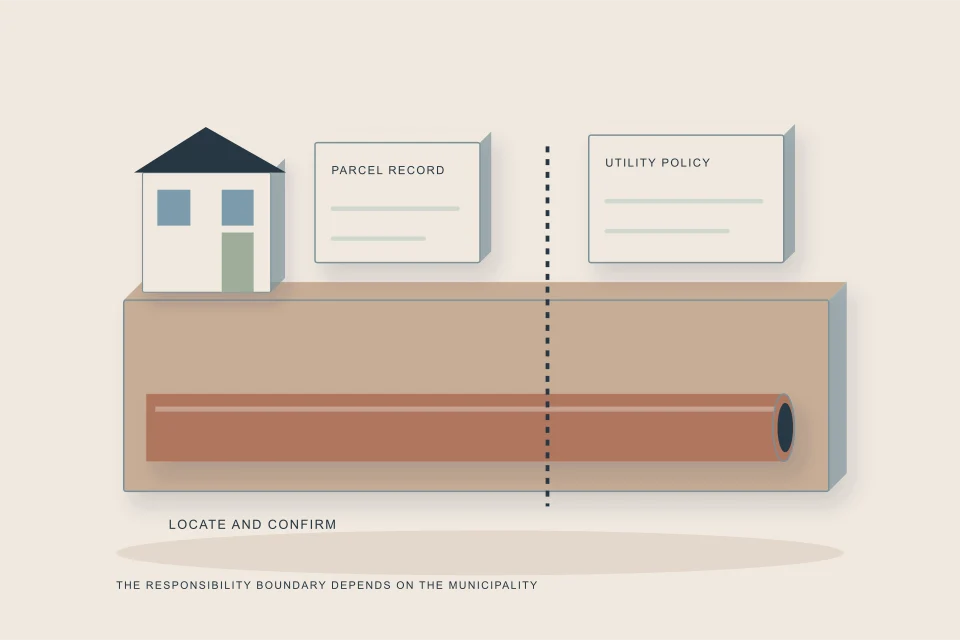
Across Canada, the owner is usually responsible for the sewer service line from the house to the property line, and the municipality for the pipe from there to the main, but not everywhere. Winnipeg makes owners responsible all the way to the main. Backup procedures, permits and subsidies also differ by city, so start with your municipality or 311 before hiring anyone.
- Calgary, Edmonton (EPCOR), Toronto and Halifax Water all describe the property line as the boundary between owner and utility.
- Winnipeg says owners own the sewer pipe from the house to the main, including under the street.
- Many cities investigate backups to see whether the public side is involved; call before you pay a contractor to dig near the boundary.
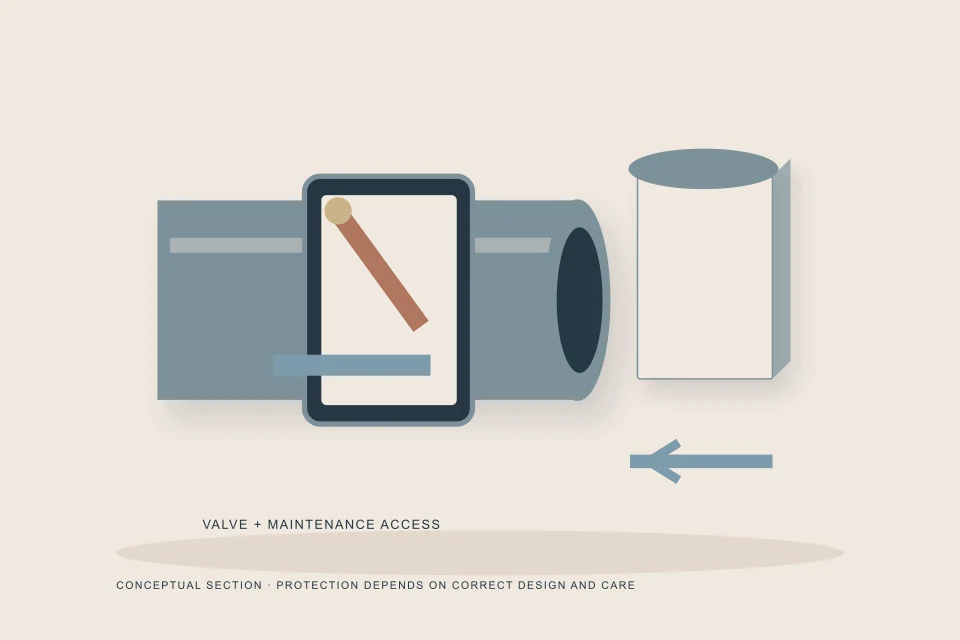
- Subsidies for backwater valves exist in some places, including Toronto and Edmonton as checked September 2026.
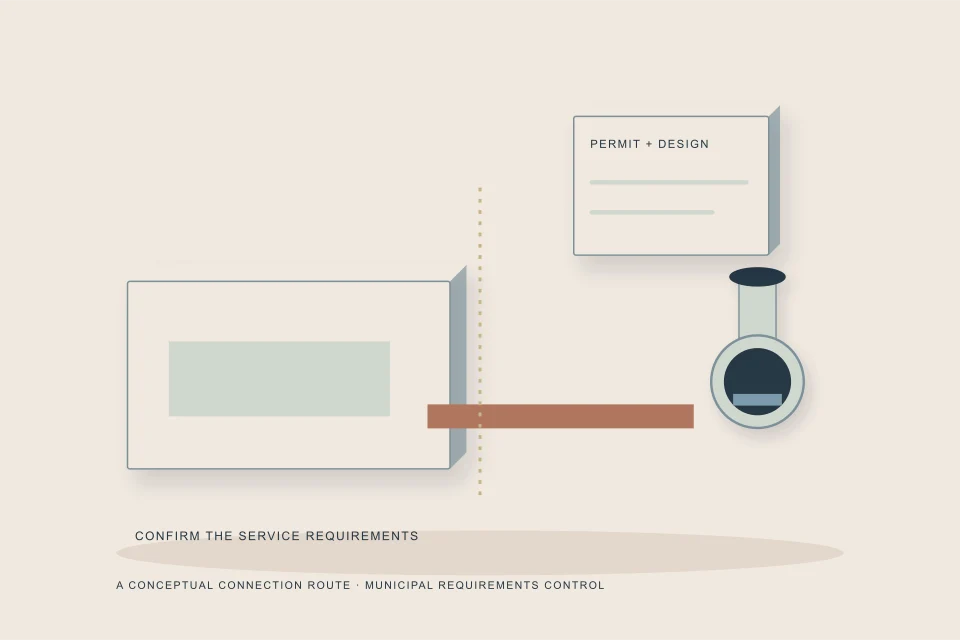
- The National Plumbing Code of Canada is a model; provinces adopt it, and municipalities enforce it through permits.
01 /Who owns the sewer line in major Canadian cities?
The service line is split into two parts almost everywhere: a private portion that runs from the building, and a public portion that joins the municipal main. What changes from city to city is where the split falls and what the utility will do on its side. These summaries come from each city's or utility's own pages, read in September 2026.
| City or utility | Owner's portion | Utility's portion | Worth knowing |
|---|---|---|---|
| Calgary | Property line to the house | Sanitary main to the property line | 311 triages backups; City crews inspect to find where the blockage is |
| Edmonton (EPCOR) | Sewer lines on the property, including any backwater valve | Property line to the main in the street or alley | EPCOR may charge to clear blockages caused by prohibited waste |
| Toronto | Property line into the home | Sewermain to the property line | City investigates and may camera the service through a cleanout |
| Halifax (Halifax Water) | Lateral from the property line to the house | Main under the street, ending at the property line | Reimburses up to $700 incl. HST if a plumber's video and report show a public-side blockage |
| Winnipeg | The whole service pipe, house to main, including under the street | The main | Assistance program for some owner-occupied homes |
Calgary publishes the public portion of its sanitary service lines as open data. As queried in September 2026, the dataset lists about 367,000 active connections; roughly two-thirds are recorded as PVC, and about 4,100 are recorded as already lined with CIPP. Almost all single-family public-side services are 100 mm pipe, averaging about 8 m long. The City notes the private portion may be a different material installed at a different time.
02 /What should you do first in a sewer backup, city by city?
Call the municipality or utility as well as a contractor. Several cities will check their own infrastructure at no charge, and knowing the answer before you pay for digging near the property line can save a lot of money.
- Calgary: call 311. The agent asks questions to decide whether you need a plumber or a City inspection. Crews will not move furniture, pull carpet or remove toilets, so locate the cleanout or stack first.
- Edmonton: EPCOR Drainage handles service line problems on the public side; plumbers handle the private side.
- Toronto: call 311. Toronto Water investigates whether the blockage is on the City's side; if there is no proper cleanout, the owner may need one installed first.
- Halifax: Halifax Water's customer care line operates around the clock for basement flooding.
- Everywhere else: search your municipality's name with "sewer backup" or call its main line or 311 service.
03 /Which cities subsidise backwater valves?
Programs come and go with municipal budgets, so treat any list as a snapshot. These were read on the program pages in September 2026.
| Program | Amount | Headline conditions |
|---|---|---|
| Toronto Basement Flooding Protection Subsidy | Up to 80% of cost, max $1,600 per valve (two max); up to $6,650 per property across eligible devices | Building permit and inspection; work on or after Nov 12, 2025; apply within two years |
| EPCOR Backwater Valve Subsidy, Edmonton | Up to $800 | Built before 1989; flooding history; no existing valve; professional plumber; funding-limited |
If your city is not listed, it may still run a program. The backwater valves page explains how the valves work and what programs usually require.
04 /How do climate and housing age change sewer problems across the country?
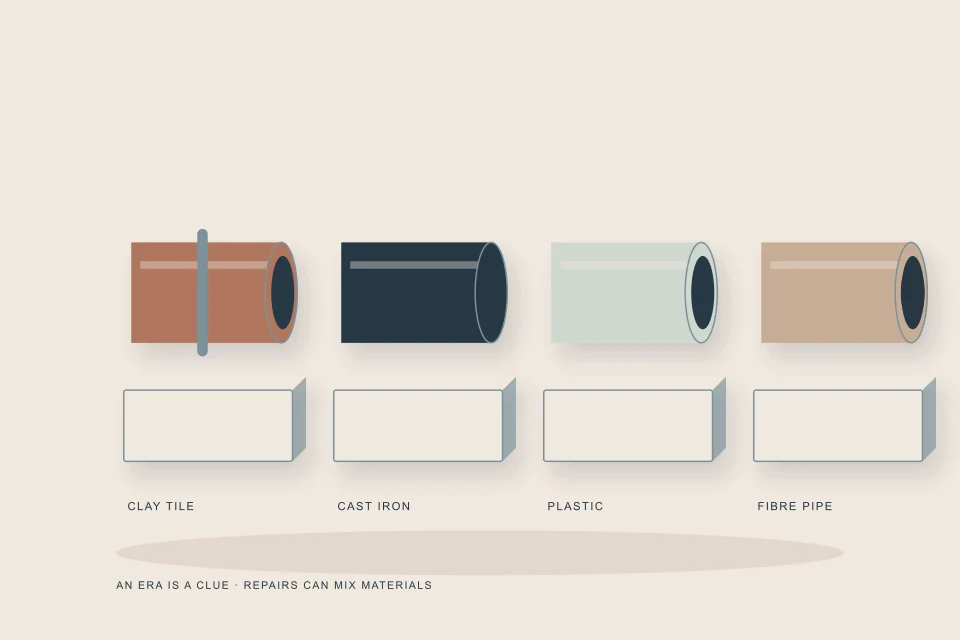
Canada's sewer problems follow two broad patterns: the age of the neighbourhood and the severity of the winter. Older neighbourhoods have older private pipe, often clay or cast iron, with mature trees above it. Colder regions push frost deeper, which matters for shallow laterals, driveways cleared of insulating snow, and lines under unheated additions.
| Pattern | Where it tends to matter | What to ask |
|---|---|---|
| Clay and cast-iron laterals with root intrusion | Established neighbourhoods in most cities | Is the line clay or cast iron, and where are the roots entering? |
| Frozen shallow laterals | Prairie and northern communities, cleared driveways | How deep is the line, and should it be insulated? |
| Storm-driven backups from surcharged mains | Cities with older or combined sewers | Is a backwater valve advisable, and is there a subsidy? |
| Reactive clay soils moving pipe joints | Parts of the Prairies | Do the joints show offsets, and is the bedding sound? |
| Infill straining older services | Redeveloping inner-city areas | Must the old service be replaced for the new building? |
In Alberta, the cities most people search for sewer help in are Calgary, Edmonton, Red Deer, Lethbridge, Medicine Hat, Grande Prairie, Fort McMurray and Airdrie. Each runs its own permit office and backup procedure; some use a utility company or regional municipality rather than a city department. Call the local utility before digging on or near the boundary.
05 /What rules apply to sewer work everywhere in Canada?
A few things hold nationally, even though the details are local.
- Plumbing code. The National Plumbing Code of Canada is published by the National Research Council as a model code; provinces and territories adopt it, sometimes with changes, and municipalities enforce it through permits and inspections.
- Locates before digging. Each province has a one-call notification service; the national Click Before You Dig portal links to them. In Alberta, Utility Safety Partners asks for three full working days' notice and does not mark customer-owned sewer lines.
- Workplace safety. Excavation and confined-space work are regulated provincially. Alberta's OHS Code has a dedicated part on excavating, and CCOHS lists sewers and manholes as confined spaces.
- Insurance. The Insurance Bureau of Canada notes sewer backup coverage is optional.
For the full comparison of city responsibility rules and how to confirm yours, read who owns the sewer line. Calgary readers have dedicated sister sites: CalgarySewers.ca for City data and CalgarySewers.com for local help. Anywhere in Canada, you can send your situation to the desk.
FAQQuestions people ask
Is the homeowner responsible for the sewer line to the street in Canada?
Usually only to the property line. Calgary, Edmonton, Toronto and Halifax all describe the utility owning the pipe from the property line to the main. Winnipeg is different: owners own the service pipe all the way to the main, including under the street.
Who do I call first when sewage backs up into my basement?
Your municipality or utility, often through 311, and a drain contractor. The city can check whether the problem is on its side, and in some cities it will investigate before you pay anyone. Stop using water in the meantime.
Will the city reimburse me if the blockage was on its side?
Some utilities do, under conditions. Halifax Water, for example, reimburses up to $700 including HST for plumbing and video costs when a certified plumber's inspection and written report show the blockage was on its side. Ask your utility about its rules.
Do all Canadian cities offer backwater valve subsidies?
No. Some do, such as Toronto and EPCOR in Edmonton as checked in September 2026, some have ended their programs, and many never had one. Check your municipality's current website before installing.
Does the plumbing code apply the same way in every province?
The National Plumbing Code is a model code. Provinces and territories adopt it, sometimes with their own amendments and on their own timelines, so confirm the version and any local changes with your permit office.
Where can I see what my city's sewer service line is made of?
Some cities publish it. Calgary's open data includes the material, diameter and install date of the public portion of each sanitary service line. The private portion may differ, so a camera inspection is the reliable answer.