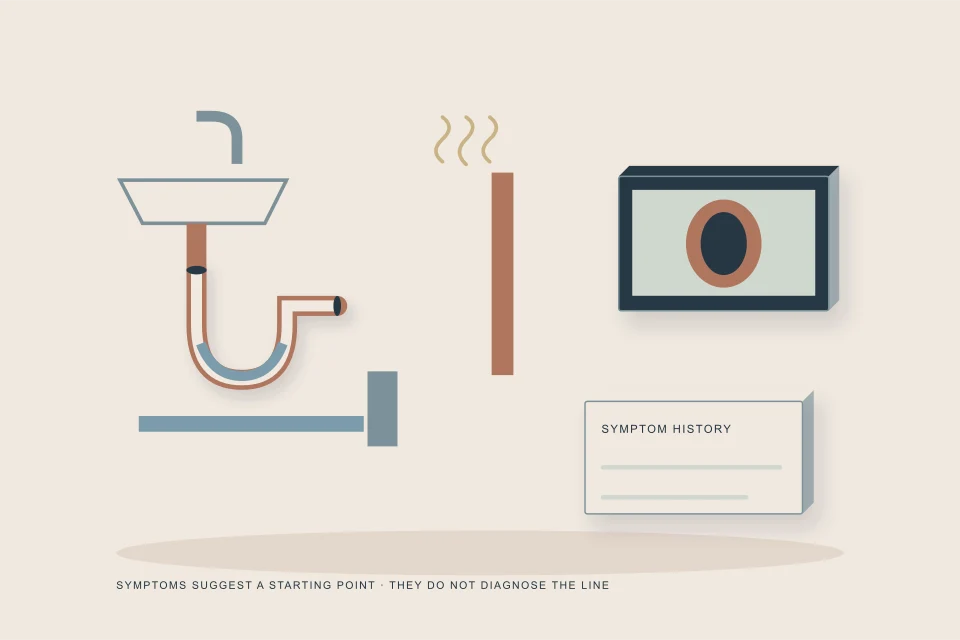
The main warning signs of a failing sewer line are several drains slowing at once, gurgling from the floor drain or toilets when other fixtures run, sewage smells with full traps, clogs that keep coming back, soggy or sunken spots over the line, and water rising from the basement floor drain. One symptom alone is a clue; several together point to the main line.
- Symptoms that involve more than one fixture group point to the main line, not a single drain.
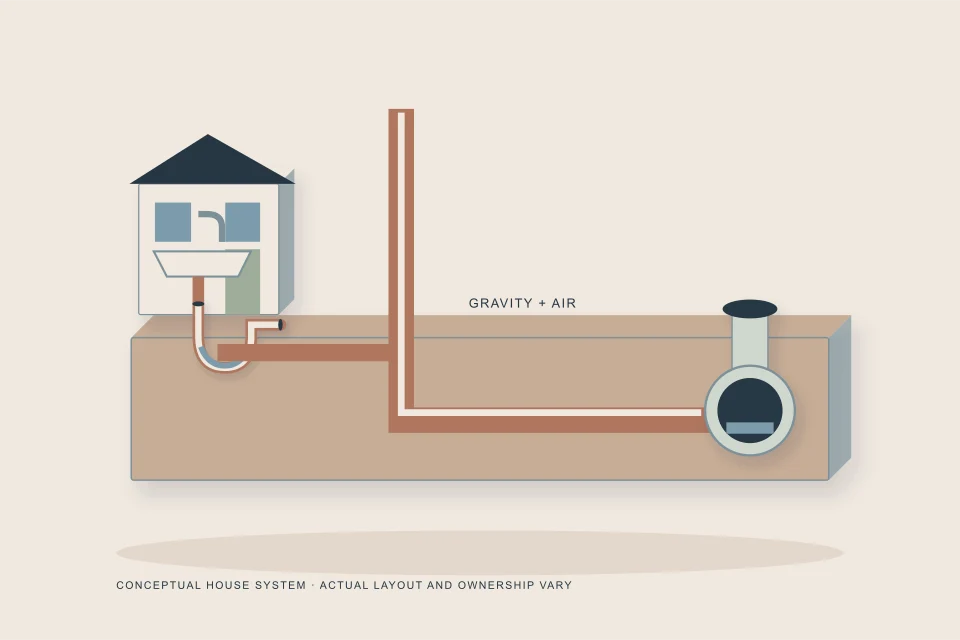
- The lowest opening in the house, usually the basement floor drain, shows main-line trouble first.
- Recurring clogs are the most useful warning sign: they mean something in the pipe keeps catching debris.
- Yard symptoms, such as sunken ground or unusually green strips, can indicate a broken lateral leaking into the soil.
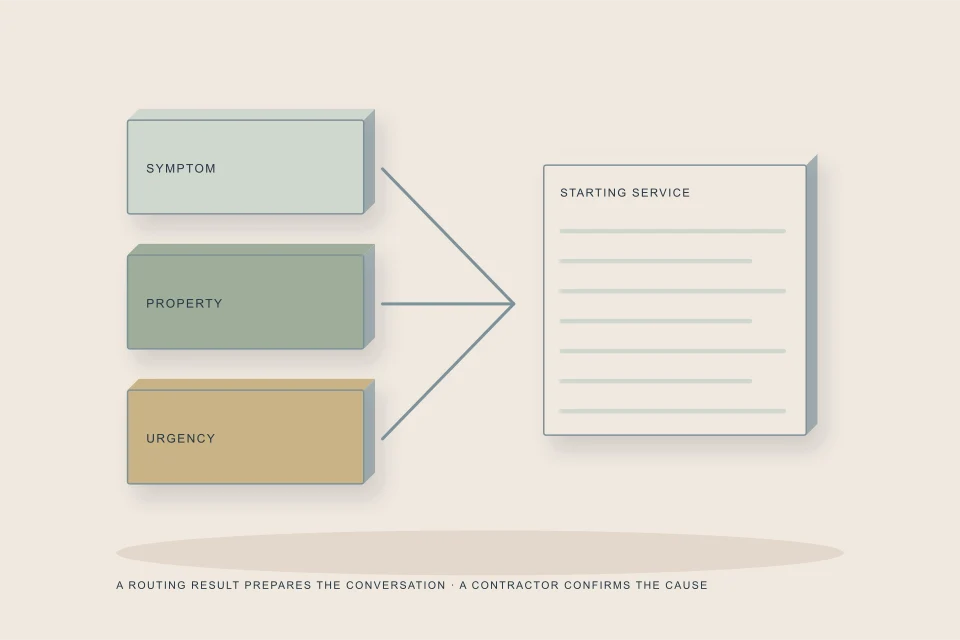
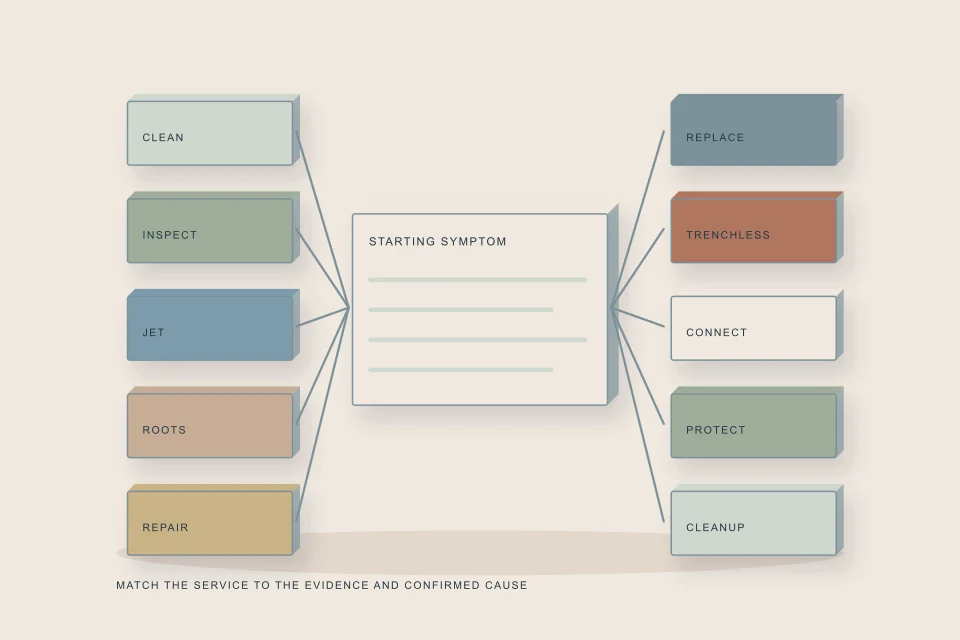
- Match each sign to a service lane, and act fastest when sewage is visible or several fixtures stop draining.
01 /What are the warning signs of sewer line problems, from early to urgent?
Signs rarely arrive alone. Read them together and weigh them by what they affect: one fixture is local, several fixtures are shared plumbing, and anything at the lowest drain in the house involves the main.
| Sign | What it often means | Service lane to start with |
|---|---|---|
| One sink or tub slow | Local clog in that fixture's trap or branch | Drain cleaning |
| Sewer smell near a rarely used drain | Dry trap | Add water first; then camera if it persists |
| Toilet water level bobbing or bubbling | Venting problem or main restriction | Camera if it persists |
| Clogs returning every few months | Roots, sag, offset, grease buildup | Camera, then jetting or repair |
| Gurgling at the floor drain when upstairs fixtures run | Main line partially restricted | Cleaning, then camera |
| Several fixtures on different floors slow together | Main line blockage forming | Cleaning, then camera |
| Sewage smell with full traps and a good toilet seal | Open joint or broken pipe | Camera |
| Unusually green strip or soggy patch over the line | Lateral leaking into soil | Camera with locate |
| Sunken ground or a hole over the line | Soil washing into a broken pipe | Camera; keep people off it |
| Water around the floor drain during laundry | Main can no longer carry peak flow | Cleaning now |
| Water seeping from the cleanout cap | Main blocked downstream of the cleanout | Cleaning now; stop water use |
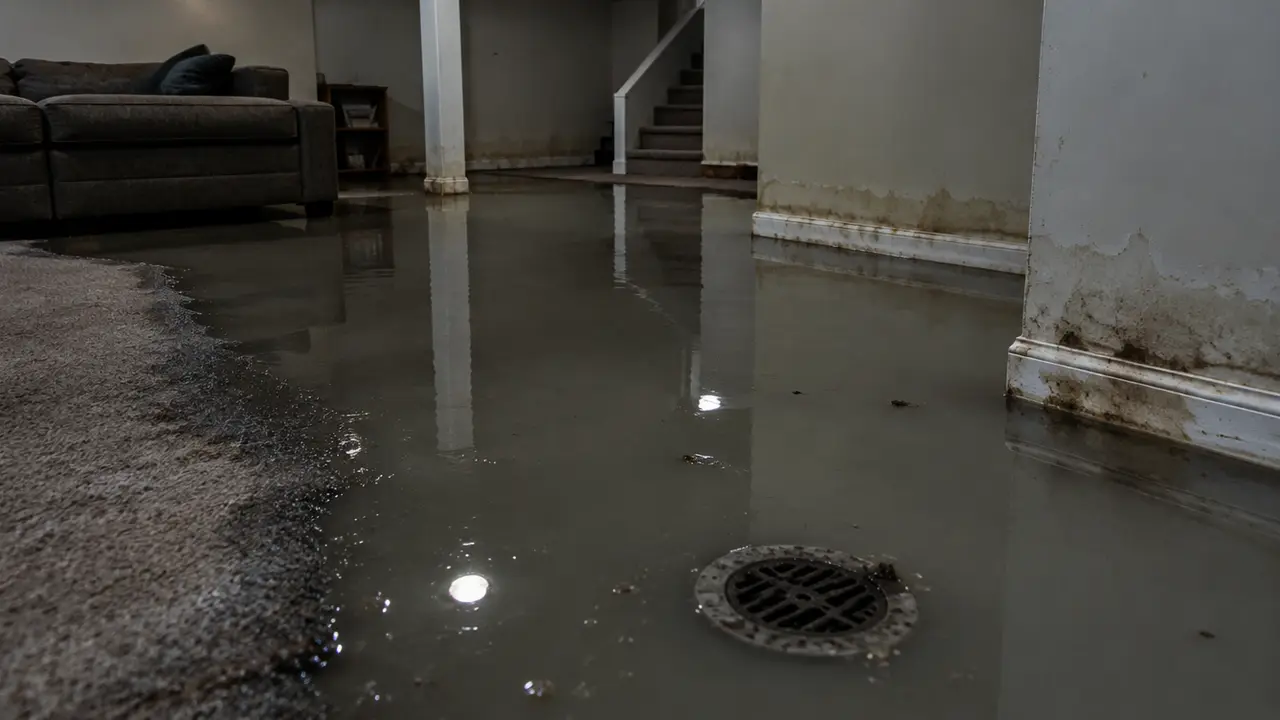
| Sewage rising from the floor drain | Main blocked, or city sewer surcharging | Cleaning now; then cleanup |
02 /What causes these sewer symptoms?
Six causes explain most main-line trouble in Canadian homes. Each leaves a distinct pattern on camera, which is why the camera turns symptoms into a plan.
- Root intrusion. Roots seeking moisture enter open joints and cracks, then catch paper and wipes. Symptoms often recur on a cycle as roots regrow.
- Grease and wipes. Calgary notes that fats, oils and grease cool, harden and stick to sewer walls, and that products labelled flushable can still clog pipes. Together they build dense blockages.
- Pipe collapse or deformation. Old fibre pipe and some unreinforced pipe lose their shape under soil load, restricting flow and eventually blocking it.
- Offset joints. Ground settlement pushes pipe sections out of line, leaving a lip that snags waste and lets soil in.
- Sags (bellies). A section sinks where bedding failed, holding water and solids until they block the line.
- Frozen lines. Shallow laterals, or lines under cleared driveways where snow no longer insulates the ground, can freeze in hard cold.
03 /How can you tell a main line problem from a single clogged drain?
Run a simple test. With nobody using water elsewhere, run an upstairs bathtub or a washing machine drain cycle and watch the basement floor drain and basement toilet. If water rises, bubbles or gurgles there, the shared main is restricted. If only the fixture you ran drains slowly, the problem is in its own trap or branch.
04 /Which sewer warning signs are emergencies?
Three situations call for immediate action rather than an appointment: sewage coming into the house, several fixtures that have stopped draining entirely, and ground collapsing over the line. The first two need the line cleared and water use stopped; the third needs people kept away from the hole.
- Stop water use
Tell everyone in the house; turn off the washing machine and dishwasher.
- Protect people
Keep children, pets and anyone vulnerable away from sewage and from sunken ground.
- Call your municipality
In Calgary, 311 decides whether you need a plumber or a City inspection. Toronto investigates whether its side is involved.
- Call a drain contractor
Have the cleanout located and cleared of stored items.
- Document
Photos for your insurer before any cleanup starts.
05 /What should you do about early warning signs?
Early signs are the cheapest to act on. A slow main that still flows can be cleaned and filmed on a scheduled visit, without after-hours premiums, and the footage gives you time to compare quotes if work is needed.
- Keep a log of dates, fixtures affected and what happened before each episode, such as heavy rain or laundry day.
- Refill dry traps in floor drains and unused showers every few weeks.
- Change what goes down the drains: grease in the bin, wipes in the garbage.
- Book a camera if the same symptom returns after cleaning.
- Check responsibility with your municipality before paying for anything near the property line.
The Sewer Service Selector turns any of these symptoms into a first service and follow-ups. For the full map of lanes, read which sewer service do I need. The seasonal sewer care guide covers the checks that catch problems early.
06 /Do the warning signs differ by the age of the house?
The signs are the same, but their likely meaning shifts with the pipe material. In an older house with clay or cast iron, recurring clogs usually mean roots or scale. In a newer house with PVC, the same symptoms more often mean a sag from poor bedding, or a construction-era problem such as debris left in the line.
| Symptom | Older home (clay, cast iron) | Newer home (PVC, ABS) |
|---|---|---|
| Recurring clogs | Roots at joints, scale | Sag, offset, construction debris |
| Smell with full traps | Cracked cast iron under the slab | Loose fitting or vent issue |
| Soggy yard strip | Broken clay joint | Separated joint from settlement |
The sewer pipe materials by era guide shows what a house of a given age likely has. When you are ready to act, describe the signs to the desk.
FAQQuestions people ask
What does it mean when my toilet gurgles when the shower runs?
Usually that air is being pushed or pulled through the toilet's trap because the shared drain below is partly restricted or poorly vented. If it happens with several fixtures, or the floor drain gurgles too, suspect the main line and have it cleaned and filmed.
Can a broken sewer line make my yard soggy?
Yes. A cracked or separated lateral can leak wastewater into the soil, leaving a wet patch, an unusually green strip or a sunken area along the line's route. A camera with a locate confirms whether the pipe beneath is broken.
Why does my basement smell like sewage only sometimes?
Intermittent smells often come from a trap that dries out between uses, a vent that is blocked in certain weather, or a crack that releases gas when the line is flowing. Refill traps first, then investigate if it continues.
Is a slow drain an emergency?
One slow drain is not. Several slow drains at once, or water appearing at the basement floor drain, can escalate to a backup quickly and should be treated as urgent: limit water use and book cleaning.
Can a sewer line problem cause a sinkhole in the yard?
A broken pipe can let soil wash into it over time, leaving a void that eventually settles or collapses at the surface. Keep people and pets off any sudden depression over the line and have it inspected.
Why does my basement floor drain gurgle after the washing machine drains?
A washing machine releases a lot of water quickly. If the main line is partly restricted, that surge pushes air back through the lowest trap, which is usually the floor drain. It is an early sign of a main-line problem worth cleaning and filming.
Can a sewer problem cause mould in the basement?
Yes, indirectly. A leaking drain under the slab or repeated small backups keep materials damp, which allows mould to grow. Finding and fixing the leak, and drying the area quickly, matters more than treating the mould itself.
NETWORKGo deeper across the HAUSE Sewer network
Signs of roots in your sewer line
Signs of roots in your sewer line: gurgling, slow floor drains, seasonal backups and what a camera shows. Ten symptoms ranked, plus how to confirm roots fast.
DrainAugering.caClog Locator: find the blockage before you pick up a cable
Use the Clog Locator to find where a drain clog sits (trap, branch, stack, main or lateral) and which auger class and cable size fits the pipe.
SewerCleaners.caMain sewer line cleaning: what is actually involved
Main sewer line cleaning explained: how pros access the line, cable vs jetting, camera proof, how long it lasts, and what a complete job should include.