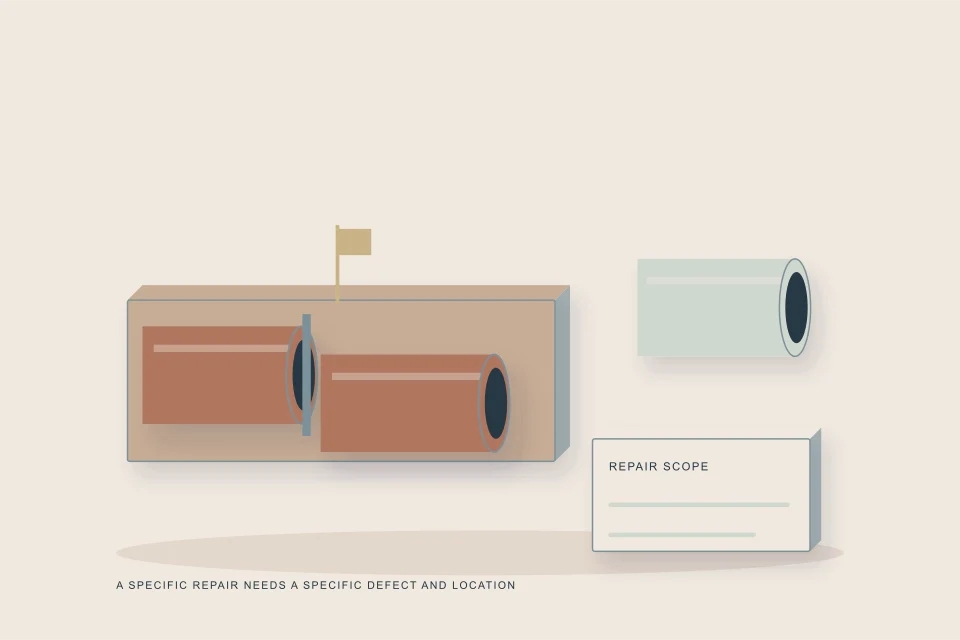
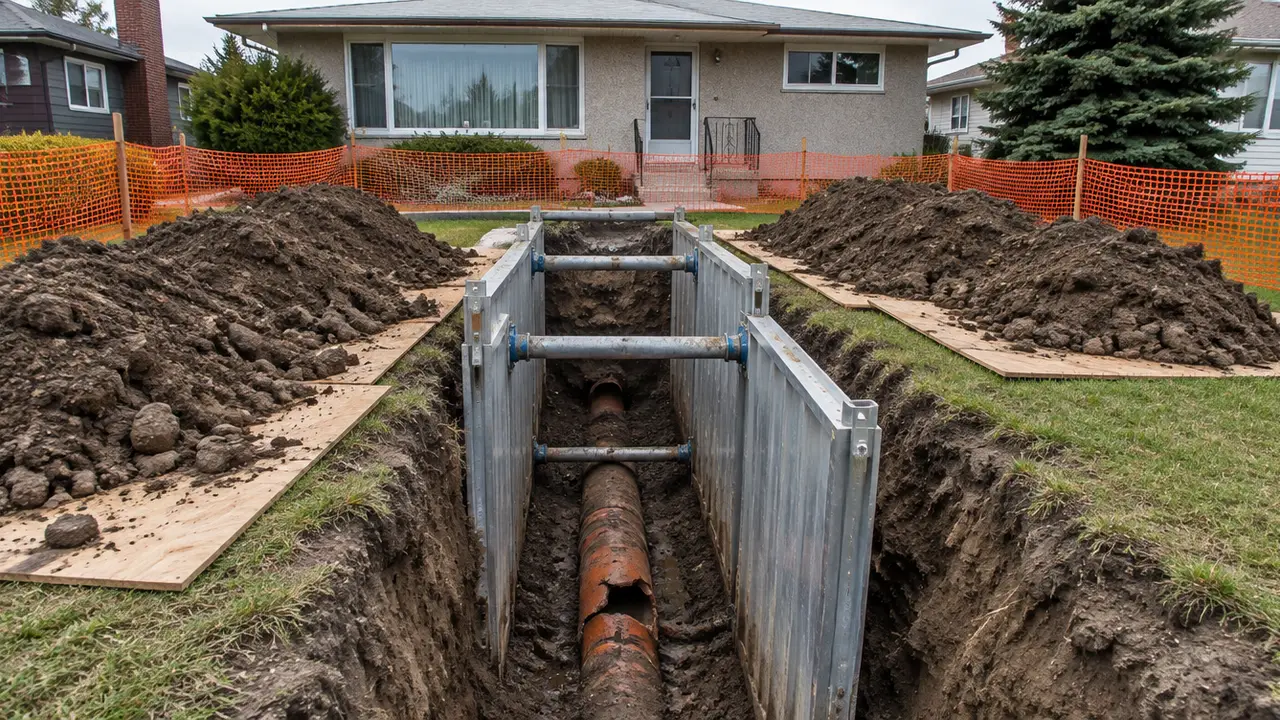
Sewer replacement renews the private sewer line from the house to the property line or municipal main along its full length, by digging a trench and laying new pipe or by pulling new pipe through the old path with pipe bursting. It is justified when the camera shows collapse, deformed pipe, a sag that traps solids, or damage along most of the run.
- Replacement is the lane of last resort, and the camera footage should make the case for it on its own.
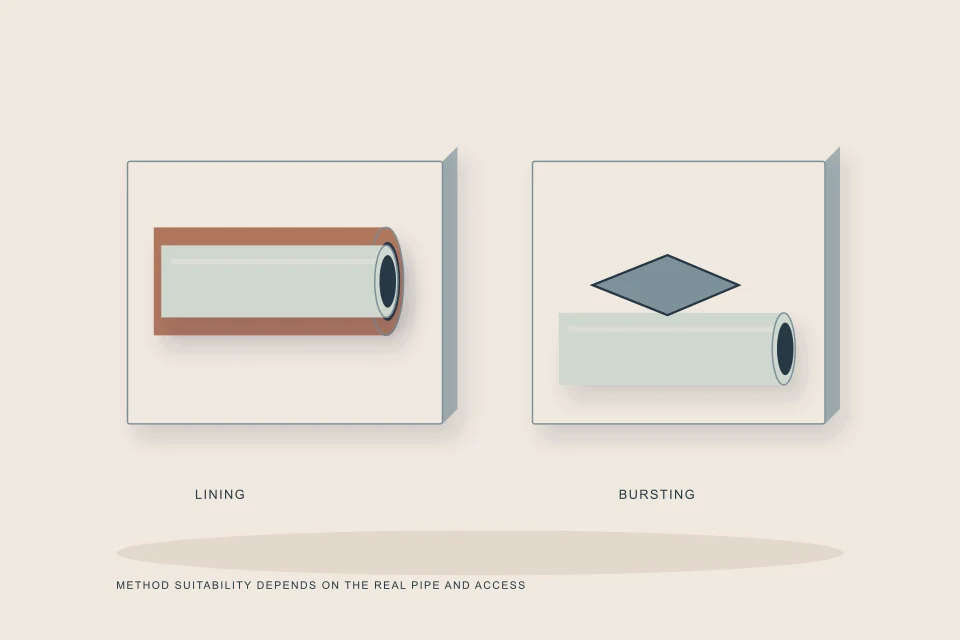
- Open cut can correct slope and route; bursting follows the old path; lining keeps the old pipe as a host.
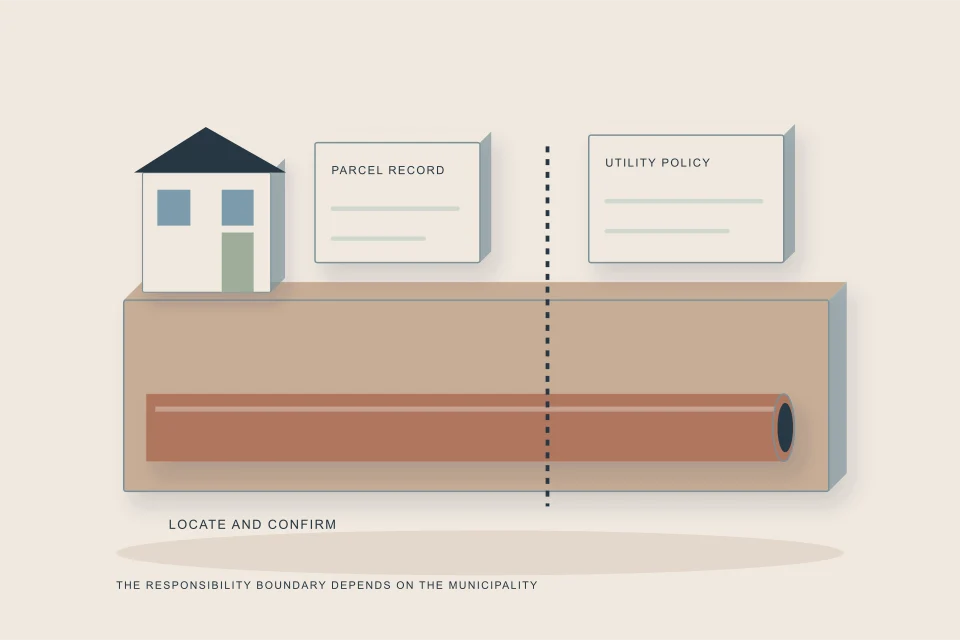
- The private portion is usually yours, but where your responsibility ends varies by city, so ask before pricing.
- Locates, permits, inspection before backfill and a finished-line video are part of a complete job.
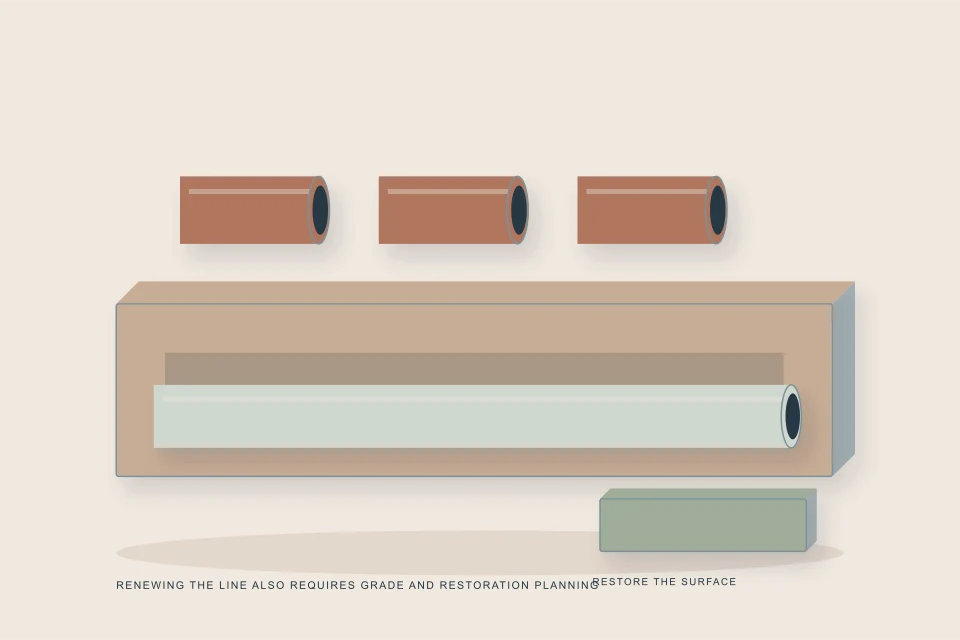
- Restoration of driveways, landscaping and basement floors can rival the pipe work itself.
01 /What evidence justifies replacing a sewer line?
A replacement recommendation should rest on recorded footage, not on the age of the house alone. Old pipe can be sound, and newer pipe can be crushed. What tips the decision toward replacement is damage that a liner or a spot repair cannot address, or damage so widespread that repairs would repeat along the run.
| Finding | Why repair or lining falls short |
|---|---|
| Collapse or a missing section | Nothing continuous is left to line; the ground may be inside the pipe |
| Deformed bituminous fibre pipe | A liner copies the oval shape; the material keeps failing |
| Sag that holds water and solids | Lining follows the belly; only re-laying on grade fixes slope |
| Breaks, offsets and roots at many joints | Spot repairs repeat; each dig adds restoration cost |
| Undersized or wrong-material pipe for a new use | Replacement can upsize; lining reduces the bore |
When the camera has found cracks, a sag or a collapse, the service selector returns three lanes at once: repair, replacement and trenchless. The defect type and its location decide which applies, and on a single line it can be more than one.
02 /What are the ways to replace a sewer line?
There are three mainstream routes for a residential lateral in Canada, and one of them technically keeps the old pipe.
Full-length cured-in-place lining is the third route. It is covered on the trenchless repair page because the result is a new pipe formed inside the old one, which makes it a rehabilitation method rather than a removal. Many real jobs mix methods: open cut for a sagging section near the house, lining or bursting for the rest.
03 /How does a sewer replacement project run, step by step?
- Footage and boundary
A recorded camera run with distances, and your municipality's answer on where your responsibility ends. Calgary, for example, describes the pipe from the main to the property line as City-owned and the rest as the homeowner's.
- Scope and quotes
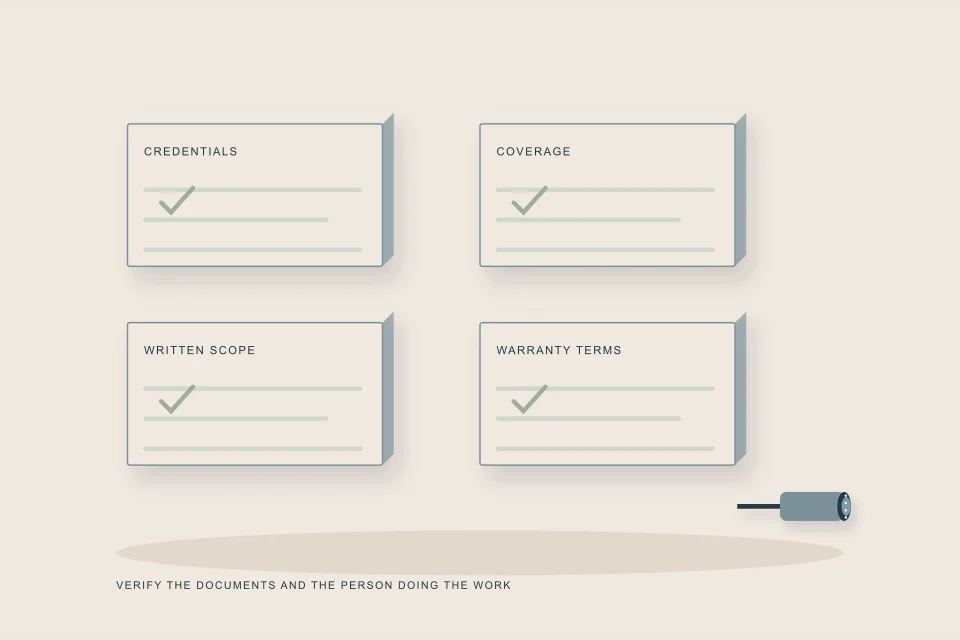
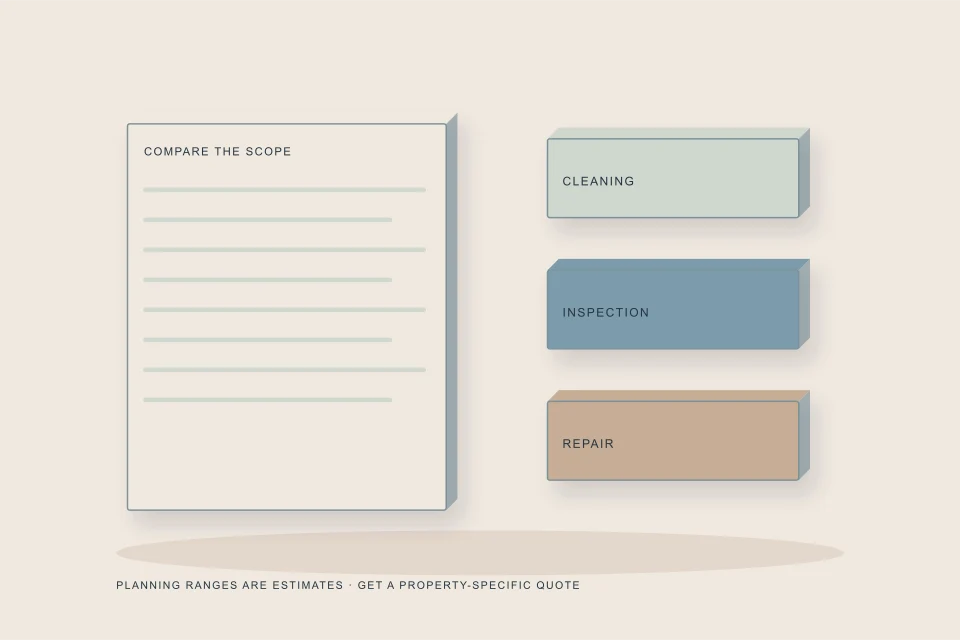
Ask two or three contractors to price the same method from the same video, with restoration and permits itemised.
- Permits and locates
Plumbing permits and any right-of-way permits, plus public utility locates. Private lines such as irrigation or a detached garage feed need a private locator.
- The work
A no-water window while the line is open. Open cut commonly runs one to a few days on site; bursting is often shorter.
- Inspection and close-out
Inspection before backfill where required, then a camera run of the finished line and written warranty terms.
04 /What happens to your yard, driveway and basement during replacement?
Restoration is where replacement quotes differ most, and where disappointments start. The pipe work is similar from one contractor to the next; the condition you get your property back in is not. Pin it down in writing.
| Surface | What usually happens | Put in writing |
|---|---|---|
| Lawn | Sod removed or trench backfilled and seeded | Topsoil depth, seed or sod, settlement top-up |
| Landscaping and fences | Removed and reinstalled, or left for you | Who removes, who reinstalls, what if plants die |
| Driveway or sidewalk | Saw-cut and repoured, or paved patch | Thickness, finish, curing time before use |
| Basement floor | Slab cut, drain replaced, concrete patched | Flooring, walls and fixtures excluded or included |
| Mature trees | Roots cut or the route adjusted | Tree protection; trenchless options near the tree |
Trenches settle as backfill consolidates, so a quote that includes a return visit to top up settled areas is worth more than one that does not. Where a boulevard or city tree is involved, ask your municipality about tree-protection rules before work starts. Where surfaces are expensive to restore, a trenchless route may cost less overall even when the pipe work itself costs more.
05 /Who pays for sewer line replacement?
Across most Canadian cities checked for this hub, the owner pays for the private portion and the municipality for the public portion, with the boundary at the property line. Winnipeg is a notable exception: the city states that property owners own the sewer pipe from the house to the main, including the part under the street, with an assistance program for some owner-occupied homes.
Home insurance generally does not pay to replace a worn-out line, and sewer backup coverage is an optional add-on for resulting water damage, according to the Insurance Bureau of Canada. Read your policy and ask your insurer before assuming either. The who owns the sewer line guide covers the city-by-city picture.
06 /How much does sewer replacement cost in 2026?
For a 15 m private lateral at typical depth under lawn, open-cut replacement plans at roughly $11,500 to $24,500 and pipe bursting at roughly $10,000 to $24,500. The same open-cut job under a driveway at depth rises to about $16,450 to $36,850. Permits, municipal-side work and interior finishing are extra.
The network's replacement specialists go much deeper than this hub: SewerReplacement.ca on deciding and supervising, PipeBursting.ca on the bursting method, and CalgarySewerReplacement.ca on the Calgary process. When you have footage, request quotes with the video attached.
FAQQuestions people ask
How do I know if my sewer line needs replacing rather than repairing?
Look at how much of the line is damaged and whether the damage is shape or slope related. One or two located defects in sound pipe suit repair. Collapse, deformed fibre pipe, a water-holding sag, or defects along most of the run usually justify replacement.
How long does it take to replace a residential sewer line?
Open-cut replacement of a typical house lateral often takes one to a few days on site, plus time for permits, locates and inspection. Pipe bursting is frequently faster on site. Deep lines, frozen ground and hard surfaces add time.
Can I use my plumbing while the sewer is being replaced?
Not while the line is open. Expect a no-water window, often most of a working day, and plan showers, laundry and toilet use around it. Ask the contractor for the exact window.
What pipe is used for a new residential sewer line?
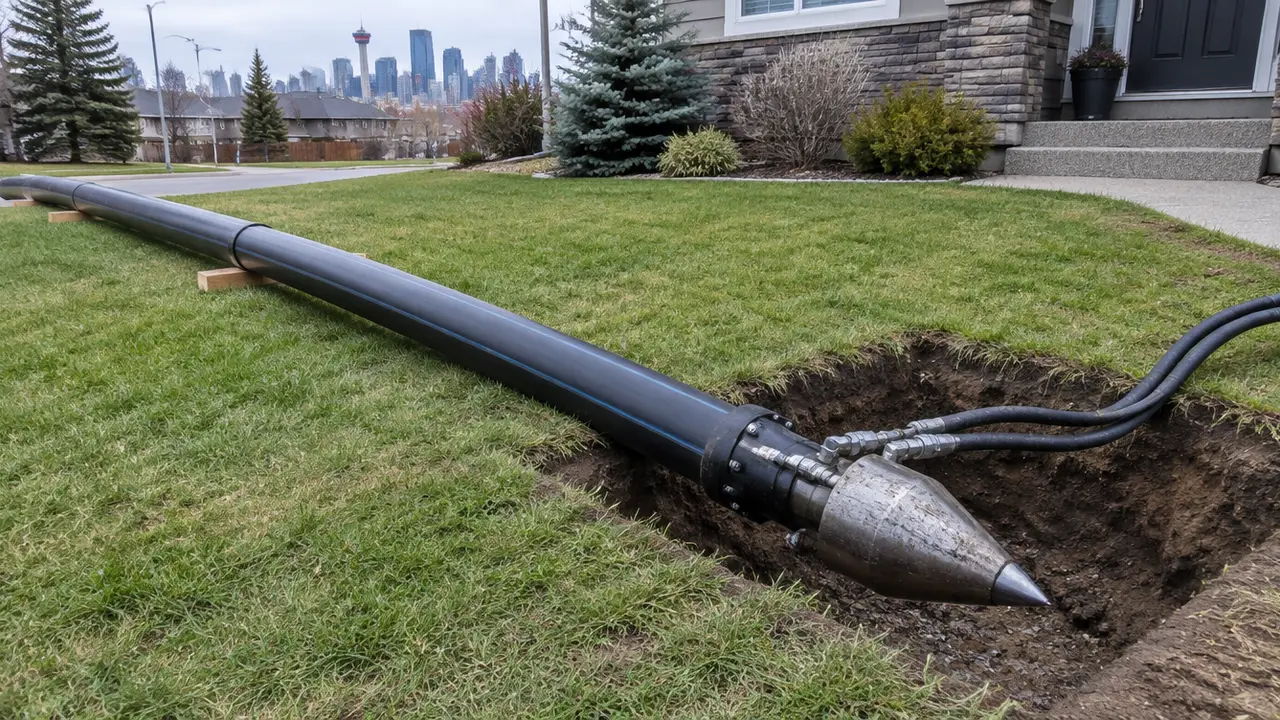
Open-cut laterals in Canada are commonly PVC sewer pipe with gasketed joints; pipe bursting usually pulls in fused HDPE. The contractor should state the material, its standard and the bedding in the written quote.
Does replacing the sewer line add value to a house?
It removes a known risk and gives buyers documentation, which matters when many buyers scope the line before closing. Keep the permit, the finished-line video and the warranty with your house records.
Do I have to replace the city's part of the sewer too?
Usually not, where the city owns the pipe beyond the property line, but some cities require coordination when the connection is renewed, and a few, such as Winnipeg, place the whole service line with the owner. Ask your municipality first.
What is left in the ground after pipe bursting?
The old pipe stays in the ground as fragments pushed into the surrounding soil, with the new pipe running through the space it occupied. Nothing needs to be dug out along the run apart from the launch and receiving pits.
NETWORKGo deeper across the HAUSE Sewer network
Sewer line replacement cost: open-cut vs trenchless, line by line
Sewer line replacement cost in Canada for 2026: open-cut, CIPP lining and pipe bursting planning ranges in CAD, per-metre math, line items and what moves price.
SewerInspector.caScope the sewer before you renovate, finish the basement or landscape
Why to get a sewer inspection before renovation, basement development, a suite or landscaping: what to check, when to book it, and how findings change plans.
SewerRoots.caWhose tree, whose pipe: who pays when roots block a sewer line
Who is responsible when a city or neighbour's tree sends roots into your sewer line: the general Canadian pattern, the evidence, and how to raise it.