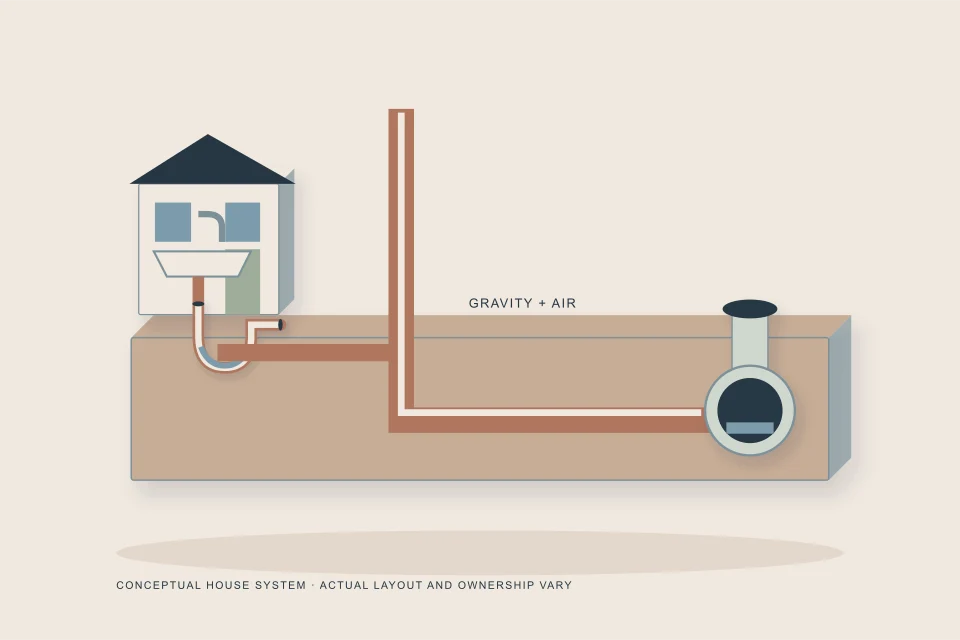
Seasonal sewer care is a short list of checks done twice a year. Before freeze-up, test the backwater valve, refill floor-drain traps, make sure the cleanout is reachable, and deal with any recurring clogs. After the spring thaw, recheck the valve and sump pump, watch for slow drains and yard settlement over the line, and redirect downspouts away from the foundation.
- Two checkpoints a year, before freeze-up and after the thaw, catch most avoidable sewer problems.
- The Insurance Bureau of Canada recommends maintaining a backwater valve at least once a year.
- A dry floor-drain trap lets sewer gas in; refill it every few weeks, especially in winter when furnaces dry the air.
- Shallow laterals and lines under cleared driveways are the ones most at risk of freezing.
- Spring settlement over the line, new slow drains after thaw and surprise wet patches are all reasons to book a camera.
01 /What should you check before winter?
Freeze-up is the deadline for anything that needs digging, and a good time to find problems before a holiday houseful of guests tests the line. These checks take an hour or two.
| Check | Why it matters | Priority |
|---|---|---|
| Open and test the backwater valve | A valve stuck open or jammed will not protect you in a backup | High |
| Pour water into every floor drain and unused shower | Dry traps let sewer gas into the house | High |
| Review any recurring clogs from the year | Frozen ground makes repairs slower and costlier | High |
| Make sure the cleanout is reachable and its cap intact | You need access fast in a winter backup | Medium |
| Insulate exposed cleanouts or piping in unheated spaces | Frozen access points block emergency service | Medium |
| Confirm the sump discharges away from the foundation | Discharge that pools and refreezes near the house causes trouble | Medium |
| Know where your main water shut-off is | In a plumbing emergency you need it without searching | Medium |
| Read your insurance for sewer backup coverage | Coverage is optional and limits vary | Medium |
If clogs have recurred during the year, fall is the best window for a camera inspection and any repair it points to, before the ground freezes.
02 /How do you stop a sewer line from freezing?
Laterals are normally buried deep enough to avoid frost, but not every line is. Shallow runs, lines under driveways and walkways that are shovelled bare, and pipe running under unheated additions or garages are the usual victims. Snow insulates the ground; clearing it lets frost drive deeper.
- Keep heat on in lower levels, including when you travel, so building drains stay above freezing.
- Use water regularly during cold snaps; a line with steady flow is less likely to freeze solid than one left idle.
- Avoid long trickles of hot water as a fix; they rarely reach a frozen lateral in useful strength.
- Ask about insulation over a shallow section when it is repaired or replaced.
A frozen lateral behaves like a blockage: drains slow, then back up at the lowest opening. Thawing is a contractor job, usually with steam or heated water through the cleanout; the drain cleaning lane covers the call.
03 /What should you check after the spring thaw?
Thaw brings two sewer risks: ground movement as frost leaves the soil, and a surge of meltwater and spring rain on municipal systems. These checks catch both.
| Check | Why it matters | Priority |
|---|---|---|
| Re-test the backwater valve flap | Winter debris or a stuck flap leaves you unprotected in spring storms | High |
| Run all basement drains and watch flow | New slow drains after thaw can mean a shifted joint | High |
| Walk the lateral's route for soft or sunken ground | Settlement over a line can signal a break or a void | High |
| Test the sump pump by filling the pit | It must start at the right level and discharge freely | High |
| Point downspouts away from the house | Water near the foundation loads drainage systems | Medium |
| Check exterior cleanout caps | Cracked caps let groundwater and debris into the line | Medium |
| Stress-test the kitchen drain | Fill the sink and release it; partial restrictions show under surge | Low |
04 /How do you maintain a backwater valve through the seasons?
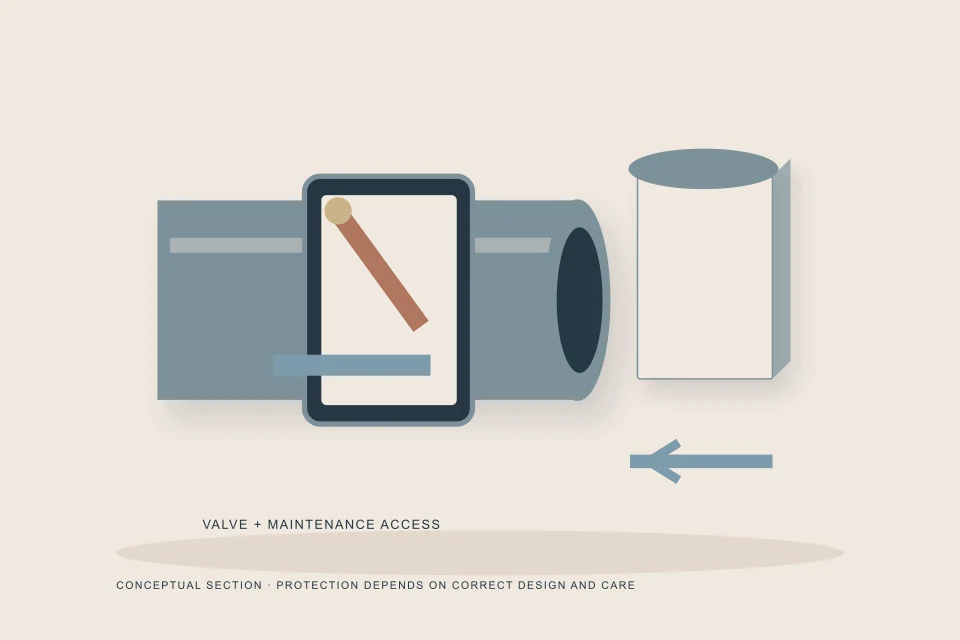
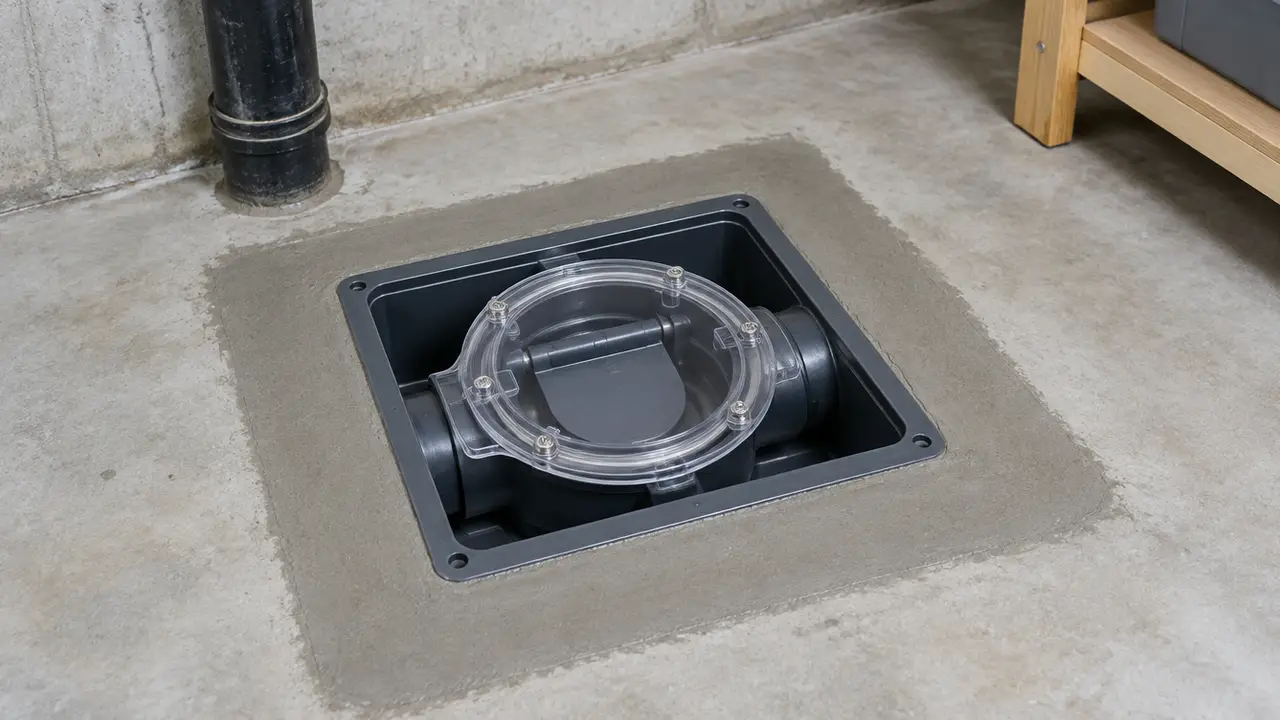
Twice a year is sensible, and at least once a year is the recommendation from the Insurance Bureau of Canada. EPCOR's homeowner method is simple: remove the access plug, look inside with a flashlight for debris, flush with water, move the gate to confirm it swings freely, check the O-ring and replace the plug.
- Open the access cover
Keep it clear of stored boxes and never tile or carpet over it.
- Inspect with a flashlight
Look for paper, grease or grit on the flap or seat.
- Flush and move the flap
It should close and open without sticking.
- Check the seal
A cracked O-ring or missing plug lets sewer gas and water out.
- Record it
Date and what you found, with your house papers.
More on how valves work, installation and subsidies is on the backwater valves page.
05 /What habits keep a sewer line healthy all year?
Most blockages are made in the kitchen and bathroom. The City of Calgary puts the toilet rule plainly: only pee, poo and toilet paper. It also reports responding to more than 8,000 sewer backups a year, and spending millions of dollars annually on damage caused by blockages.
Add a camera check to your routine if the house has older pipe, big trees near the line, or a history of clogs. There is no universal interval; many owners of older homes film the line every few years or whenever symptoms change.
06 /What should you do before leaving the house empty in winter?
An empty house in a cold snap combines two sewer risks: traps that dry out and lines that sit idle. A short routine before a trip covers both.
- Keep the heat on
Set the thermostat so lower levels stay warm, including rooms with plumbing on outside walls.
- Top up every trap
Pour water into floor drains, unused showers and basement sinks.
- Check the backwater valve
Make sure the flap moves and the cover is sealed before you go.
- Arrange a check-in
Ask someone to walk through the basement every few days and look at the floor drain.
- Know your insurer's rules
Some policies set conditions for unoccupied homes; read yours before a long absence.
07 /When does seasonal care turn into a service call?
When a check finds something you cannot fix with water, a flashlight and a strainer. A valve that will not close, a cleanout cap that will not open, settlement over the line, or slow drains that return after the thaw all belong with a contractor.
Run the symptom through the Sewer Service Selector to see which lane it belongs in, and check the sewer line warning signs guide for how urgent it is. The across Canada page covers regional differences in frost and backup risk. When you are ready, request a visit.
FAQQuestions people ask
How often should I check my backwater valve?
At least once a year, and ideally twice: before freeze-up and after the spring thaw. Open the access cover, check for debris, flush it and make sure the flap moves freely.
Why does my basement smell like sewer gas in winter?
Dry indoor air in heating season evaporates the water in floor-drain traps faster, breaking the seal that blocks sewer gas. Pour a few litres of water into floor drains and unused showers every few weeks.
Can a main sewer line freeze in Canada?
Yes, especially shallow lines and sections under driveways that are shovelled bare, where frost penetrates deeper. A frozen line backs up like a blockage and needs a contractor to thaw it, usually with steam or heated water.
Should I have my sewer line inspected every year?
Not necessarily. There is no universal interval. Older lines, big trees near the route and a history of clogs justify more frequent camera checks; a newer line with no symptoms may never need one.
Is spring a good time for sewer repairs?
Late spring through fall is usually the easiest time for digging and restoration. Spring melt can leave trenches wet, and frozen ground in winter adds thawing costs, so non-urgent repairs are often scheduled for summer or early fall.
NETWORKGo deeper across the HAUSE Sewer network
Seasonal sewer risks: spring thaw, heavy rain and winter freeze
Seasonal sewer risks in Canada: spring thaw and snowmelt, summer storms and surcharges, fall roots and leaves, and winter freeze, with a checklist for each season.
DrainAugering.caHow to auger a basement floor drain without fighting the trap
How to auger a floor drain step by step: using its cleanout, getting past the trap, backwater valve cautions, cable size and when the clog is really the main.
PipeCleaning.caHow to clean outside drain pipes: downspouts, yard drains and weeping tile
How to clean outside drain pipes in Canada: downspout leaders, yard drains, weeping tile, sump lines and the sewer cleanout, plus thawing frozen lines.