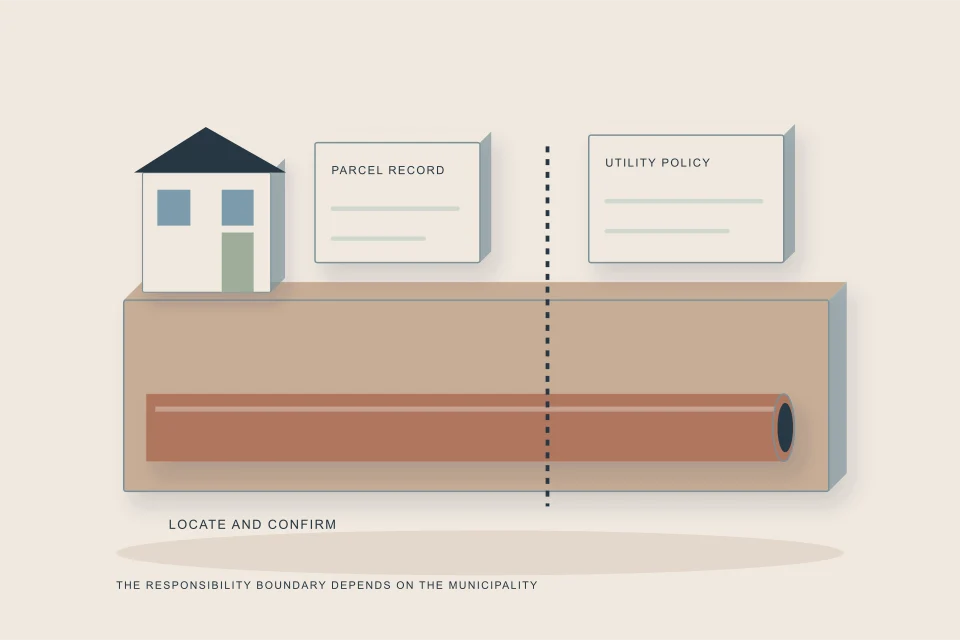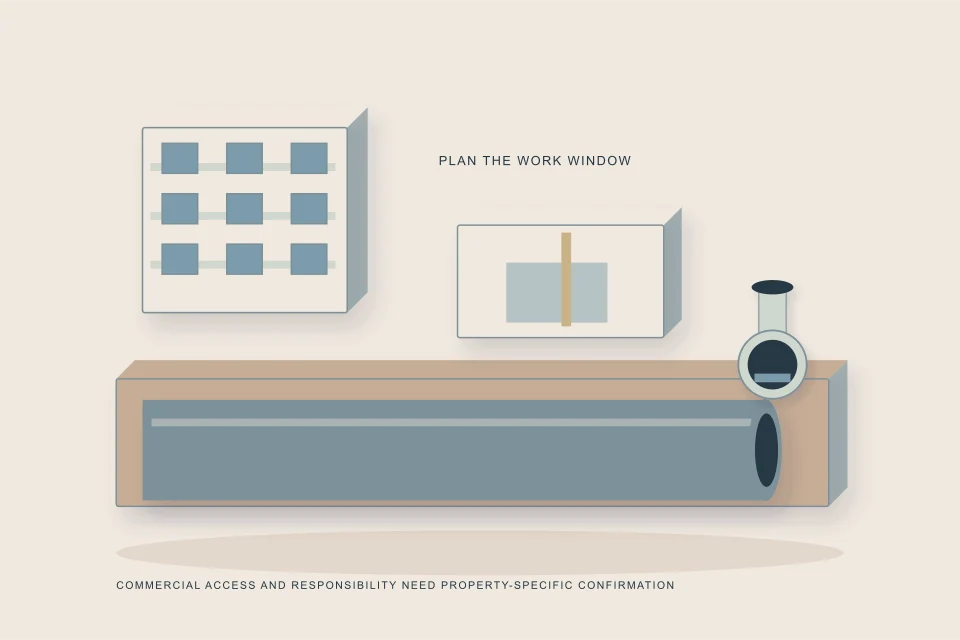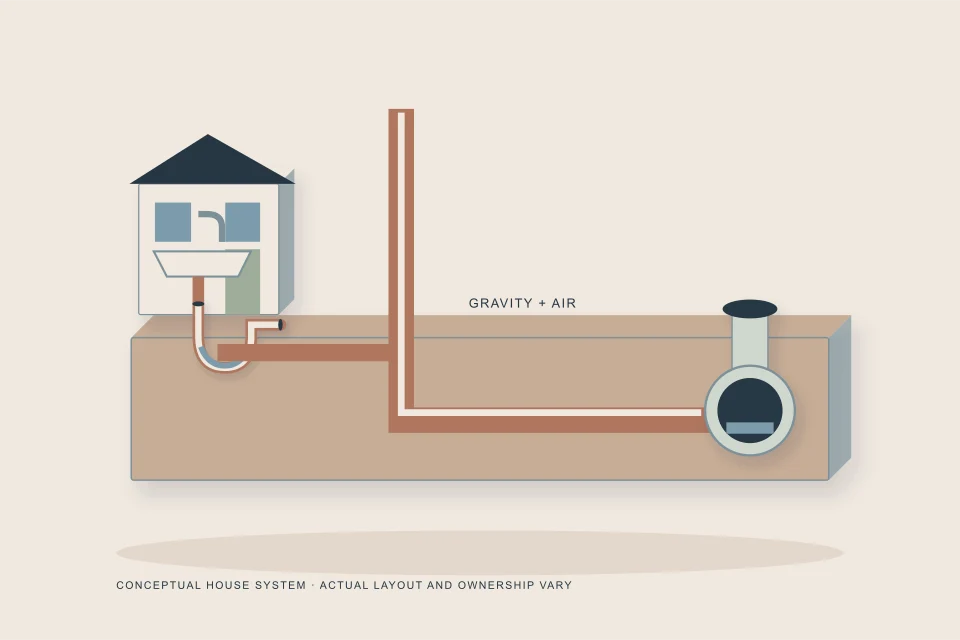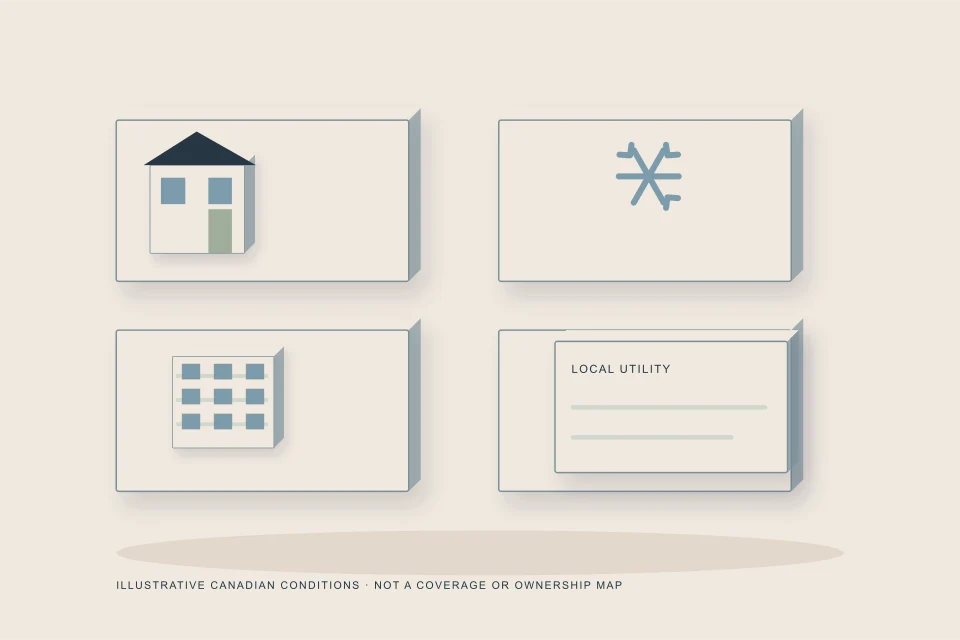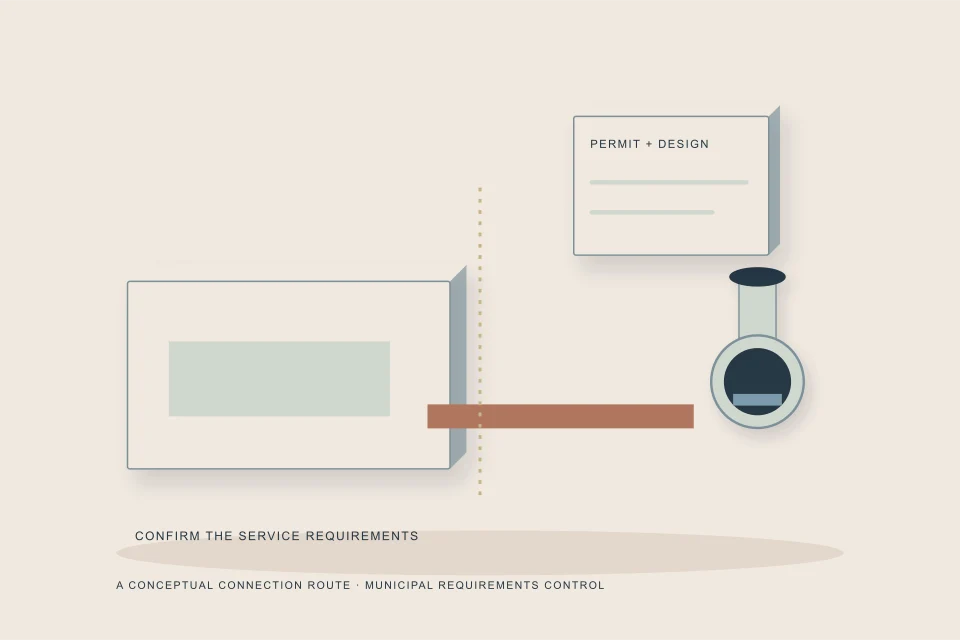
A new sewer connection links a building's drain to the municipal sanitary main. The municipality usually controls the tie-in and the public portion, often through its own crews or approved contractors, while the owner or builder pays for and installs the private pipe from the property line to the house under a permit. Plan early: approvals, locates and scheduling take weeks.
- Two jurisdictions meet at a new connection: the municipal side and the private side, each with its own rules and timeline.
- Toronto, for example, estimates connection costs in four to six weeks and typically completes City work 12 to 14 weeks after application.
- Infill and rebuilds often cannot reuse the old service; confirm what your city requires before demolition.
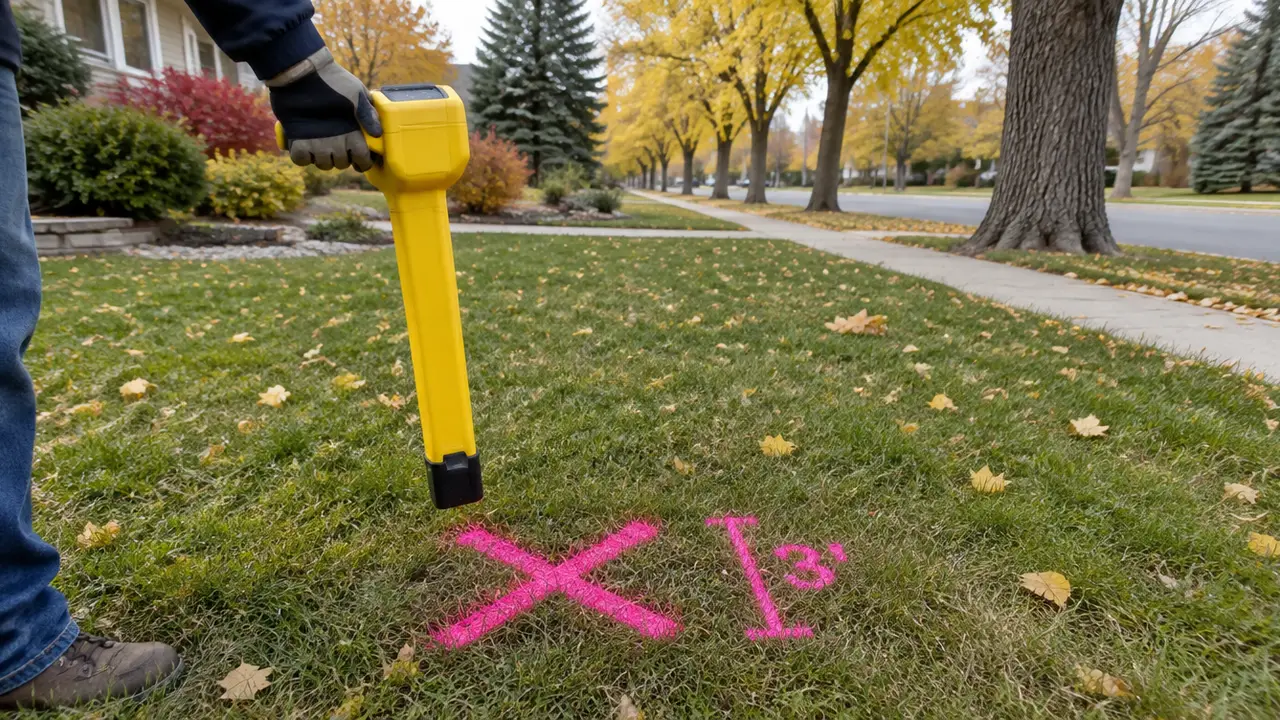
- Public locates do not mark private lines, and excavation near utilities needs a safe exposure method such as hand or hydrovac digging.
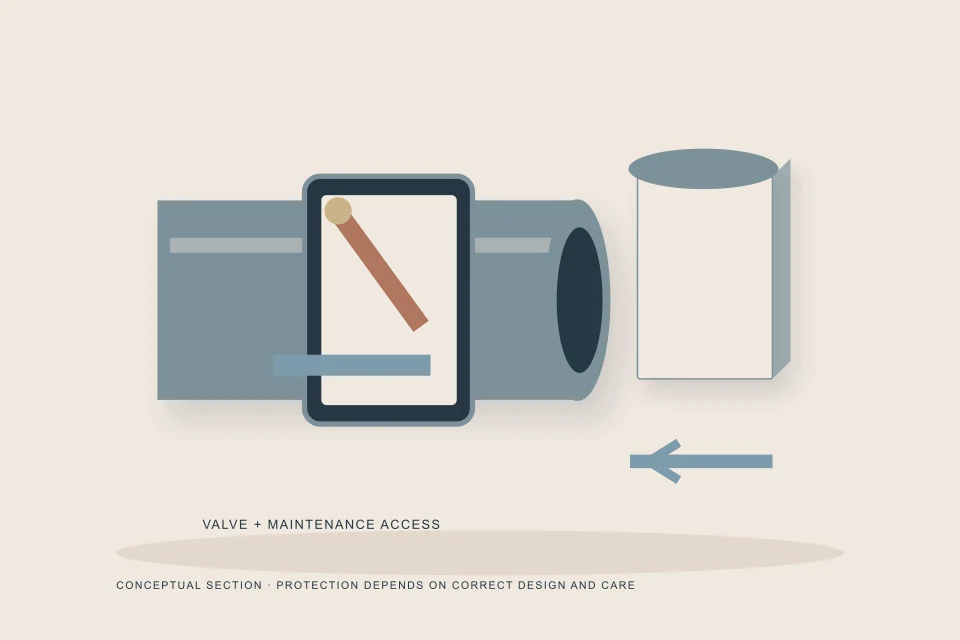
- Slope, a cleanout near the foundation and backwater protection for below-grade fixtures should be designed in from the start.
01 /Who builds which part of a new sewer connection?
A new residential sewer service crosses from public land into private land, and each side has an owner. The City of Calgary states that utility site servicing on private property must be owned by the builder or homeowner and built by their contractor at their expense, with the City inspecting it against its bylaws. Toronto says plainly that it does not install or replace service connections on private property.
| Part | Usually built by | Usually paid by |
|---|---|---|
| Tie-in to the municipal main | Municipal crews or approved contractors | Owner or builder, through connection fees |
| Pipe from main to property line | Municipality or its approved contractors | Varies; often the applicant |
| Pipe from property line to house | Owner's contractor under permit | Owner or builder |
| Building drain, cleanout, backwater valve | Owner's plumber under permit | Owner or builder |
Some cities also keep lists of pre-qualified contractors for work on the public side. Calgary refers to indemnified contractors under a master agreement. Ask your municipality whether your contractor needs to be on such a list.
02 /What are the steps to get a new sewer connection?
- Check the records
Find the main's location, size and depth (invert) from your municipality. Calgary publishes the public portion of existing service lines as open data, including material, diameter and install date.
- Apply for the connection
Toronto, for instance, lets residential properties of up to five units apply online for a standard 150 mm sewer connection; larger or commercial projects go through a site servicing submission.
- Plumbing permit for the private side
Your plumber or builder pulls it. In Calgary, homeowners may apply for all permit types except gas.
- Locates before any digging
Request public locates through your provincial one-call centre; in Alberta, Utility Safety Partners asks for three full working days' notice.
- Excavate, lay and inspect
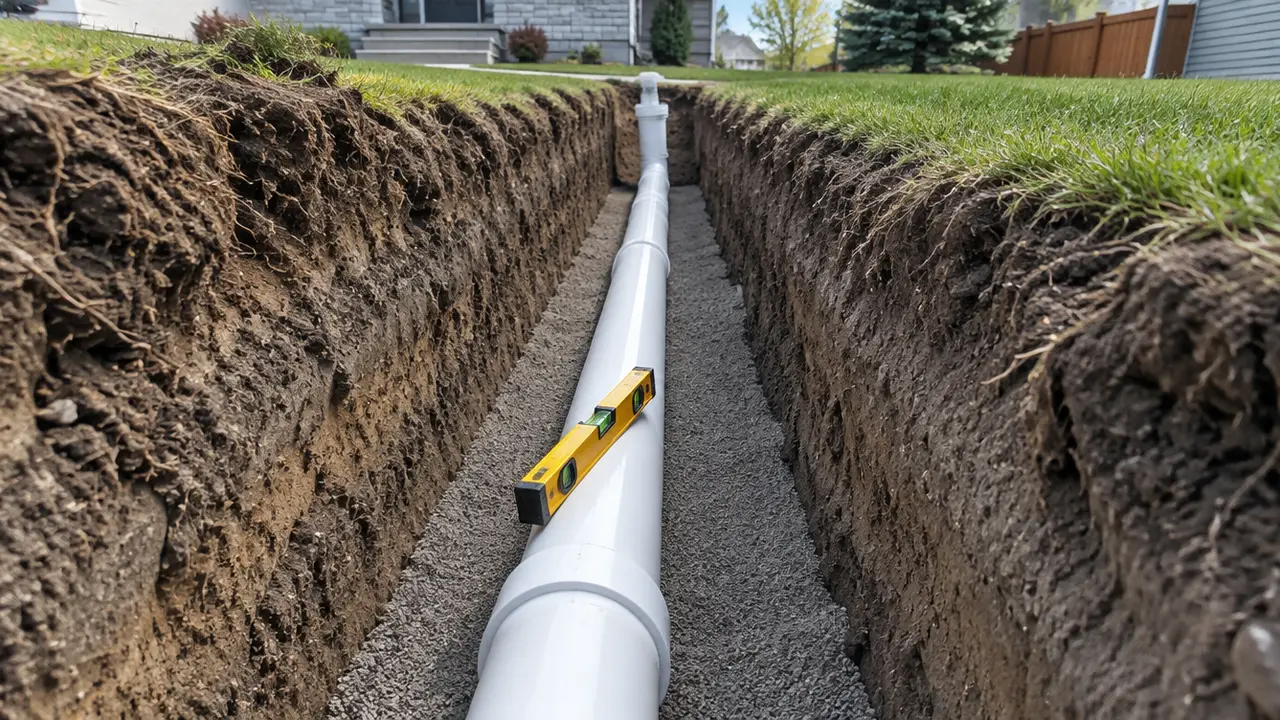
Pipe on bedding at a steady slope, a cleanout near the foundation, inspection before backfill.
- Tie-in and sign-off
The municipal side is connected on the city's schedule, and the service is accepted.
03 /What changes for infill, rebuilds and demolition?
Replacing an older house with a new one, or adding a secondary suite, raises two questions early: can the existing service be reused, and must it be capped before demolition? Many municipalities require old services to be disconnected, capped or proven sound before reuse. Toronto treats a substantially demolished building as needing a new connection under its bylaws.
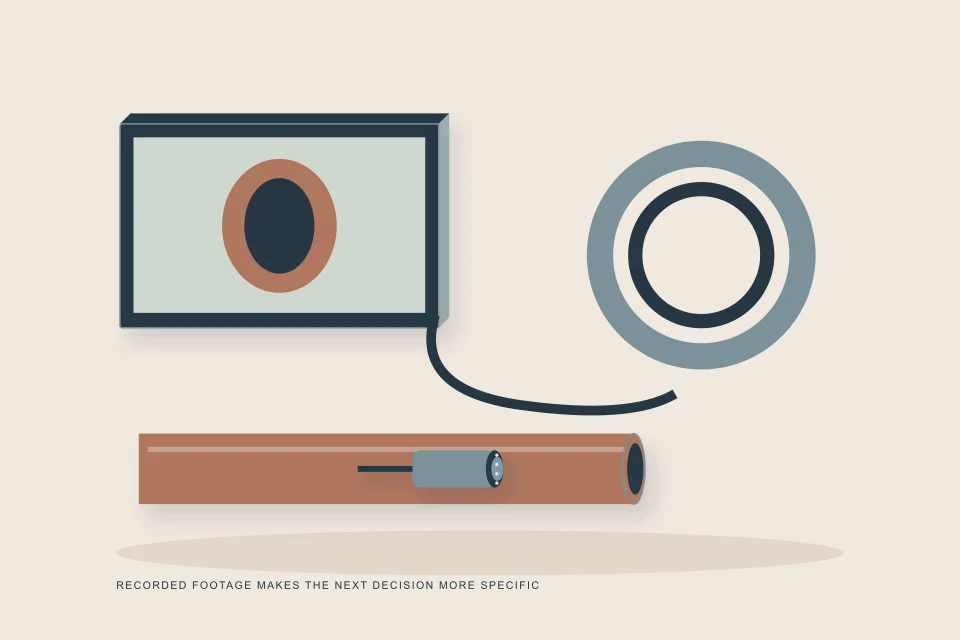
- Get the old service on camera before demolition, if it may be reused.
- Ask about capacity. A larger or multi-unit building may need a larger service than the old 100 mm line.
- Plan the sequence. Disconnection permits, demolition, new service, then building connection.
- Keep the paperwork. Permits and inspection records matter to lenders and future buyers.
The Calgary sister portals, CalgarySewers.ca and CalgarySewers.com, cover the City's service line data and local help in more detail.
04 /How are buried utilities exposed safely near a new service?
Locates show approximately where marked utilities run; they are not a promise of exact position or depth. Near the marks, contractors expose lines by hand digging or by hydrovac, which loosens soil with pressurised water and vacuums the slurry into a truck, before machines dig nearby. Alberta's Occupational Health and Safety Code includes duties to locate and expose buried facilities before excavation.
05 /How should the private side of a new sewer be designed?
A new service is the one chance to build the line the way every later contractor will wish it had been built. The plumbing code sets minimum slopes and sizes; good practice goes further in a few places that cost little at construction and a lot later.
| Choice | Why it matters later |
|---|---|
| A cleanout near the foundation, reachable and not buried under finishes | Every future cleaning and camera run starts here |
| Long-sweep bends instead of tight elbows | Cameras, cables and liners pass long sweeps far more easily |
| A steady, checked slope with no low spots | Sags hold water and solids; they cannot be lined out later |
| Compacted granular bedding and careful backfill | Settlement under the pipe is what creates sags and offsets |
| Burial below local frost penetration, or insulation where that is impossible | Frozen laterals are a real winter risk in shallow runs |
| A tracer wire on plastic pipe | Lets a future locator find a line that metal detectors cannot |
| Backwater protection for below-grade fixtures | Required in many situations and far cheaper at rough-in |
Record the route. Photograph the open trench with a tape measure in frame, note distances from the foundation corners, and keep the inspection report. Future owners, locators and contractors will thank you, and it takes minutes while the trench is open. The how a home sewer system works guide explains how the new line fits the rest of the drainage system.
06 /What does a new sewer connection cost?
Private-side pipe work for a new house service commonly plans at $600 to $1,000 per metre when shallow and more when deep, in 2026 dollars. A backwater valve in new construction, a cleanout, permits, and the municipal connection fee sit on top. Municipal fees and road work are set locally and range from modest to substantial.
Cost detail for new lines and septic-to-sewer conversions lives on SewerQuotes.com. If your project is a larger building, the commercial and multi-unit page covers the extra design steps. With your lot, the main's location and a rough plan, you can request quotes through the desk.
FAQQuestions people ask
How long does it take to get a new sewer connection?
It depends on the municipality. Toronto, for example, estimates costs in about four to six weeks and typically completes City construction 12 to 14 weeks after application. Private-side work and permits add their own time, so start early.
Can I reuse the old sewer line for a new house?
Sometimes, but many municipalities require the old service to be capped, disconnected or proven sound first, and a new or larger building may need a bigger service. A camera inspection before demolition shows whether reuse is even an option.
Who is allowed to connect to the city sewer main?
Usually the municipality or a contractor it has approved. Work on the private side is done by the owner's contractor under a plumbing permit. Confirm the rule in your city before hiring.
Do new homes need a backwater valve?
Current plumbing codes generally require backflow protection where fixtures sit below the level of the street sewer, and many municipalities enforce this for new homes. Confirm with your plumbing permit office.
Do utility locates mark my private sewer line?
No. Public locate services mark lines registered by utility owners. Alberta's Utility Safety Partners notes that customer-owned water and sewer service lines are not registered, so a private locator is needed.
NETWORKGo deeper across the HAUSE Sewer network
New sewer line cost: new connections, infill services and septic-to-sewer
New sewer line cost in Canada (2026): CAD planning ranges for new house connections, infill services and septic-to-sewer conversions, plus fees to confirm.
SewerCleaners.caBackwater valves: how they work and how to maintain one
How a backwater valve works, normally open vs normally closed types, a step-by-step maintenance routine, and what to do when it closes in a storm.
SewerInspector.caSewer line locating and depth: how the mark on your lawn is made
How sewer line locating and depth readings work: the sonde, the hand-held locator, peak and null readings, marking, accuracy, and calling before you dig.